

Compare models
Google Pixel 10 Pro Vs iPhone 15
- 1-year minimum warranty
- Free delivery on all items
- Free 30-day returns
Differences at a glance
The Google Pixel 10 Pro (2025) and the iPhone 15 (2023) represent two distinct approaches to modern smartphone design, software integration, and daily utility. While the Google Pixel 10 Pro runs on the Android operating system with deep artificial intelligence integration, the iPhone 15 operates on iOS, focusing on streamlined ecosystem connectivity and intuitive everyday navigation. Both devices offer robust core capabilities, but differ significantly in launch timing, display fluidness, and interactive features.
Available Models
Colour
Storage (GB)
Scores
Durability
When comparing longevity and durability, both the Google Pixel 10 Pro and the iPhone 15 provide extended software support timelines and sturdy build standards, though their release years introduce slight differences in total active lifecycle.
- Release timeline and software support: The iPhone 15 debuted in late 2023, whereas the Google Pixel 10 Pro launched in late 2025, meaning both models benefit from multi-year update schedules that cover several upcoming operating system cycles.
- Repairability and build resilience: Each device features certified dust and water resistance alongside reinforced glass panels, ensuring they withstand routine wear and tear with standard professional repair availability.
- Expected lifespan: Both smartphones maintain dependable hardware stamina for daily tasks over many years, though choosing a quality-assured refurbished option provides a sustainable choice that extends the active life of each device.
Year of Release
2025
2023
Compatible with latest Update
Yes
Yes
OS
Android
iOS
Foldable
No
No
Performance
Performance capabilities between the Google Pixel 10 Pro and the iPhone 15 cater to users looking for responsive multitasking, dependable app loading, and smooth day-to-day operation without excessive complexity.
- Memory and storage capacity: The Google Pixel 10 Pro incorporates ample memory for intensive background processes, while the iPhone 15 offers optimized storage configurations suited for everyday media storage and apps.
- Everyday system responsiveness: Both phones handle web browsing, video streaming, and demanding applications smoothly, transitioning between tasks without noticeable stutter or lag.
- Battery behavior and power management: The Google Pixel 10 Pro features a high-capacity battery designed to sustain prolonged use, while the iPhone 15 balances efficient power consumption to comfortably navigate a typical daily routine.
Screen quality
Display characteristics differ notably between the two models in terms of refresh rate fluidity, maximum outdoor visibility, and overall physical dimensions.
- Display technology and clarity: Both devices utilize advanced OLED panels that produce deep blacks, sharp text clarity, and vivid color reproduction for all forms of media consumption.
- Brightness and outdoor legibility: The Google Pixel 10 Pro achieves exceptionally high peak brightness levels for clear viewing under direct sunlight, matching the robust outdoor viewing performance found on the iPhone 15.
- Refresh rate and smoothness: The Google Pixel 10 Pro supports a high refresh rate up to 120 Hz for fluid scrolling, whereas the iPhone 15 maintains a standard 60 Hz refresh rate.
Resolution
1280x2856
1179 x 2556
Screen type
OLED
Super Retina XDR OLED
Audiovisual
Audio-visual capabilities and capture systems on the Google Pixel 10 Pro and the iPhone 15 offer versatile tools for photography, video recording, and media playback.
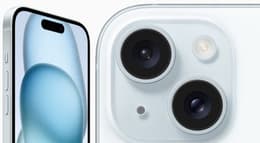
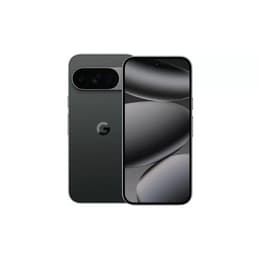
- Camera versatility: The Google Pixel 10 Pro equips a triple-lens setup including dedicated optical zoom capabilities, while the iPhone 15 utilizes an advanced dual-camera system with high-resolution main sensor detail.
- Low-light and video performance: Both smartphones deliver reliable stabilization and clear exposure in challenging lighting conditions, alongside crisp microphone pickup for calls and voice notes.
- Media consumption output: Stereo speaker setups on both models provide clear audio output for hands-free calling, podcasts, and casual video viewing.
Front camera
42 megapixels
12 megapixels
Miscellaneous
Practical everyday features, connectivity standards, and physical handling traits shape how each device fits into distinct user lifestyles.
- Connectivity and ports: Both models support widespread 5G networks and utilize universal USB-C connection ports for charging and data transfer.
- Authentication and security: The Google Pixel 10 Pro features an under-display fingerprint sensor alongside facial recognition, while the iPhone 15 relies on secure facial authentication.
- Physical dimensions: The Google Pixel 10 Pro offers a slightly larger screen format within a balanced chassis, compared to the more compact one-handed footprint of the iPhone 15.
Weight
207 g
171 g
Screen size (in)
6.3
6.1
Mobile network
5G
5G
SIM card
Physical SIM + eSIM
Physical SIM + eSIM
Carrier compatibility
Unlocked
Unlocked
Connector
USB-C
USB-C (USB 2)
What the community thinks
User feedback on the Google Pixel 10 Pro frequently highlights its fluid display refresh rate, comprehensive multi-lens camera array, and deeply integrated software assistance tools. Conversely, owners of the iPhone 15 often praise its streamlined operating system, reliable everyday battery efficiency, and comfortable, pocket-friendly dimensions. Common discussions across user communities often weigh the benefits of a high refresh rate display against the simplicity of a tightly integrated device ecosystem.
Users prioritizing advanced photography flexibility, high display fluidity, and deep artificial intelligence features may prefer the Google Pixel 10 Pro. Meanwhile, users prioritizing a straightforward operating system, compact physical handling, and seamless integration with existing tablet or computer ecosystems may lean toward the iPhone 15. Opting for an eco-friendly alternative through a quality-assured refurbished option provides a sustainable path for acquiring either model without compromising on performance or reliability.