
Galaxy A56 Vs iPhone 16 Plus

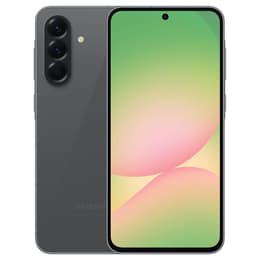
Galaxy A56
Galaxy A56
Starting at

Refurbished price:£274.00

Versus £422.50 new

See options
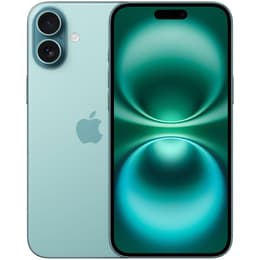
iPhone 16 Plus
iPhone 16 Plus
Starting at

Refurbished price:£503.46

Versus £799.00 new

See options

Ratings

The Samsung Galaxy A56 and the iPhone 16 Plus are contemporary smartphones, released in March 2025 and September 2024, respectively. While both devices offer a large display and robust feature sets, they cater to different ecosystems and user preferences. The Galaxy A56 operates on Android, providing a customizable experience, whereas the iPhone 16 Plus runs on iOS, known for its integrated services and streamlined interface. Key distinctions lie in their camera systems, display refresh rates, and long-term software support commitments.

Scores

Durability

When considering the longevity of a smartphone, software support and physical durability are crucial factors. Both the Galaxy A56 and the iPhone 16 Plus offer substantial support, ensuring users can rely on their devices for an extended period.

  • Software Updates: The Samsung Galaxy A56 is notable for its commitment to six years of Android OS upgrades and six years of security updates, with support projected to end in 2031. The iPhone 16 Plus, following Apple's typical support cycles, is expected to receive major iOS updates and security patches for five to seven years, with some sources indicating support until 2031 or even 2036.
  • Physical Durability: The Galaxy A56 features an aluminum frame and Corning Gorilla Glass Victus+ on both its front and back, providing enhanced scratch and drop resistance. It also carries an IP67 rating for dust and water resistance. The iPhone 16 Plus incorporates a durable glass front, likely Ceramic Shield, and an aluminum frame, along with an IP68 rating, offering superior protection against dust and water immersion.
  • Repairability: While specific repairability scores can vary, both manufacturers generally design their devices with a balance of durability and serviceability. Users seeking to extend the life of either device can consider quality-assured refurbished options, which provide an eco-friendly alternative.

Year of Release

2025

2024

Compatible with latest Update

Yes

Yes

Foldable

No

No

Performance

The performance of a smartphone is determined by its internal components, influencing everything from app responsiveness to multitasking capabilities and gaming experiences. Both devices are equipped to handle daily tasks efficiently, though their approaches differ.

  • Processing Power: The Galaxy A56 is powered by a 4 nm chipset, which delivers a responsive experience for everyday applications and can manage demanding tasks with ease. Users have reported a noticeable improvement in performance compared to its predecessor, indicating smooth operation for most activities. The iPhone 16 Plus features a powerful current-generation processor designed for high efficiency and robust performance across the iOS ecosystem. This allows for seamless multitasking, rapid app launches, and fluid graphics in advanced mobile games.
  • Memory and Storage: The Galaxy A56 is available with 8GB or 12GB of RAM, paired with 128GB or 256GB of internal storage, which can be expanded significantly via a microSD card. The iPhone 16 Plus comes with 8GB of RAM and storage options of 128GB, 256GB, or 512GB, without expandable storage.
  • Battery Behavior: The Galaxy A56 includes a 5000 mAh battery, supporting 45W fast charging that can reach 65% charge in about 30 minutes. The iPhone 16 Plus is equipped with a 4674 mAh battery, offering efficient power management and supporting fast charging via USB-C, as well as MagSafe and Qi2 wireless charging.

Memory (GB)

8 GB

8 GB

Screen quality

The display is a primary interface for smartphone interaction, and both the Galaxy A56 and iPhone 16 Plus offer large, immersive viewing experiences with distinct characteristics.

  • Display Technology and Clarity: The Galaxy A56 features a 6.7-inch Super AMOLED display, known for its vibrant colors, deep blacks, and excellent contrast. It offers a Full HD+ resolution, providing clear and sharp visuals for general use and media consumption. The iPhone 16 Plus sports a 6.7-inch Super Retina XDR OLED display, which delivers exceptional color accuracy, deep blacks, and a higher pixel density for incredibly sharp text and images.
  • Brightness and Refresh Rate: The Galaxy A56's display boasts a 120Hz refresh rate, contributing to smoother scrolling and more fluid animations, and reaches a peak brightness of 1900 nits, ensuring good visibility outdoors. The iPhone 16 Plus offers a 60Hz refresh rate but compensates with impressive brightness levels, reaching up to 1000 nits typical, 1600 nits for HDR content, and a peak of 2000 nits for outdoor viewing, making it highly legible even in direct sunlight.
  • Viewing Experience: Both devices provide expansive screens suitable for media consumption, gaming, and productivity. The Galaxy A56's higher refresh rate offers a perceptibly smoother visual experience, while the iPhone 16 Plus excels in overall display fidelity and peak brightness.

Resolution

1080 x 2340

1290 x 2796

Screen type

Super AMOLED

Super Retina XDR OLED

Audiovisual

Camera capabilities are a significant consideration for many users, and both the Galaxy A56 and iPhone 16 Plus offer advanced systems for capturing photos and videos, each with its own strengths.

  • Rear Camera Systems: The Galaxy A56 features a versatile triple-camera setup on the rear, including a 50MP main sensor with optical image stabilization (OIS), a 12MP ultrawide lens, and a 5MP macro lens, providing flexibility for various shooting scenarios. The iPhone 16 Plus is equipped with an advanced dual-camera system, comprising a 48MP main camera with sensor-shift OIS and a 12MP ultrawide lens. Its main sensor can also achieve 2x telephoto capabilities through advanced processing.
  • Photography Performance: The Galaxy A56's main camera is capable of capturing sharp and vibrant images in everyday conditions, with the ultrawide and macro lenses adding creative options. The iPhone 16 Plus leverages computational photography features like Photonic Engine, Deep Fusion, and Smart HDR 5 to produce detailed images with excellent dynamic range and color accuracy, performing well in various lighting conditions, including low light.
  • Video Recording and Audio: Both phones support 4K video recording. The Galaxy A56 can record 4K at 30 frames per second (fps) with stabilization across all its cameras, including the front-facing one. The iPhone 16 Plus offers 4K Dolby Vision video recording at up to 60 fps, along with Cinematic mode and slo-mo capabilities, providing a more advanced video capture experience. Both devices offer stereo speakers for media consumption, though the iPhone's audio output is often noted for its clarity and spatial quality.

Main camera

4K@30fps

48 megapixels

Front camera

13 megapixels

12 megapixels

Miscellaneous

Beyond core performance and display, several practical features contribute to the overall user experience of these smartphones.

  • Connectivity and Ports: Both devices support 5G connectivity for fast mobile data. The Galaxy A56 includes Wi-Fi 6 and Bluetooth 5.3, along with a USB Type-C port for charging and data transfer. The iPhone 16 Plus steps up with Wi-Fi 7 and Bluetooth 5.3, also featuring a USB-C port, though its data transfer speeds are based on USB 2.0.
  • Biometrics and Sensors: The Galaxy A56 incorporates an under-display fingerprint sensor for secure unlocking. The iPhone 16 Plus relies on Face ID, Apple's facial recognition system, for biometric authentication. Both devices include a standard array of sensors for navigation and functionality.
  • Design and Handling: The Galaxy A56 measures 162.2 x 77.5 x 7.4 mm and weighs 198g, featuring an aluminum frame and glass front and back. The iPhone 16 Plus has dimensions of 160.9 × 77.8 × 7.8 mm and weighs 199g, also with an aluminum frame and durable glass construction. Both offer a premium feel, with the Galaxy A56 being slightly thinner.

Weight

197 g

199 g

Screen size (in)

6.5

6.7

Mobile network

5G

5G

SIM card

Dual Physical SIM + eSIM

Physical SIM + eSIM

Carrier compatibility

Unlocked

Unlocked

Connector

USB-C

USB-C (USB 2)

The Samsung Galaxy A56 and iPhone 16 Plus each present a compelling package, tailored to different user ecosystems and priorities. Users often praise the Galaxy A56 for its vibrant 120Hz AMOLED display, extensive software support commitment, and the flexibility of expandable storage. Its robust battery life and fast charging are also frequently highlighted as strong points. Some users, however, might note the absence of a telephoto lens in its camera system as a potential limitation compared to some competitors.

The iPhone 16 Plus is generally lauded for its powerful processor, highly optimized iOS experience, and advanced computational photography capabilities that deliver consistent image quality. Its superior display brightness and robust build quality with an IP68 rating are also common points of appreciation. A frequent observation from users is the lack of a high refresh rate display, which is present in many Android counterparts, and the absence of expandable storage.

Users prioritizing a highly customizable Android experience, a smoother scrolling display, and the option for expandable storage may find the Galaxy A56 well-suited to their needs. Conversely, those who value a streamlined operating system, advanced video capabilities, and a tightly integrated ecosystem might lean towards the iPhone 16 Plus. Both devices offer excellent performance for their respective platforms, and choosing between them often comes down to personal preference for either Android or iOS. For those considering either device, exploring quality-assured refurbished options can be a sustainable choice.

See all articles

Our recent comparisons