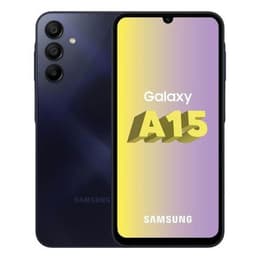


Galaxy A15 Vs OnePlus 10 Pro

Galaxy A15
Galaxy A15
Starting at

Refurbished price:£88.00

Versus £169.00 new

See options
OnePlus 10 Pro
OnePlus 10 Pro
Starting at

Refurbished price:£391.00

Versus £769.39 new

See options

Ratings

The Samsung Galaxy A15, released in December 2023, and the OnePlus 10 Pro, launched globally in March 2022, are Android smartphones designed for different user expectations. While the Galaxy A15 focuses on delivering a balanced experience with strong battery life and software support, the OnePlus 10 Pro aims for high-end performance and advanced camera capabilities. Both devices run on the Android operating system, offering distinct user interfaces: Samsung's One UI and OnePlus's OxygenOS.

Scores

Durability

When considering the long-term usability of these devices, their release timelines and software support policies are key differentiators.

  • Software Longevity: The Samsung Galaxy A15, released in late 2023, benefits from Samsung's commitment to four years of Android upgrades and five years of security patches, extending its software relevance well into the future. The OnePlus 10 Pro, launched in early 2022, typically receives three major Android updates and four years of security updates, meaning its software support cycle will conclude sooner than the A15's.
  • Physical Durability: The Galaxy A15 features a plastic frame and back, offering a degree of resilience to everyday bumps. The OnePlus 10 Pro, with its glass back and Gorilla Glass Victus on the front, presents a more premium feel but has shown some structural vulnerabilities in bend tests, raising concerns about its long-term physical integrity under stress.
  • Repairability: The OnePlus 10 Pro has an average repairability score, with some components being accessible but requiring careful disassembly due to adhesive use. Information on the Galaxy A15's specific repairability score is less prominent, but budget-friendly devices often prioritize ease of manufacturing over modular repair.

Year of Release

2023

2022

Compatible with latest Update

Yes

Yes

OS

Android

Android

Foldable

No

No

Performance

The performance capabilities of these two smartphones cater to different usage demands, primarily influenced by their internal components and optimization.

  • Processing Power: The OnePlus 10 Pro, equipped with a high-end processor from its release year, delivers robust performance suitable for demanding applications, intensive multitasking, and graphic-heavy gaming. The Galaxy A15, featuring a mid-range processor, handles everyday tasks, social media, and lighter gaming smoothly, though it may exhibit slower loading times for more complex apps.
  • Multitasking and Storage: The OnePlus 10 Pro offers higher RAM configurations, contributing to a smoother experience when switching between numerous applications. It comes with ample internal storage options, though it lacks expandable storage. The Galaxy A15 provides various RAM and storage configurations, with the added flexibility of expandable storage via a microSD card, which can be beneficial for users with large media libraries.
  • Battery Behavior: Both devices house a 5000 mAh battery. The Galaxy A15 is noted for its excellent battery longevity, often lasting up to two days with moderate use or over 14 hours of continuous video streaming. The OnePlus 10 Pro also offers strong battery life, with users reporting it can last a full day or more, supported by very fast wired and wireless charging capabilities. Some users of the OnePlus 10 Pro have noted that intensive use or certain software updates can lead to increased battery drain and thermal throttling over time.

Memory (GB)

4 GB

8 GB

Screen quality

The visual experience on these devices is shaped by their display technology, resolution, and refresh rate capabilities.

  • Display Technology and Clarity: Both phones feature AMOLED displays, known for vibrant colors and deep blacks. The OnePlus 10 Pro boasts a 6.7-inch Fluid AMOLED display with a QHD+ resolution (3216 x 1440 pixels), offering exceptional sharpness and detail. The Samsung Galaxy A15 has a 6.5-inch Super AMOLED display with an FHD+ resolution (1080 x 2340 pixels), providing clear and bright visuals suitable for general media consumption.
  • Refresh Rate and Smoothness: The OnePlus 10 Pro features an adaptive refresh rate that dynamically scales from 1Hz to 120Hz, contributing to very smooth scrolling and responsiveness while optimizing power consumption. The Galaxy A15 offers a 90Hz refresh rate, which provides a noticeably smoother experience than standard 60Hz displays, enhancing daily interactions like browsing and app usage.
  • Brightness and Viewing Experience: The OnePlus 10 Pro can reach a peak brightness of 1300 nits, ensuring excellent visibility even in bright outdoor conditions. The Galaxy A15 offers a high brightness mode of up to 800 nits, which is sufficient for most outdoor scenarios and provides comfortable viewing with reduced blue light for eye comfort.

Resolution

1080 x 2340

1440 x 3216

Screen type

Super AMOLED

LTPO2 Fluid AMOLED

Audiovisual

The camera systems on the Galaxy A15 and OnePlus 10 Pro offer different photographic experiences, catering to varying user priorities.

  • Rear Camera Capabilities: The OnePlus 10 Pro features a versatile triple camera setup co-developed with Hasselblad, including a 48MP main sensor with optical image stabilization (OIS), a 50MP ultrawide lens with a wide 150° field of view, and an 8MP telephoto lens offering 3.3x optical zoom and OIS. This combination allows for detailed shots across various focal lengths and improved stability. The Galaxy A15 comes with a 50MP main camera, a 5MP ultrawide, and a 2MP macro lens. Its main camera performs well in good lighting, producing decent detail and color, but the ultrawide and macro lenses offer more limited utility.
  • Low-Light and Video Performance: The OnePlus 10 Pro's main camera performs well in low-light conditions, and it supports video recording up to 8K resolution. Its video stabilization is solid, and it offers advanced features like a manual 'Movie' mode. The Galaxy A15's main camera can capture decent low-light photos with sufficient ambient light, and it records video at 1080p at 30 frames per second with digital stabilization. The ultrawide and macro cameras on the A15 are less capable in challenging lighting.
  • Front Camera and Audio: The OnePlus 10 Pro is equipped with a 32MP front camera, capable of capturing detailed selfies. The Galaxy A15 has a 13MP front camera that provides functional selfies. For audio, the OnePlus 10 Pro features dual stereo speakers for an immersive media consumption experience. The Galaxy A15 includes a single audio speaker and retains a 3.5mm headphone jack, offering flexibility for wired audio accessories.

Main camera

50 megapixels

48 megapixels

Front camera

13 megapixels

32 megapixels

Miscellaneous

Beyond core specifications, several practical elements contribute to the overall user experience of these devices.

  • Connectivity and Ports: Both smartphones support 5G connectivity for fast mobile data. The OnePlus 10 Pro features Wi-Fi 6 and Bluetooth 5.2, along with a USB Type-C 3.1 port. The Galaxy A15 supports Wi-Fi 5 and Bluetooth 5.3, and includes a USB Type-C 2.0 port. Notably, the Galaxy A15 retains a 3.5mm headphone jack, which is absent on the OnePlus 10 Pro.
  • Biometric Security: The OnePlus 10 Pro utilizes an in-display optical fingerprint sensor for secure unlocking. The Samsung Galaxy A15 features a side-mounted fingerprint sensor integrated into the power button, offering a quick and accessible authentication method. Both devices also support face recognition.
  • Design and Handling: The OnePlus 10 Pro has a more premium build with glass on both the front and back, and a slightly curved display, contributing to a refined in-hand feel. It measures 163 x 73.9 x 8.5 mm and weighs 200.5g. The Galaxy A15 has a plastic construction, measuring 160.1 x 76.8 x 8.4 mm and weighing 200g, making it slightly more compact and similar in weight.

Weight

200 g

201 g

Screen size (in)

6.5

6.7

Mobile network

4G

5G

SIM card

Dual Physical SIM

Physical SIM

Carrier compatibility

Unlocked

Unlocked

User feedback for the Samsung Galaxy A15 frequently praises its exceptional battery life, vibrant Super AMOLED display, and Samsung's commitment to long-term software updates, making it a reliable daily driver. Some users note that while its performance is adequate for general use, it may not be as snappy as higher-end devices, and the secondary cameras are less impressive than the main sensor.

The OnePlus 10 Pro is often lauded for its stunning QHD+ 120Hz AMOLED display, powerful performance for gaming and demanding applications, and extremely fast charging speeds. However, some users have reported inconsistencies with camera performance, particularly in low light or with the ultrawide lens, and concerns about thermal management affecting sustained performance. Early durability tests also highlighted a structural weakness.

Users prioritizing extended software support, a long-lasting battery, and a solid display for everyday tasks may find the Samsung Galaxy A15 well-suited to their needs. It offers a dependable experience for communication, media consumption, and light productivity. Conversely, individuals seeking top-tier processing power, a highly fluid and detailed display, and advanced camera features for creative photography and videography might lean towards the OnePlus 10 Pro. Its rapid charging is also a significant advantage for those who need quick power-ups.

For those considering either device, exploring quality-assured refurbished options can provide an eco-friendly alternative, extending the life cycle of these products and offering a sustainable choice.


See all articles

Our recent comparisons