
Galaxy Z Fold6 Vs Google Pixel 9a

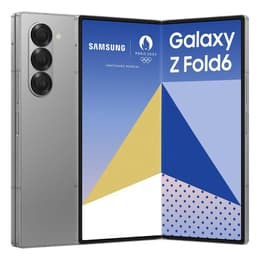
Galaxy Z Fold6
Galaxy Z Fold6
Starting at

Refurbished price:£524.00

Versus £1,685.59 new

See options
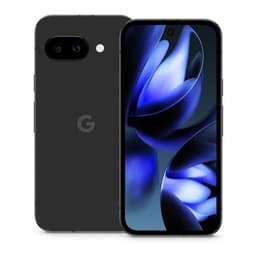
Google Pixel 9a
Google Pixel 9a
Starting at

Refurbished price:£319.00

Versus £499.00 new

See options

Ratings

The Samsung Galaxy Z Fold6, released in July 2024, represents the pinnacle of foldable smartphone technology, offering a unique dual-screen experience. In contrast, the Google Pixel 9A, launched in April 2025, is a more traditional smartphone known for its camera capabilities and clean software experience. Both devices operate on the Android platform, but they cater to very different user needs and preferences, primarily distinguished by their form factors and performance tiers.

Scores

Durability

When considering the longevity of these devices, their release timelines and build philosophies play a significant role.

  • Software Support: The Galaxy Z Fold6, as a premium Android device, offers seven years of major operating system updates and security patches from its release. The Google Pixel 9A also benefits from Google's direct software management, typically receiving seven years of software and security updates, providing a comparable long update lifespan.
  • Physical Durability: The Z Fold6 features a sophisticated foldable design with premium materials, including an enhanced Armor Aluminum frame and a robust hinge mechanism, alongside an IP48 rating for dust and water resistance. Its inner screen, however, remains more susceptible to scratches than a traditional glass display. The Pixel 9A, with its more conventional form factor, offers an IP68 rating for dust and water resistance and a solid build with Corning Gorilla Glass 3 on its display, which provides good scratch resistance.
  • Practical Lifespan: Users prioritizing the absolute longest software support will find both devices well-equipped. The Z Fold6's advanced features and premium build are designed for sustained high-performance use over its expected software lifecycle, while the Pixel 9A's robust software commitment and repair-friendly design contribute to its practical longevity.

Year of Release

2024

2025

Compatible with latest Update

Yes

Yes

OS

Android

Android

Foldable

Yes

No

Performance

The performance capabilities of the Galaxy Z Fold6 and Google Pixel 9A are tailored to their respective market segments, offering distinct experiences for different user demands.

  • Processing Power: The Galaxy Z Fold6 is equipped with a top-tier, current-generation processor, designed to handle the most demanding applications, intensive multitasking across its large display, and advanced gaming with ease. The Pixel 9A features Google's Tensor G4 processor, which provides smooth performance for everyday tasks, efficient AI-powered features, and capable handling of most applications and games, positioning it as a strong performer in its category.
  • Multitasking and Storage: The Z Fold6 typically comes with 12GB of RAM, facilitating seamless transitions between numerous open applications and heavy multitasking, especially when utilizing its large inner screen. It offers storage options up to 1TB. The Pixel 9A includes 8GB of RAM, which is sufficient for smooth daily operation and managing multiple apps, with storage options up to 256GB.
  • Battery Behavior: The Z Fold6 houses a 4400 mAh battery, optimized to power its dual-screen setup and high-performance components, providing all-day usage for many users. The Pixel 9A features a larger 5100 mAh battery, which, combined with its efficient processor and single display, often translates to extended battery life, easily handling a full day of heavy usage.

Memory (GB)

12 GB

8 GB

Screen quality

The display experience is a primary differentiator between these two smartphones, owing to their distinct form factors and design philosophies.

  • Display Technology and Clarity: The Galaxy Z Fold6 boasts a large, foldable 7.6-inch Dynamic AMOLED inner display that offers vibrant colors, deep blacks, and excellent contrast, alongside a high adaptive refresh rate for smooth scrolling. It also features a 6.3-inch Dynamic AMOLED cover display for quick interactions. The Pixel 9A typically comes with a 6.3-inch OLED display, providing rich colors and good viewing angles with a resolution of 1080x2424 pixels.
  • Brightness and Outdoor Visibility: Both the inner and cover displays of the Z Fold6 offer a peak brightness of 2600 nits, ensuring excellent visibility even in bright outdoor conditions. The Pixel 9A's display also achieves a high peak brightness of 2700 nits, making it very bright and easily viewable in direct sunlight.
  • Refresh Rate and Viewing Experience: Both devices feature adaptive refresh rates up to 120Hz, contributing to a fluid and responsive user experience, whether scrolling through content or playing games. The Z Fold6's larger inner screen provides an immersive tablet-like experience, while the Pixel 9A offers a consistently smooth experience on its single, traditional display.

Resolution

1856 x 2160

2424 x 1080

Audiovisual

The camera systems on the Galaxy Z Fold6 and Google Pixel 9A approach photography with different strengths, catering to varied user preferences.

  • Rear Camera Capabilities: The Galaxy Z Fold6 features a versatile triple-camera setup, including a 50MP main sensor with optical image stabilization (OIS), a 12MP ultrawide lens, and a 10MP telephoto lens with 3x optical zoom and OIS. This system delivers detailed and vibrant photos in most conditions, with strong color reproduction. The Pixel 9A is equipped with a dual-camera system, featuring a 48MP main camera with OIS and electronic image stabilization (EIS), and a 13MP ultrawide camera. It excels in computational photography, producing sharp images with balanced exposure and vibrant colors, particularly strong in low-light scenarios for its main lens.
  • Low-Light and Video Performance: The Z Fold6's main camera performs well in low light, though its ultrawide can show more noise. It supports 4K 60fps video from most cameras and 8K 30fps from the primary. The Pixel 9A's main camera also performs admirably in low light, but its ultrawide and video performance in challenging low-light conditions are less robust compared to its still photography.
  • Selfie Cameras and Features: The Z Fold6 includes a 10MP camera on its cover display and a 4MP under-display camera on the inner screen, which, while lower resolution, benefits from Samsung's image processing. The Pixel 9A has a 13MP front-facing camera, offering good quality for selfies and video calls. Both devices offer various shooting modes and AI enhancements to improve photographic results.

Front camera

4 megapixels

13 megapixels

Miscellaneous

Beyond their core functionalities, several practical elements distinguish the Galaxy Z Fold6 and Google Pixel 9A, influencing daily usability and convenience.

  • Connectivity and Ports: Both devices support advanced 5G connectivity, ensuring fast mobile data speeds. The Z Fold6 and Pixel 9A also feature modern Wi-Fi standards (Wi-Fi 6E) and Bluetooth for wireless connections. Both utilize a USB-C port for charging and data transfer, but neither typically includes a traditional headphone jack.
  • Biometrics and Security: The Galaxy Z Fold6 often incorporates a side-mounted fingerprint sensor for secure unlocking. The Pixel 9A typically features an in-display fingerprint sensor. Both offer face recognition for convenient access.
  • Design, Weight, and Handling: The Z Fold6, with its foldable design, is heavier at 239g and thicker when folded (12.1mm), offering a compact phone experience that unfolds into a tablet-like screen. Its build materials are premium. The Pixel 9A maintains a more conventional smartphone form factor, weighing 185.9g and measuring 8.9mm thick, making it lighter and generally easier for one-handed use. The Pixel 9A's design features a matte-finish plastic back and slightly wider bezels compared to flagship models.

Weight

239 g

186 g

Screen size (in)

7.6

6.3

Mobile network

5G

5G

SIM card

Dual Physical SIM + eSIM

Physical SIM + eSIM

Carrier compatibility

Unlocked

Unlocked

User feedback for the Samsung Galaxy Z Fold6 often highlights its innovative foldable design and the versatility of having both a smartphone and a tablet in one device. Users appreciate the bright, expansive inner display for media consumption and productivity, as well as the powerful performance for demanding applications. Common criticisms sometimes point to the durability concerns of the inner screen and hinge, despite improvements, and the camera system, while competent, is not always considered class-leading compared to traditional slab flagships at a similar tier. The crease on the inner display, though less noticeable, is still present.

The Google Pixel 9A is frequently praised for its exceptional main camera performance, often rivaling more expensive devices due to Google's computational photography. Its impressive battery life and the bright, smooth 120Hz display are also strong points. Users value the long software support commitment and the clean Android experience. Some common concerns include the ultrawide camera not matching the main sensor's quality, and a design that some find less distinctive due to the removal of the camera bar and thicker bezels.

For users prioritizing a large, adaptable screen for multitasking, media, and a premium, innovative experience, the Galaxy Z Fold6 is well-suited. Its powerful internals and unique form factor make it ideal for those who can leverage its tablet-like capabilities. Conversely, users who prioritize an outstanding camera for everyday photography, consistent long-term software updates, and extended battery life in a more traditional, compact form factor may find the Google Pixel 9A to be a more fitting choice. Both devices offer compelling features for their respective audiences, and considering a quality-assured refurbished option for either model can be a sustainable choice for consumers.

See all articles

Our recent comparisons