
Compare models
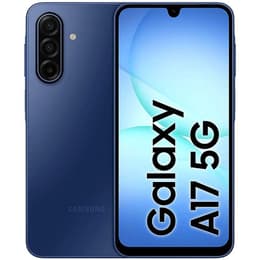
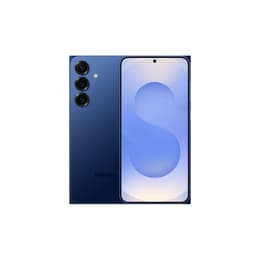
Galaxy A17 Vs Galaxy S25+
- 1-year minimum warranty
- Free delivery on all items
- Free 30-day returns
Differences at a glance
The Samsung Galaxy A17 (2025) and the Samsung Galaxy S25+ (2025) represent two very distinct tiers within the modern smartphone market, catering to different user priorities and expectations. While the Galaxy A17 focuses on delivering reliable core functionality for everyday communication and media consumption, the Galaxy S25+ provides advanced processing capabilities and high-end hardware configurations designed for demanding tasks. Both devices run on the Android operating system paired with Samsung's custom interface, offering a familiar software layout despite their hardware differences.
Available Models
Colour
Storage (GB)
Scores
Durability
When evaluating structural longevity and software support, both devices benefit from long-term update policies that help extend their practical usability over time, making a quality-assured refurbished option a sustainable choice for eco-conscious buyers.
- Software support timelines: The Galaxy A17 receives multiple years of major Android upgrades, while the Galaxy S25+ matches or slightly exceeds this window with extended security patches and flagship support commitments.
- Build and repair considerations: The Galaxy S25+ utilizes hardened glass and reinforced aluminum framing, whereas the Galaxy A17 relies on pragmatic plastic builds that absorb daily wear differently.
- Expected practical lifespan: Both models are built to remain functional for years, though the higher-tier hardware in the Galaxy S25+ ensures it handles future software demands with greater ease.
Year of Release
2025
2025
OS
Android
Android
Foldable
No
No
Performance
System responsiveness and daily execution speeds vary noticeably based on the internal hardware architecture of each device, influencing how smoothly apps and multitasking are handled.
- Multitasking and memory capacity: The Galaxy S25+ features ample RAM to keep numerous background applications active simultaneously, while the Galaxy A17 manages standard daily multitasking and messaging efficiently.
- Processing heavy applications: Demanding mobile games and resource-heavy editing tools run with maximum fluidity on the Galaxy S25+, whereas the Galaxy A17 is better suited for casual gaming and standard productivity apps.
- Battery behavior: Both devices are equipped with large battery capacities capable of lasting through a standard day of moderate use, though charging speeds and power management favor the higher-end model.
Screen quality
Display characteristics differ significantly in terms of peak brightness, panel technology, and visual clarity during outdoor or media-heavy usage scenarios.
- Panel technology and resolution: The Galaxy S25+ incorporates a high-resolution dynamic AMOLED screen with deep contrast levels, while the Galaxy A17 offers a clear standard resolution display suitable for everyday video viewing.
- Outdoor visibility: High peak brightness levels on the Galaxy S25+ ensure screen content remains easily legible under direct sunlight, whereas the Galaxy A17 performs adequately under typical indoor lighting conditions.
- Refresh rate and fluidity: Both phones offer smooth scrolling interfaces, with the higher-tier model providing advanced refresh rate adjustments to balance motion clarity and power efficiency.
Resolution
1080x2340
1440x3120
Audiovisual
Imaging hardware and auxiliary multimedia features vary to accommodate casual photography needs versus more versatile creative capture requirements.
- Camera lens configurations: The Galaxy S25+ includes a versatile triple-lens setup featuring a dedicated telephoto option for optical zoom, while the Galaxy A17 focuses on a simplified main camera arrangement for everyday snapshots.
- Low-light performance: Advanced image processing engines on the Galaxy S25+ reduce visual noise in dark environments, whereas the Galaxy A17 captures clear photos primarily in well-lit settings.
- Audio and media output: Stereo speakers on both models deliver clear sound for hands-free calls and casual video streaming, with the flagship model offering richer depth and volume.
Miscellaneous
Practical everyday features, connectivity standards, and physical handling characteristics define how each device integrates into a user's daily routine.
- Connectivity and ports: Both devices support modern 5G networks and fast wireless standards, utilizing standard connector ports for charging and data transfer.
- Biometric security: The Galaxy S25+ features advanced under-display fingerprint sensing and rapid facial recognition, while the Galaxy A17 uses reliable authentication methods integrated into its physical side profile.
- Physical dimensions: The Galaxy S25+ balances a large viewing area with a slim profile, whereas the Galaxy A17 provides a sturdy, lightweight feel during one-handed operation.
Weight
192 g
190 g
Screen size (in)
6.7
6.7
Mobile network
5G
5G
SIM card
Dual Physical SIM
Dual Physical SIM
Carrier compatibility
Unlocked
Unlocked
What the community thinks
Users prioritizing high-end processing power, advanced camera versatility, and premium display brightness often prefer the Galaxy S25+, while users who need a dependable, straightforward device for everyday communication find the Galaxy A17 well-suited to their needs. Common praise for the Galaxy S25+ centers on its fluid multitasking and robust display clarity, though some users note that its advanced capabilities exceed what casual operators require. Conversely, the Galaxy A17 receives positive feedback for its practical reliability and approachable structure, with occasional observations that intensive applications push its hardware limits.
When deciding between these two options, buyers should weigh whether advanced photography and high-tier processing are essential for their daily routines, or if standard core functions are sufficient. Exploring a quality-assured refurbished option provides a sustainable way to access these technologies while reducing electronic waste. Ultimately, the choice depends on matching individual performance requirements and usage habits with the strengths of each respective smartphone.