
Galaxy Z Fold4 Vs Google Pixel 9a

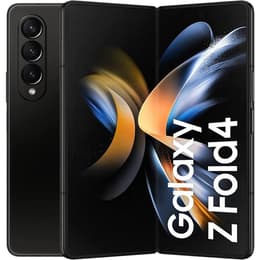
Galaxy Z Fold4
Galaxy Z Fold4
Starting at

Refurbished price:£352.00

Versus £1,889.00 new

See options
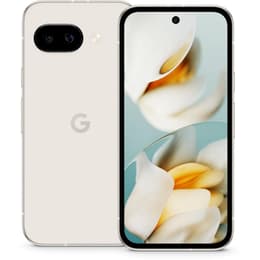
Google Pixel 9a
Google Pixel 9a
Starting at

Refurbished price:£319.00

Versus £499.00 new

See options

Ratings

The Samsung Galaxy Z Fold4, released in August 2022, is a premium foldable smartphone that transforms from a traditional phone into a tablet-sized display. In contrast, the Google Pixel 9A, launched in April 2025, is a conventional slab-style smartphone designed to offer a balanced and user-friendly experience. Both devices operate on the Android platform but cater to distinct user preferences, primarily differing in their form factor and release timelines.

Scores

Durability

When considering the longevity of these devices, both offer robust software support, though with different timelines due to their respective release years.

  • Software Updates: The Galaxy Z Fold4, released in 2022, typically receives 4-5 years of major Android OS updates and 5 years of security updates from its launch. The Google Pixel 9A, being a newer device from 2025, benefits from Google's extended software support policy, potentially offering 7 years of OS and security updates, ensuring a longer period of current features and security.
  • Physical Durability: The Z Fold4 features a complex foldable display mechanism, which, while advanced, introduces a crease and requires careful handling. It boasts an IPX8 water resistance rating, protecting against submersion. The Pixel 9A, with its conventional design, is generally considered more physically robust for everyday bumps and drops, and carries an IP68 rating for water and dust resistance. Its display is protected by Corning Gorilla Glass 3, which offers scratch resistance but may be more vulnerable to drops compared to newer glass technologies.
  • Practical Lifespan: Users prioritizing the absolute longest software support will find the Pixel 9A more appealing. Those who value the innovative foldable design and are comfortable with its specific care requirements will find the Z Fold4 offers a premium experience for its supported lifetime.

Year of Release

2022

2025

Compatible with latest Update

Yes

Yes

OS

Android

Android

Foldable

Yes

No

Performance

The performance capabilities of these two smartphones cater to different usage intensities, largely influenced by their release dates and intended market segments.

  • Processing Power: The Galaxy Z Fold4 is equipped with a high-end processor from its release year, capable of handling demanding applications and multitasking smoothly across its dual displays. The Pixel 9A, featuring a current-generation processor, delivers strong performance for daily tasks, app loading, and moderate gaming, with users reporting smooth interactions.
  • Multitasking and Responsiveness: The Z Fold4, with its larger RAM capacity, is designed for extensive multitasking, allowing users to run multiple applications simultaneously on its expansive inner screen without significant slowdowns. The Pixel 9A, typically with 8GB of RAM, offers capable multitasking for most users, allowing easy switching between several open applications.
  • Battery Behavior: The Z Fold4, despite its dual screens, offers a battery life that can last through a full day of mixed usage, with power management optimizations contributing to its endurance. The Pixel 9A features a larger battery capacity, with user reports indicating it can comfortably last more than a day, even with heavy use, making it a strong contender for users prioritizing extended usage between charges.

Memory (GB)

12 GB

8 GB

Screen quality

The display experience is a primary differentiator between these two devices, offering distinct form factors and visual characteristics.

  • Display Technology & Size: The Galaxy Z Fold4 features two Dynamic AMOLED 2X displays: a 6.2-inch cover screen and a large 7.6-inch foldable internal screen. Both offer vibrant colors, deep blacks, and excellent contrast, providing a versatile viewing experience. The Pixel 9A features a single, high-quality OLED display, typically around 6.3 inches, providing a clear and bright viewing experience.
  • Resolution and Clarity: The Z Fold4's internal display offers a high resolution, resulting in sharp text and detailed images across its large canvas, suitable for immersive media consumption and productivity. The Pixel 9A's display provides a resolution of 1080x2424 pixels, ensuring crisp visuals for everyday use.
  • Brightness and Smoothness: Both the Z Fold4's internal and cover screens support a 120Hz adaptive refresh rate, resulting in very smooth scrolling and animations. The Pixel 9A also features a 120Hz refresh rate and offers high peak brightness, making content easily viewable even in bright outdoor conditions.

Resolution

1812 x 2176

2424 x 1080

Audiovisual

Both devices offer capable camera systems, though they approach photography with different hardware philosophies and software optimizations.

  • Rear Camera System: The Galaxy Z Fold4 features a triple-lens rear camera system, including a 50MP main sensor, a 12MP ultrawide, and a 10MP telephoto lens with 3x optical zoom. It delivers detailed and vibrant photos in various lighting conditions. The Pixel 9A typically comes with a dual-camera setup, featuring a 48MP main sensor and a 13MP ultrawide lens. It leverages Google's computational photography for excellent image processing, especially in bright environments.
  • Low-Light and Video Performance: The Z Fold4 shows improved low-light performance over its predecessor, capturing clarity even in challenging conditions. The Pixel 9A also performs well in low-light scenarios, with users noting punchy colors and detailed textures, though low-light video can show more noise. Both devices offer capable video recording, with the Z Fold4 supporting up to 4K resolution.
  • Front Cameras and Audio: The Z Fold4 has a 10MP cover screen camera and a 4MP under-display camera on the main screen, with the cover camera being the preferred option for selfies. The Pixel 9A features a 13MP front-facing camera, providing clear selfies. Both devices offer decent microphone quality for calls and good speaker output for media consumption.

Front camera

4 megapixels

13 megapixels

Miscellaneous

Beyond their core functionalities, several practical elements distinguish these two devices in terms of connectivity, physical attributes, and unique features.

  • Connectivity and Ports: The Galaxy Z Fold4 supports 5G, Wi-Fi 6E, and Bluetooth 5.2. The newer Pixel 9A is likely to feature more current standards, such as Wi-Fi 802.11 a/b/g/n/ac/ax and Bluetooth v5.30, offering potentially faster and more stable wireless connections. Both devices utilize a USB-C port for charging and data transfer.
  • Biometrics and Sensors: The Z Fold4 features a side-mounted fingerprint sensor for secure unlocking. The Pixel 9A is expected to have an under-display fingerprint sensor and also offers face recognition.
  • Design and Handling: The Z Fold4 is a heavier device at 263 grams and is thicker when folded, offering a substantial feel. It also supports the S Pen for note-taking and drawing. The Pixel 9A is significantly lighter and more compact, designed for comfortable one-handed use and easy pocketability, without S Pen support. The Z Fold4's build materials include Armor Aluminum, while the Pixel 9A features a plastic back and Gorilla Glass 3 on the front.

Weight

263 g

186 g

Screen size (in)

7.6

6.3

Mobile network

5G

5G

SIM card

Dual Physical SIM + eSIM

Physical SIM + eSIM

Carrier compatibility

Unlocked

Unlocked

The Samsung Galaxy Z Fold4 and Google Pixel 9A offer distinct smartphone experiences, each with its own set of strengths and considerations. Users often praise the Z Fold4 for its innovative foldable design, which provides a large tablet-like screen for productivity and immersive media, alongside a capable camera system for its time. Criticisms sometimes revolve around its bulk when folded and the inherent fragility concerns of a foldable display, despite advancements in durability.

The Pixel 9A, on the other hand, is frequently lauded for its exceptional battery life, consistent camera performance driven by computational photography, and Google's commitment to long-term software updates. Users appreciate its smooth performance for everyday tasks and its robust water and dust resistance. Some common feedback points include its more traditional design, which might be seen as less exciting than a foldable, and the use of older display protection technology.

Users prioritizing a cutting-edge, versatile device that doubles as a small tablet for multitasking and media consumption may prefer the Galaxy Z Fold4. Its unique form factor and S Pen support make it suitable for those who need a larger canvas on the go. Conversely, users who value extended battery life, consistent camera performance, and a longer period of software support in a more conventional, durable form factor will find the Google Pixel 9A well-suited to their needs. Both devices, whether new or as quality-assured refurbished options, enable informed and sustainable choices for different user profiles.
See all articles

Our recent comparisons