

Compare models

Galaxy Z Flip7 Vs iPhone 17 Pro

  • 1-year minimum warranty
  • Free delivery on all items
  • Free 30-day returns
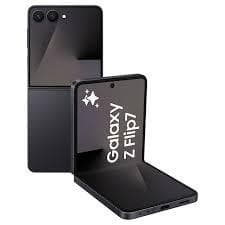
Galaxy Z Flip7
Starting at

Refurbished price:£470.00

Versus £1,156.31 new

See options
iPhone 17 Pro
Starting at

Refurbished price:£813.00

Versus £1,099.00 new

See options

Differences at a glance

The Samsung Galaxy Z Flip7 (2025) and the Apple iPhone 17 Pro (2025) represent two distinct approaches to high-end mobile engineering, contrasting a foldable clamshell design with a conventional slab smartphone structure. While the Galaxy Z Flip7 prioritizes pocket-friendly portability through a folding screen layout, the iPhone 17 Pro focuses on robust unibody durability and performance density. Running on Android and iOS respectively, these devices serve different structural preferences while offering modern connectivity and advanced daily utility.

Available Models

Colour

Storage

Scores

Durability

Both smartphones provide solid multi-year software and hardware support, though their mechanical designs introduce different longevity considerations for daily wear.

  • Release timeline and build structure: Released in July 2025, the Galaxy Z Flip7 utilizes a flexible folding display and a hinge mechanism, whereas the September 2025 iPhone 17 Pro features a rigid aluminum unibody protected by reinforced ceramic glass layers on both sides.
  • Software longevity: Both manufacturers provide extensive multi-year operating system updates and security patches, ensuring each device stays current for several years of active ownership.
  • Repairability and practical lifespan: Conventional slab designs like the iPhone generally present fewer structural vulnerabilities over extended use cycles, while folding devices require careful handling around the primary screen crease area over years of regular opening and closing.

Year of Release

2025

2025

Compatible with latest Update

Yes

Yes

OS

Android

iOS

Foldable

Yes

No

Performance

System responsiveness and energy management vary due to differences in cooling architecture, memory management, and overall hardware layout.

  • Storage and multitasking: Both devices begin with ample baseline storage configurations and generous RAM allocations, allowing demanding applications and background tasks to run concurrently without stuttering.
  • Battery behavior: The iPhone 17 Pro benefits from efficient power management that sustains long periods of media playback, whereas the Galaxy Z Flip7's compact folding footprint houses a slightly smaller cell that may require a top-up during heavy usage days.
  • Everyday processing: Advanced internal processors in both models handle rapid app loading, complex graphics rendering, and intensive multitasking smoothly, maintaining a high level of system fluidity during demanding tasks.

Screen quality

Visual output relies on advanced OLED technology in both models, though their form factors create entirely different viewing experiences.

  • Display technology: The Galaxy Z Flip7 opens into a large flexible panel accompanied by a functional outer cover screen for quick interactions, while the iPhone 17 Pro uses a rigid, flat display featuring adaptive high refresh rates for smooth scrolling.
  • Brightness and clarity: Both screens deliver sharp resolutions and high peak outdoor brightness levels, ensuring text and images remain legible under direct sunlight.
  • Viewing ergonomics: The foldable inner screen provides an immersive, expansive canvas for media consumption, whereas the conventional proportions of the iPhone offer a traditional, crease-free viewing surface.

Resolution

1080x2520

2622x1206

Audiovisual

Multimedia capture and audio output cater to different content creation styles and everyday consumption habits.

  • Camera systems: The iPhone 17 Pro employs a triple high-resolution lens arrangement geared toward versatile optical zoom and detailed professional video recording, while the Galaxy Z Flip7 utilizes a dual rear camera setup that pairs well with flexible angles for hands-free framing.
  • Low-light and video performance: Both models process low-light scenes effectively to reduce visual noise, though the iPhone lineup includes specialized production tools and high-fidelity video codecs suited for mobile filmmakers.
  • Audio output: Built-in stereo speakers on both devices provide balanced sound reproduction for hands-free calls, casual media streaming, and gaming without requiring external speakers.

Main camera

50 megapixels

48 megapixels

Front camera

10 megapixels

18 megapixels

Miscellaneous

External connections, physical dimensions, and security options define how each device integrates into daily routines.

  • Connectivity and ports: The iPhone 17 Pro features a universal USB-C connection alongside advanced wireless standards, while the Galaxy Z Flip7 relies on USB-C charging and comprehensive global 5G network compatibility.
  • Authentication sensors: Security is handled via facial recognition on the Apple device and a side-mounted fingerprint sensor integrated into the power key on the Samsung foldable.
  • Physical handling: The Galaxy Z Flip7 folds down into a compact square that slips easily into smaller pockets, whereas the iPhone 17 Pro maintains a traditional pocket profile with a solid, weighted feel in the hand.

Weight

188 g

206 g

Screen size (in)

6.9

6.3

Mobile network

5G

5G

SIM card

Physical SIM + eSIM

Physical SIM + eSIM

Carrier compatibility

Unlocked

Unlocked

Connector

USB-C

USB-C

What the community thinks

User feedback highlights distinct preferences for each device across community forums. Owners of the Galaxy Z Flip7 frequently praise its compact folded size, eye-catching folding utility, and the convenience of the outer display for quick notifications. Conversely, iPhone 17 Pro users routinely commend its reliable battery endurance, dependable unibody construction, and smooth integration within the broader Apple ecosystem. Common criticisms for the foldable model occasionally center on visible screen crease concerns over time, while some users note that the traditional slab phone lacks the novel pocketability of a flip design.

When deciding between these two options, user priorities serve as the primary guide. Users prioritizing compact pocketability, innovative form factors, and a flexible folding display layout may prefer the Galaxy Z Flip7. Meanwhile, users prioritizing long battery endurance, a rigid unibody build, and advanced video capture tools will lean toward the iPhone 17 Pro. For buyers exploring sustainable purchasing routes, choosing a quality-assured refurbished option provides an eco-friendly alternative that reduces electronic waste while delivering fully tested hardware performance.