
Compare models
Galaxy Z Flip7 Vs Google Pixel 8 Pro
- 1-year minimum warranty
- Free delivery on all items
- Free 30-day returns
Differences at a glance
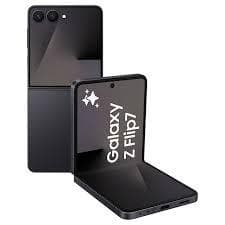
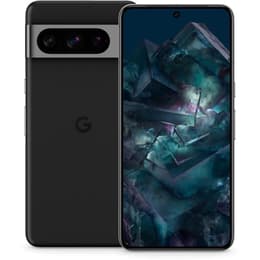
The Samsung Galaxy Z Flip7 (2025) and the Google Pixel 8 Pro (2023) represent two very different approaches to modern smartphone engineering. The Galaxy Z Flip7 utilizes a foldable clamshell form factor with a compact footprint, while the Google Pixel 8 Pro adheres to a traditional slate design featuring a large, uninterrupted display and a specialized multi-lens camera layout. Both devices run the Android operating system, though they offer distinct hardware foundations and unique structural benefits that cater to contrasting daily usage styles.
Available Models
Colour
Storage (GB)
Scores
Durability
When evaluating structural longevity and software support, both smartphones offer robust frameworks suited for long-term ownership, though their physical builds differ significantly.
- Release timeline and hardware age: The Google Pixel 8 Pro debuted in late 2023, whereas the Galaxy Z Flip7 arrived in mid-2025, giving the Samsung device a newer hardware baseline.
- Software longevity: Both manufacturers provide extensive multi-year software and security support schedules to ensure the operating system stays current over time.
- Physical durability: The Pixel 8 Pro relies on a traditional rigid slate body with hardened glass, while the Galaxy Z Flip7 features a foldable main screen mechanism that requires distinct hinge maintenance over its operational lifecycle.
Year of Release
2025
2023
Performance
Day-to-day processing capability and resource management allow both devices to handle multitasking, demanding applications, and system navigation with high responsiveness.
- Multitasking capacity: Both models include generous system memory configurations that enable smooth switching between multiple background tasks and open applications without noticeable stutter.
- System responsiveness: App loading speeds, web browsing fluidity, and general user interface navigation operate reliably thanks to optimized current-generation architectures.
- Thermal and battery behavior: The Pixel 8 Pro relies on a traditional cell capacity to power its large display throughout a standard day, while the Galaxy Z Flip7 balances a more compact battery footprint with power-efficient internal components.
Screen quality
Visual output differs notably due to the structural divergence between a folding panel and a large fixed glass screen.
- Display technology: The Galaxy Z Flip7 features a flexible OLED panel that folds in half alongside an expanded exterior cover screen, while the Pixel 8 Pro uses a large flat OLED screen with high peak brightness levels.
- Clarity and resolution: Both devices deliver sharp text reproduction and vivid color rendering, making them well-suited for media streaming and reading documents.
- Outdoor visibility: High brightness thresholds on both panels ensure that content remains legible under direct sunlight or bright ambient lighting conditions.
Audiovisual
Photography and media capture hardware are tailored to different shooting styles, balancing versatile multi-lens arrays against flexible framing angles.
- Camera layout: The Pixel 8 Pro equips a traditional triple-lens setup including dedicated telephoto zoom capabilities, whereas the Galaxy Z Flip7 utilizes a dual-lens rear system that doubles as a self-framing tool when folded into partial angles.
- Low-light performance: Advanced image processing software on both models helps preserve detail and manage noise in dimly lit environments.
- Audio and video output: Built-in microphone arrays capture clear speech for calls and video recordings, complemented by stereo speakers that deliver balanced sound output for media consumption.
Miscellaneous
Practical daily usability elements, connectivity standards, and physical handling characteristics define how each device integrates into routine activities.
- Connectivity and ports: Both smartphones support modern fifth-generation cellular networks, fast Wi-Fi protocols, and Bluetooth standards, utilizing a standard universal charging port.
- Biometric security: The Pixel 8 Pro incorporates an in-display fingerprint sensor alongside facial recognition, while the Galaxy Z Flip7 places its fingerprint scanner conveniently on the side power button.
- Physical handling: The Pixel 8 Pro provides a wider, traditional slate footprint, whereas the Galaxy Z Flip7 folds down into a square pocket-friendly shape that reduces its surface area during transit.
Screen size (in)
6.9
6.7
Mobile network
5G
5G
SIM card
Physical SIM + eSIM
Physical SIM + eSIM
Carrier compatibility
Unlocked
Unlocked
What the community thinks
User feedback highlights distinct preferences for each device based on physical form and daily routines. Owners of the Google Pixel 8 Pro frequently praise its reliable telephoto photography suite, expansive flat screen, and deep software integration. Conversely, users of the Galaxy Z Flip7 often emphasize the convenience of its pocket-friendly folding design and the utility of the exterior cover screen for quick notifications. Frequent criticisms for the folding model center on the visible crease across the main display, while the Pixel 8 Pro is occasionally noted for its heavier physical weight in comparison.
Users prioritizing pocket space and a compact, innovative footprint may prefer the Galaxy Z Flip7, while users prioritizing traditional screen estate and long-range zoom photography will lean toward the Pixel 8 Pro. For those seeking a sustainable choice, a quality-assured refurbished option provides an eco-friendly alternative to purchasing new hardware. Reviewing these core differentiators helps ensure that the chosen device matches your specific daily requirements.