
Galaxy Z Flip6 Vs Google Pixel 7A

Galaxy Z Flip6
Galaxy Z Flip6
Starting at

Refurbished price:£335.00

Versus £1,011.35 new

See options
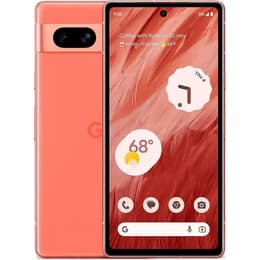
Google Pixel 7A
Google Pixel 7A
Starting at

Refurbished price:£128.00

Versus £649.99 new

See options

Ratings

The Samsung Galaxy Z Flip6 (released July 2024) and the Google Pixel 7A (released May 2023) represent distinct approaches to smartphone design and functionality. The Galaxy Z Flip6 offers a unique foldable form factor, allowing for a compact device that unfolds into a larger screen, while the Pixel 7A provides a traditional smartphone experience with a strong emphasis on camera capabilities and software integration. Both devices operate on the Android platform, but they cater to different user preferences through their core features and design philosophies.

Scores

Durability

When considering the long-term usability of these devices, their release timelines and software support policies are key differentiators.

  • Release Timeline: The Galaxy Z Flip6 is a more recent device, launched in July 2024, making it over a year newer than the Google Pixel 7A, which was released in May 2023. This difference in launch date inherently provides the Flip6 with a longer potential lifespan for receiving the latest software and security updates.
  • Software Support: Samsung has committed to providing seven years of operating system updates and security patches for the Galaxy Z Flip6. [1, 2, 4, 5, 7, 21] In contrast, the Google Pixel 7A is expected to receive five years of OS and security updates, with support extending until May 2028. [23, 32, 57, 58, 59] This means the Z Flip6 offers a significantly longer period of guaranteed software longevity.
  • Durability Features: The Galaxy Z Flip6 features an IP48 rating for dust and water resistance, along with Corning Gorilla Glass Victus 2 on its cover screen and back, and an Armor Aluminum frame. [1, 2, 4, 5, 7, 12, 13] The Pixel 7A has an IP67 rating, indicating strong dust and water resistance, and uses Corning Gorilla Glass 3 on its front display. [23, 29, 33, 34, 39, 49, 51, 56] User durability tests suggest the Pixel 7A is robust, with its plastic back proving resilient in bend tests. [29, 45, 46, 48]

Year of Release

2024

2023

Compatible with latest Update

Yes

Yes

OS

Android

Android

Foldable

Yes

No

Performance

The performance of both devices is driven by their respective processors, influencing how smoothly they handle daily tasks and demanding applications.

  • Processing Power: The Galaxy Z Flip6 is equipped with a current-generation processor, which allows it to handle demanding applications and multitasking smoothly. [1, 2, 4, 5, 6, 7, 8, 9, 12] This includes a vapor chamber cooling system, designed to maintain performance during extended use. [1, 5, 9, 12] The Google Pixel 7A utilizes a processor designed by Google, which provides a fluid experience for everyday tasks, including mobile gaming and app navigation. [23, 25, 31, 37, 42]
  • Multitasking and Storage: The Galaxy Z Flip6 comes with 12GB of RAM, which contributes to efficient multitasking and supports advanced AI features. [1, 2, 4, 5, 6, 8, 9, 12] It offers storage options of 256GB or 512GB. [1, 2, 4, 5, 6, 8, 12] The Pixel 7A features 8GB of RAM, which is sufficient for smooth operation and app switching, and comes with 128GB of internal storage. [23, 24, 25, 26, 31, 35, 37, 38, 43, 44, 49, 50, 52, 60] Neither device supports expandable storage via a microSD card. [2, 23, 49]
  • Battery Behavior: The Galaxy Z Flip6 houses a 4000 mAh battery, with user reports indicating it can last through a full day of typical use. [2, 5, 8, 12] The Pixel 7A has a 4385 mAh battery, and in testing, it demonstrated improved battery life compared to its predecessor, often lasting over 10 hours in continuous use scenarios. [23, 24, 26, 27, 31, 38, 43, 49, 50]

Memory (GB)

12 GB

8 GB

Screen quality

The visual experience on both devices is shaped by their display technologies, sizes, and refresh rates, catering to different viewing preferences.

  • Main Display Technology: The Galaxy Z Flip6 features a 6.7-inch Foldable Dynamic AMOLED 2X main display, offering vibrant colors, deep blacks, and an adaptive refresh rate ranging from 1Hz to 120Hz. [1, 2, 5, 6, 9, 10, 12, 22] Its peak brightness reaches 2600 nits, ensuring good visibility even in bright outdoor conditions. [1, 9, 10] The Google Pixel 7A has a 6.1-inch OLED display with HDR support and a 90Hz refresh rate, providing smooth scrolling and good color reproduction. [23, 24, 25, 27, 30, 31, 38, 42, 43, 49, 52, 53, 56]
  • Resolution and Clarity: The Z Flip6's main screen has a resolution of 1080 x 2640 pixels, resulting in a pixel density of approximately 426 pixels per inch (ppi). [1, 6, 10] The Pixel 7A offers a resolution of 1080 x 2400 pixels, with a pixel density of around 429 ppi. [23, 25, 30, 49] Both resolutions provide sharp and clear visuals for text and images.
  • Cover Screen (Z Flip6): A distinctive feature of the Z Flip6 is its 3.4-inch Super AMOLED cover display, which has a resolution of 720 x 748 pixels and a 60Hz refresh rate. [1, 4, 12, 13] This external screen allows for quick interactions and notifications without unfolding the device. [2, 3, 13] The Pixel 7A does not have a secondary display.

Resolution

1080 x 2640

1080 x 2400

Screen type

Foldable Dynamic LTPO AMOLED 2X

OLED

Audiovisual

Both smartphones offer capable camera systems, though their configurations and strengths vary, impacting the quality of photos and videos in different scenarios.

  • Rear Camera Systems: The Galaxy Z Flip6 features a dual-camera setup with a 50MP wide-angle main sensor (f/1.8, with optical image stabilization and dual-pixel autofocus) and a 12MP ultrawide sensor (f/2.2, with a 123-degree field of view). [1, 2, 3, 5, 12] The Pixel 7A also has a dual rear camera system, comprising a 64MP wide-angle main sensor (f/1.9, with OIS and dual pixel PDAF) and a 13MP ultrawide sensor (f/2.2, with a 120-degree field of view). [23, 25, 26, 28, 36, 38, 43, 49, 52, 56]
  • Photography Performance: The Z Flip6's main camera is noted for capturing clear and detailed images, with improved low-light performance and enhanced night mode. [3, 9, 12] It also includes AI features like ProVisual Engine for image processing. [3] The Pixel 7A is widely praised for its camera performance, delivering excellent photos in various conditions, including low light, thanks to Google's image processing capabilities. [25, 28, 31, 38]
  • Video and Front Camera: Both devices support 4K video recording at up to 60 frames per second with their rear cameras. [9, 23, 56] For selfies, the Z Flip6 has a 10MP front camera (f/2.2). [1, 2, 5, 12] The Pixel 7A features a 13MP front camera (f/2.2) with a wide 95-degree ultrawide field of view, suitable for group selfies. [23, 25, 28, 38, 43, 49, 56]

Main camera

50 megapixels

64 megapixels

Front camera

10 megapixels

13 megapixels

Miscellaneous

Beyond core features, several practical elements contribute to the overall user experience, from connectivity to physical design.

  • Connectivity and Ports: Both the Galaxy Z Flip6 and the Google Pixel 7A support 5G connectivity, Wi-Fi 6E, and Bluetooth 5.3. [6, 12, 23, 43] They both utilize a USB-C port for charging and data transfer. [6, 23, 35, 56] Neither device includes a traditional 3.5mm headphone jack. [23]
  • Biometrics and Sensors: The Z Flip6 features a side-mounted fingerprint sensor integrated into the power button, along with face recognition. [8, 11] The Pixel 7A offers both an under-display fingerprint sensor and face unlock. [27, 42, 56]
  • Physical Design and Handling: The Galaxy Z Flip6 has a unique foldable design, measuring 165.1 x 71.9 x 6.9 mm when unfolded and weighing 187g. [6, 8, 12, 20] Its clamshell form factor allows it to become very compact when folded. The Pixel 7A has a more traditional slate design, with dimensions of 152 x 72.9 x 9 mm and a weight of approximately 193.5g. [23, 24, 25, 30, 38, 40, 41, 43, 53] The Z Flip6 features a matte finish on its back and frame, while the Pixel 7A has a plastic back and metal frame. [1, 2, 25, 46, 48, 49]

Weight

187 g

193 g

Screen size (in)

6.7

6.1

Mobile network

5G

5G

SIM card

Physical SIM + eSIM

Physical SIM + eSIM

Carrier compatibility

Unlocked

Unlocked

The Samsung Galaxy Z Flip6 and Google Pixel 7A cater to different user priorities, each excelling in distinct areas. The Z Flip6 is often praised for its innovative foldable design, offering a large screen in a compact form factor, along with its strong performance and extended software support. Users appreciate its improved cameras and the less visible display crease compared to previous models. Some common observations include the cover screen's functionality being less extensive than some competitors and wired charging speeds not being the fastest. [1, 4, 7, 9, 11]

The Google Pixel 7A receives consistent acclaim for its exceptional camera performance, delivering high-quality photos across various conditions, a hallmark of Pixel devices. Its solid performance for its segment and the clean Android software experience are also frequently highlighted. Points of consideration for users often include its noticeable display bezels, slower charging speeds, and the single 128GB storage option. [25, 26, 29, 31, 38, 42, 45, 46, 48]

Users prioritizing a cutting-edge, compact design with long-term software commitment and strong overall performance, particularly for multitasking and demanding applications, may find the Galaxy Z Flip6 well-suited to their needs. Its foldable nature offers a unique blend of portability and screen real estate. Conversely, individuals who value a traditional smartphone form factor with a focus on outstanding photography, a smooth software experience, and robust everyday durability will likely lean towards the Google Pixel 7A. Both devices offer compelling features, and choosing between them depends on whether a user prioritizes a unique, foldable form factor with extended support or a more conventional, camera-centric experience. For those considering either device, exploring quality-assured refurbished options can provide an eco-friendly alternative.

See all articles

Our recent comparisons