
Galaxy Tab S6 Lite (10.4", 2024) Vs Galaxy Tab S8 (11.0", 2022)

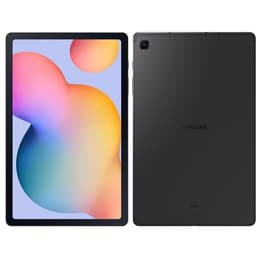
Galaxy Tab S6 Lite (10.4", 2024)
Starting at

Refurbished price:£160.00

Versus £420.00 new

See options
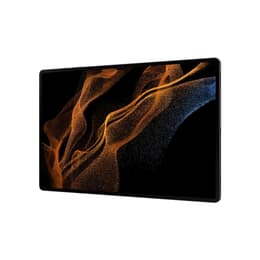
Galaxy Tab S8 (11.0", 2022)
Starting at

Refurbished price:£262.00

Versus £745.19 new

See options

Ratings

The Samsung Galaxy Tab S6 Lite 2024 and the Samsung Galaxy Tab S8 2022 are Android tablets designed for different user needs and expectations. Released two years apart, the Tab S8, launched in 2022, represents a more premium offering, while the Tab S6 Lite 2024, a refreshed version of an earlier model, focuses on delivering essential tablet functionality. The primary differentiators lie in their processing power, display technology, and overall feature sets, catering to users with varying demands for performance and visual experience.

Scores

Durability

When considering the longevity of these tablets, their release timelines and software support are key factors.

  • Release Timeline: The Galaxy Tab S6 Lite 2024 was released in March 2024, making it a newer device compared to the Galaxy Tab S8, which launched in February 2022. This difference in release date directly impacts their expected software support cycles.
  • Software Longevity: The Galaxy Tab S8 was promised 4 Android OS upgrades and 5 years of security updates from its release, suggesting support could extend until around 2027. The Galaxy Tab S6 Lite 2024 launched with Android 14 and One UI 6.1, and Samsung generally provides good software support for its devices, with some sources indicating a similar commitment of four years of Android version upgrades and five years of security updates. However, some user reports suggest that the Tab S6 Lite's hardware might struggle with future Android versions.
  • Build and Durability: The Galaxy Tab S8 features an Armor Aluminum body, which is designed to be more scratch-resistant and less prone to bending compared to previous models. The Tab S6 Lite 2024 also features a glass front with an aluminum back and frame, offering a solid build for its category.

Year of Release

2024

2022

Compatible with latest Update

Yes

Yes

OS

Android

Android

Performance

The performance capabilities of these two tablets cater to different usage intensities, primarily due to their internal components.

  • Processing Power: The Galaxy Tab S8 is equipped with a high-performance processor from its release year, enabling it to handle demanding applications, complex multitasking, and graphic-intensive games with fluidity. In contrast, the Galaxy Tab S6 Lite 2024 features a mid-range processor, which provides adequate performance for everyday tasks like web browsing, video streaming, and note-taking, but may show limitations with more intensive applications or heavy multitasking.
  • Multitasking and Responsiveness: With its more capable processor and higher RAM configurations (8GB or 12GB), the Tab S8 offers a smoother experience when switching between multiple applications and running several programs simultaneously. The Tab S6 Lite 2024, typically with 4GB of RAM, is suitable for lighter multitasking, though some users might notice occasional slowdowns when pushing its limits.
  • Storage and Battery: Both tablets offer expandable storage via microSD cards, providing flexibility for users who need more space for files and media. The Tab S8 has a larger 8000 mAh battery, generally providing extended usage times, while the Tab S6 Lite 2024 comes with a 7040 mAh battery, offering a full day of mixed use for many users. The Tab S8 also supports faster 45W wired charging compared to the Tab S6 Lite's 15W charging.

Memory (GB)

4 GB

8 GB

Processor

Exynos 1280

Qualcomm SM8450 Snapdragon 8 Gen 1

Screen quality

The visual experience on these tablets differs significantly, primarily due to their display specifications.

  • Display Technology and Resolution: The Galaxy Tab S8 features an 11-inch TFT LCD with a resolution of 2560 x 1600 pixels, offering sharp images and vibrant colors. The Galaxy Tab S6 Lite 2024 has a 10.4-inch TFT LCD with a resolution of 2000 x 1200 pixels. While both use TFT LCD panels, the Tab S8's higher resolution on a slightly larger screen results in a higher pixel density, contributing to a clearer and more detailed visual output.
  • Refresh Rate and Smoothness: A notable difference is the refresh rate. The Tab S8 boasts an adaptive 120Hz refresh rate, which provides a noticeably smoother scrolling experience and more fluid animations, especially beneficial for gaming and fast-paced content. The Tab S6 Lite 2024 operates at a standard 60Hz refresh rate, which is suitable for most everyday tasks but does not offer the same level of visual fluidity.
  • Brightness and Viewing Experience: The Tab S8 offers a brighter display, typically around 480-500 nits, making it more comfortable for outdoor use or in brightly lit environments. The Tab S6 Lite 2024 has a peak brightness of nearly 500 nits, which is solid for its class, but the Tab S8 generally provides a more impactful viewing experience with its higher resolution and adaptive refresh rate.

Resolution

1200 x 2000

1600 x 2560

Screen type

TFT LCD

TFT LCD

Pixel density

230ppp

280ppp

Audiovisual

The camera systems on both tablets are designed for different levels of photography and video conferencing needs.

  • Rear Camera Capabilities: The Galaxy Tab S8 features a dual-camera setup on the rear, including a 13 MP wide-angle lens and a 6 MP ultra-wide-angle lens, offering more versatility for capturing different scenes. It can record video at up to 4K resolution at 60 frames per second. The Galaxy Tab S6 Lite 2024 has a single 8 MP rear camera, which is suitable for basic document scanning and casual photography. It supports video recording at FHD (1920 x 1080) at 30fps, with 4K available on the main camera.
  • Front Camera for Video Calls: For video conferencing, the Tab S8 is equipped with a 12 MP ultra-wide front-facing camera, which includes features like auto-framing to keep subjects centered during calls. The Tab S6 Lite 2024 has a 5 MP front camera, which is adequate for standard video calls.
  • Audio Experience: Both tablets offer stereo speakers with Dolby Atmos support, providing an enhanced audio experience for media consumption. The Tab S8 also features a three-microphone setup with noise cancellation for clearer audio during calls.

Miscellaneous

Beyond core specifications, several practical elements differentiate these two Samsung tablets.

  • S Pen Integration: Both tablets include an S Pen, enhancing their utility for note-taking, drawing, and navigation. The S Pen with the Galaxy Tab S8 is an active stylus with Bluetooth capabilities, supporting Air Actions for remote control and magnetically attaching to the tablet for charging. The S Pen included with the Galaxy Tab S6 Lite 2024 is a passive stylus, offering precise writing and drawing without requiring a charge, but lacks the advanced features of the Tab S8's S Pen.
  • Connectivity and Ports: The Tab S8 supports newer connectivity standards, including Wi-Fi 6E and Bluetooth 5.2, offering faster and more stable wireless connections. It also features a USB 3.2 Type-C port for quicker data transfer. The Tab S6 Lite 2024 comes with Wi-Fi 5 and Bluetooth 5.3, and a USB 2.0 Type-C port. The Tab S6 Lite 2024 retains a 3.5mm headphone jack, which is absent on the Tab S8.
  • Biometric Security and Design: The Galaxy Tab S8 incorporates a side-mounted fingerprint scanner for secure and convenient unlocking, alongside facial recognition. The Tab S6 Lite 2024 relies solely on less secure 2D facial recognition, lacking a fingerprint sensor. In terms of physical design, the Tab S8 is slightly larger and heavier at 253.8 x 165.3 x 6.3 mm and 503g, compared to the Tab S6 Lite 2024's 244.5 x 154.3 x 7 mm and 465g, though both are designed for portability.

Weight

467 g

507 g

Screen size (in)

10.4

11.0

Network

Wi-Fi

Wi-Fi

Carrier compatibility

Without SIM Port

Without SIM Port

Connector

USB Type-C

USB Type-C

User sentiment for the Galaxy Tab S6 Lite 2024 often highlights its value as an accessible tablet with S Pen functionality, making it a suitable choice for students or those primarily focused on note-taking and media consumption. Users appreciate its included S Pen and decent battery life for everyday tasks. However, common criticisms include its display, which some find outdated due to the 60Hz refresh rate and TFT technology, and its performance, which can feel sluggish with demanding applications or extensive multitasking. The absence of a fingerprint scanner is also a frequent point of concern.

The Galaxy Tab S8, despite being an older model, is generally praised for its robust performance, vibrant 120Hz display, and the more advanced S Pen features. Users often commend its ability to handle productivity tasks and gaming smoothly, along with its premium build quality. Some users, however, note that while its LCD display is good, it doesn't offer the deep blacks and contrast of AMOLED panels found in higher-end tablets. Its camera system is considered capable for a tablet, especially for video calls.

Users prioritizing a smooth, responsive experience for productivity, creative work, or more intensive applications will find the Galaxy Tab S8 better suited to their needs. Its superior processor, higher refresh rate display, and advanced S Pen offer a more premium tablet experience. Conversely, users seeking a more budget-conscious option primarily for note-taking, casual browsing, and media consumption, where the S Pen is a key requirement, may lean towards the Galaxy Tab S6 Lite 2024. Both models are available as quality-assured refurbished options, providing an eco-friendly alternative for consumers.

See all articles

Our recent comparisons