
Compare models

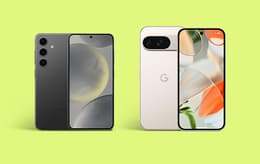
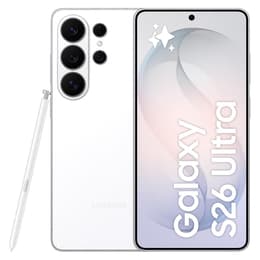
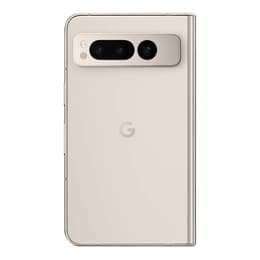
Galaxy S26 Ultra Vs Google Pixel Fold

  • 1-year minimum warranty
  • Free delivery on all items
  • Free 30-day returns
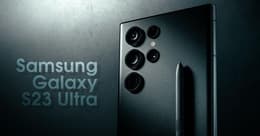
Galaxy S26 Ultra
Starting at

Refurbished price:£901.00

Versus £1,279.00 new

See options
Google Pixel Fold
Starting at

Refurbished price:£1,050.00

Versus £1,499.00 new

See options

Differences at a glance

The Samsung Galaxy S26 Ultra (2026) and the Google Pixel Fold (2023) showcase two distinct paths for mobile technology, contrasting a traditional slate flagship with an expansive foldable design. While both devices run on the Android operating system, they approach daily smartphone usage from entirely different physical and mechanical angles.

Choosing between them involves weighing a classic slab format equipped with an integrated stylus against a dual-screen device that transforms into a compact tablet.

Available Models

Colour

Storage (GB)

Scores

Durability

When comparing longevity and durability, these two devices reflect different release timelines and structural designs that influence how long they remain viable everyday companions.

  • Software longevity and support: The Galaxy S26 Ultra benefits from an extended software update timeline spanning several years, while the Google Pixel Fold operates on an earlier release window with a shorter remaining update schedule.
  • Build and mechanical design: The Galaxy S26 Ultra relies on a traditional slate structure with reinforced glass and frame materials, whereas the Google Pixel Fold incorporates a complex hinge and folding inner screen mechanism requiring careful handling over time.
  • Practical lifespan expectations: Traditional slab smartphones typically maintain predictable structural durability across years of heavy daily use, while foldable devices require careful maintenance of the flexible inner display layer.

Year of Release

2026

2023

Compatible with latest Update

Yes

Yes

OS

Android

Android

Foldable

No

Yes

Performance

Under the hood, these devices deliver high levels of system responsiveness and multitasking capabilities, though their internal configurations and memory management differ.

  • Everyday system responsiveness: Both devices handle rapid app switching, web browsing, and demanding mobile games smoothly, though the newer processor architecture in the Galaxy S26 Ultra ensures faster loading times for heavy software tasks.
  • Multitasking and memory capacity: The Google Pixel Fold utilizes its split-screen software features to manage multiple apps side-by-side on the large inner display, supported by ample memory configurations shared by the Galaxy S26 Ultra.
  • Battery behavior during heavy use: The Galaxy S26 Ultra sustains full-day power efficiency under intense loads, while the dual-screen configuration of the Google Pixel Fold demands more frequent charging when utilizing the expansive inner display extensively.

Screen quality

Display technology defines the core user experience of each device, offering contrasting formats optimized for different viewing habits.

  • Display format and versatility: The Galaxy S26 Ultra features a single, large traditional OLED panel with high brightness and sharp clarity, while the Google Pixel Fold provides a standard outer screen alongside a tablet-sized folding inner display.
  • Outdoor visibility and brightness: Both models deliver high peak brightness levels to ensure legibility under direct sunlight, though anti-reflective glass coatings on the Galaxy S26 Ultra enhance outdoor viewing comfort.
  • Refresh rate and visual smoothness: Each device supports a fast 120Hz refresh rate, ensuring fluid scrolling through web pages, smooth animation transitions, and responsive touch interactions across all screens.

Resolution

1440 x 3120

1840 x 2208

Audiovisual

Photography and media consumption capabilities vary significantly due to the distinct physical dimensions and sensor arrangements of each model.

  • Camera system versatility: The Galaxy S26 Ultra employs a multi-lens rear array featuring high-resolution main and periscope telephoto sensors for distant subjects, whereas the Google Pixel Fold utilizes a triple-lens setup optimized for natural color processing and everyday snapshots.
  • Video recording and low-light performance: Both smartphones handle low-light environments effectively using computational enhancement, though the Galaxy S26 Ultra offers advanced stabilization features for steady high-resolution video capture.
  • Media and speaker output: Built-in stereo speakers on both devices provide balanced audio output for podcasts and video streaming, while the inner folding screen of the Google Pixel Fold creates an immersive landscape for viewing media.

Front camera

12.0

8 megapixels

Miscellaneous

Practical everyday features, connectivity standards, and physical handling characteristics shape how these devices fit into daily routines.

  • Physical dimensions and handling: The Galaxy S26 Ultra features a slim slate profile with an included stylus silo, while the Google Pixel Fold offers a wider folded stance that opens into a heavier, square tablet format.
  • Biometric security and sensors: Both models integrate responsive fingerprint recognition and facial scanning capabilities for secure unlocking and authentication.
  • Connectivity and ports: Each device supports modern 5G networks, fast Wi-Fi standards, and universal USB-Type C ports for charging and data transfer.

Weight

214 g

283 g

Screen size (in)

6.9

7.6

Mobile network

5G

5G

SIM card

Physical SIM + eSIM

Physical SIM + eSIM

Carrier compatibility

Unlocked

Unlocked

What the community thinks

User feedback highlights distinct preferences for each device across community forums. Owners of the Galaxy S26 Ultra frequently praise its reliable battery performance, integrated stylus utility, and versatile zoom capabilities. Conversely, Pixel Fold users often emphasize the productivity benefits of the expansive inner screen and clean software interface, though some note that the heavier weight and visible screen crease require adjustment. Choosing a quality-assured refurbished option provides a sustainable choice for consumers interested in these advanced mobile platforms.

Users prioritizing productivity on a tablet-sized screen will find the Google Pixel Fold well-suited to their needs, while users prioritizing traditional ergonomics, long-range camera zoom, and stylus integration may lean toward the Galaxy S26 Ultra. Evaluating personal workflow habits and physical preferences serves as the most effective guide for making a final decision between these two distinct form factors.