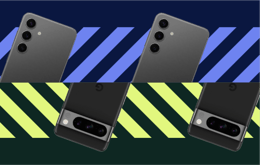

Compare models

Galaxy A17 Vs Google Pixel 7A

  • 1-year minimum warranty
  • Free delivery on all items
  • Free 30-day returns
Galaxy A17
Starting at

Refurbished price:£133.00

Versus £263.33 new

See options
Google Pixel 7A
Starting at

Refurbished price:£166.00

Versus £649.99 new

See options

Differences at a glance

The Samsung Galaxy A17 (2025) and the Google Pixel 7a (2023) are popular Android smartphones designed to deliver reliable everyday performance without the complexity of top-tier flagships. While both devices run the Android operating system, they approach user experience through different hardware and software philosophies.

The Galaxy A17 emphasizes modern software longevity and a larger screen, whereas the Pixel 7a focuses on advanced computational photography and refined processing capabilities. This comparison outlines their practical differences to help you choose the right model for your daily routines.

Available Models

Colour

Storage

Scores

Durability

When evaluating longevity, these two smartphones offer contrasting update timelines and hardware lifespans shaped by their different release years.

  • Software Support Window: The Galaxy A17 benefits from an extended software update commitment spanning multiple years, while the Pixel 7a operates on an older release timeline with a more finite remaining support period.
  • Expected Hardware Lifespan: Both devices are equipped to handle daily tasks for years, but the Galaxy A17 holds an advantage for users seeking multi-year operating system upgrades.
  • Repairability and Maintenance: Both models feature standard build designs that allow for straightforward component replacements through professional repair services, supporting sustainable device usage.

Year of Release

2025

2023

OS

Android

Android

Foldable

No

No

Performance

Underneath the surface, these smartphones utilize different hardware configurations that influence multitasking, battery endurance, and day-to-day responsiveness.

  • Everyday Responsiveness: Both devices handle common tasks like web browsing, social media apps, and streaming smoothly, though the Pixel 7a generally manages heavy application switching and complex multitasking with greater fluidity.
  • Battery Behavior: The Galaxy A17 includes a larger battery capacity that comfortably sustains a full day of mixed use, while the Pixel 7a relies on efficient power management to navigate daily usage despite a slightly smaller power cell.
  • Storage Configuration: Both models commonly offer standard internal storage capacities paired with sufficient memory to keep background applications running without frequent reloads.

Screen quality

Display characteristics differ notably between the two models in terms of physical dimensions, panel technology, and viewing comfort.

  • Display Technology: Both models feature vibrant OLED panels that deliver deep contrast levels, sharp details, and rich colors for media consumption and reading.
  • Size and Form Factor: The Galaxy A17 offers a larger screen workspace suited for media viewing and multitasking, whereas the Pixel 7a provides a more compact footprint that is easier to handle with one hand.
  • Refresh Rate and Smoothness: Both screens support an increased refresh rate that ensures smooth scrolling through web pages and fluid animations across the user interface.

Resolution

1080x2340

1080 x 2400

Audiovisual

Imaging and audio hardware shape how each device captures memories and reproduces sound for media playback.

  • Camera System Capabilities: The Pixel 7a utilizes advanced image processing software to produce detailed everyday and low-light photos, while the Galaxy A17 provides a versatile multi-lens setup for standard and wide-angle shooting.
  • Video and Audio Output: Both devices record stable high-definition video and feature built-in stereo speakers that deliver clear sound for voice calls and casual media playback.
  • Microphone Performance: Integrated noise suppression on both models ensures that voice calls and audio recordings remain clear in busy environments.

Front camera

50MP

13 megapixels

Miscellaneous

Practical daily features, physical handling characteristics, and connectivity standards vary between the two choices.

  • Connectivity and Ports: Both models support modern 5G networks, fast Wi-Fi standards, and reliable Bluetooth pairing alongside standard USB-C charging ports.
  • Security Sensors: Each device incorporates modern biometric authentication methods, including secure facial recognition and integrated fingerprint sensors for quick unlocking.
  • Build and Handling: The Galaxy A17 presents a lightweight plastic-backed construction optimized for larger-screen handling, while the Pixel 7a features a compact frame incorporating a distinctive camera bar design.

Weight

192 g

193 g

Screen size (in)

6.7

6.1

Mobile network

5G

5G

SIM card

Dual Physical SIM

Physical SIM + eSIM

Carrier compatibility

Unlocked

Unlocked

What the community thinks

User feedback highlights distinct preferences for each device across community forums. Owners of the Galaxy A17 frequently praise its reliable battery endurance, large display, and exceptional software support window for an affordable device. Conversely, Pixel 7a users often highlight the dependable camera performance, compact handling, and smooth processing capabilities as primary benefits. Common criticisms for the Galaxy A17 focus on its basic multitasking limits under heavy loads, while Pixel 7a users occasionally note that the battery requires more frequent recharging during heavy use.

Users prioritizing a larger screen and extended software longevity may prefer the Galaxy A17, while users prioritizing compact handling and advanced photo processing will find the Google Pixel 7a well-suited to their needs. For those looking for an eco-friendly alternative, choosing a quality-assured refurbished option provides a sustainable way to acquire either device while reducing electronic waste. Ultimately, the right choice depends on whether your daily routine leans toward media consumption on a larger display or streamlined photography in a smaller frame.