
Galaxy S25+ Vs iPhone 14

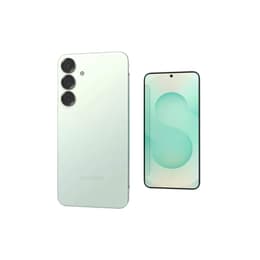
Galaxy S25+
Galaxy S25+
Starting at

Refurbished price:£549.00

Versus £958.39 new

See options
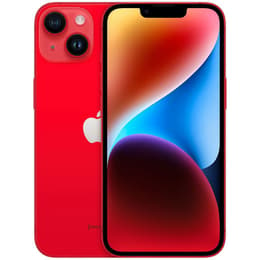
iPhone 14
iPhone 14
Starting at

Refurbished price:£229.00

Versus £599.00 new

See options

Ratings

The Samsung Galaxy S25 Plus, released in early 2025, and the Apple iPhone 14, launched in late 2022, represent different generations within the smartphone landscape. While both devices offer robust performance and premium features, the Galaxy S25 Plus benefits from more recent technological advancements, particularly in display technology and camera versatility. The iPhone 14 operates on Apple's iOS, known for its integrated ecosystem, while the Galaxy S25 Plus runs on Android with Samsung's One UI, offering extensive customization.

Scores

Durability

The expected lifespan of a smartphone is significantly influenced by its release timeline and the manufacturer's commitment to software updates. These two devices, originating from different years, offer distinct longevity prospects.

  • Software Support: The Samsung Galaxy S25 Plus, launched in February 2025, is projected to receive seven years of major Android OS upgrades and seven years of security updates, extending its software relevance potentially until 2032. In contrast, the iPhone 14, released in September 2022, typically receives around five to six years of major iOS updates, with support expected to continue until approximately September 2028.
  • Physical Durability: Both devices feature an IP68 rating for dust and water resistance, indicating a high level of protection against environmental elements. The iPhone 14 incorporates a Ceramic Shield front cover, designed for enhanced drop protection, while the Galaxy S25 Plus utilizes Gorilla Glass Victus 2 on its front and back, paired with an Armor Aluminum frame.
  • Repairability: The Galaxy S25 Plus has demonstrated a relatively high repairability score, with teardowns noting the use of standard Philips screws and an improved battery pull tab, making component replacement more straightforward. The iPhone 14 initially received a favorable repairability assessment due to its redesigned internal structure allowing easier access to components, but its score was later downgraded due to software restrictions that complicate repairs with non-genuine or unpaired parts.

Year of Release

2025

2022

OS

Android

iOS

Foldable

No

No

Performance

Performance is a critical aspect for daily smartphone use, encompassing everything from app responsiveness to handling demanding tasks. The Galaxy S25 Plus and iPhone 14 offer different levels of processing power and memory configurations.

  • Processing Power: The Galaxy S25 Plus is equipped with a current-generation processor, which provides a significant leap in performance, resulting in smoother animations and enhanced capabilities for artificial intelligence tasks. The iPhone 14 features a previous-generation processor, which still delivers reliable performance for everyday applications and multitasking.
  • Multitasking and Storage: The Galaxy S25 Plus comes with 12GB of RAM, supporting extensive multitasking and efficient handling of numerous open applications. It offers storage options of 256GB and 512GB. The iPhone 14 includes 6GB of RAM, which is sufficient for smooth operation and app switching, and is available with 128GB, 256GB, or 512GB of internal storage.
  • Battery Behavior: The Galaxy S25 Plus houses a 4900 mAh battery, often providing extended usage and good endurance, with users reporting it can last through a full day of heavy use. The iPhone 14 has a 3279 mAh battery, which generally offers all-day battery life for typical usage, though heavy users might find themselves needing to charge more frequently.

Memory (GB)

12 GB

6 GB

Screen quality

The display is the primary interface for smartphone interaction, and both devices offer high-quality viewing experiences with distinct characteristics.

  • Display Technology and Resolution: The Galaxy S25 Plus features a 6.7-inch Dynamic AMOLED 2X display with a QHD+ resolution of 3120x1440 pixels, resulting in a sharp 513 pixels per inch. The iPhone 14 has a 6.1-inch Super Retina XDR OLED display with a resolution of 2532x1170 pixels, providing a clear 460 pixels per inch.
  • Brightness and Smoothness: The Galaxy S25 Plus offers a 120Hz adaptive refresh rate, contributing to smoother scrolling and more fluid animations, along with a peak brightness of 2600 nits for excellent visibility in bright conditions. The iPhone 14 features a standard 60Hz refresh rate and a peak HDR brightness of 1200 nits, which provides good outdoor visibility and vibrant HDR content.
  • Viewing Experience: The larger, higher-resolution, and higher refresh rate display of the Galaxy S25 Plus offers a more immersive and responsive visual experience, particularly for media consumption and gaming. The iPhone 14's display, while smaller and with a lower refresh rate, still delivers excellent color accuracy and deep blacks characteristic of OLED technology.

Resolution

1440x3120

1170 x 2532

Audiovisual

Camera capabilities are a significant factor for many users, and both the Galaxy S25 Plus and iPhone 14 provide advanced photographic and videographic tools, though with different approaches.

  • Rear Camera System: The Galaxy S25 Plus boasts a versatile triple-camera setup, including a 50MP wide-angle main sensor, a 12MP ultra-wide camera, and a 10MP telephoto lens with 3x optical zoom, allowing for greater flexibility in capturing various scenes and distant subjects. The iPhone 14 features a dual-camera system with a 12MP wide-angle main sensor and a 12MP ultra-wide lens, focusing on high-quality image processing and low-light performance.
  • Photography Performance: The Galaxy S25 Plus delivers sharp, detailed photos with vibrant colors, and its improved image processing algorithms enhance overall quality, especially in challenging conditions. The iPhone 14 excels in producing consistent, natural-looking images with strong low-light capabilities, thanks to its larger sensor and Photonic Engine.
  • Video and Audio: Both devices offer high-quality video recording. The Galaxy S25 Plus supports Log file recording, providing more control for professional video editing. The iPhone 14 features Cinematic Mode for depth-of-field effects and Action Mode for enhanced video stabilization, making it suitable for capturing dynamic footage. Both phones provide clear audio recording and a good media consumption experience through their stereo speakers.

Miscellaneous

Beyond core features, several practical elements contribute to the overall user experience and daily convenience of a smartphone.

  • Connectivity and Ports: The Galaxy S25 Plus supports the latest Wi-Fi 7 and Bluetooth 5.4 standards, offering faster and more efficient wireless connections, and features a USB-C port for charging and data transfer. The iPhone 14 uses Wi-Fi 6 and Bluetooth 5.3, providing reliable wireless performance, and retains the Lightning port. Both devices support 5G connectivity.
  • Biometric Security: The Galaxy S25 Plus typically employs an under-display fingerprint sensor for secure unlocking. The iPhone 14 relies on Face ID, Apple's facial recognition system, for biometric authentication.
  • Design and Handling: The Galaxy S25 Plus has a 6.7-inch display and a design with flat metal edges, offering a modern aesthetic and a comfortable grip. The iPhone 14 features a 6.1-inch display, maintaining a compact form factor that is easy to handle with one hand. The Galaxy S25 Plus weighs approximately 190 grams, while the iPhone 14 is lighter at 172 grams.

Weight

190 g

172 g

Screen size (in)

6.7

6.1

Mobile network

5G

5G

SIM card

Dual Physical SIM

Physical SIM + eSIM

Carrier compatibility

Unlocked

Unlocked

The Samsung Galaxy S25 Plus and the iPhone 14 cater to different user preferences, largely due to their respective release timelines and operating systems. Users often praise the Galaxy S25 Plus for its vibrant, high-refresh-rate display, robust performance, and extended software support, making it a compelling choice for those seeking the latest Android innovations and a versatile camera system. Some common criticisms, however, point to its camera system, while capable, not always being class-leading compared to some direct competitors, and its design being perceived as somewhat iterative.

The iPhone 14 is frequently lauded for its consistent performance, reliable camera quality, and the seamless integration within the Apple ecosystem. Its strong video capabilities, including Action Mode, are also a highlight for many users. Conversely, some users express concerns about its 60Hz display refresh rate and battery life under heavy usage, and its repairability has been noted as challenging due to software-related part pairing restrictions.

Users prioritizing a cutting-edge display, a dedicated telephoto camera, and the longest possible software support in an Android ecosystem may find the Galaxy S25 Plus well-suited to their needs. Those who value the iOS experience, consistent performance, and advanced video features in a slightly more compact form factor might lean towards the iPhone 14. Both devices are available as quality-assured refurbished options, providing an eco-friendly alternative for consumers.

See all articles

Our recent comparisons