
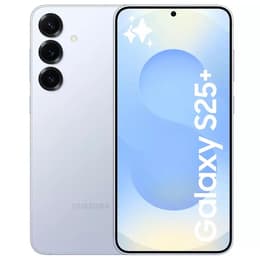
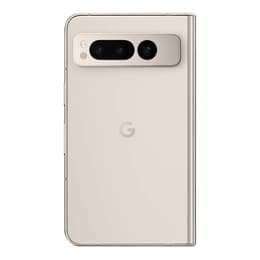

Galaxy S25+ Vs Google Pixel Fold

Galaxy S25+
Galaxy S25+
Starting at

Refurbished price:£550.00

Versus £958.39 new

See options
Google Pixel Fold
Google Pixel Fold
Starting at

Refurbished price:£371.00

Versus £1,499.00 new

See options

Ratings

The Samsung Galaxy S25 Plus, released in early 2025, represents a high-end traditional smartphone, while the Google Pixel Fold, launched in mid-2023, offers a distinct foldable smartphone experience. Both devices operate on the Android platform, but their fundamental design and user interaction differ significantly, catering to varied preferences for screen size and portability.

Scores

Durability

When considering the long-term usability of these devices, their release timelines and software support policies are key factors.

  • Release Timeline: The Samsung Galaxy S25 Plus was released in February 2025, making it a more recent device. The Google Pixel Fold, having launched in June 2023, is an earlier model.
  • Software Longevity: Samsung has committed to providing 7 years of OS and security updates for the Galaxy S25 series, extending support until 2032. The Google Pixel Fold is guaranteed 5 years of OS and security updates, with support expected until at least June 2028. This means the Galaxy S25 Plus offers a longer period of guaranteed software updates.
  • Physical Durability: The Galaxy S25 Plus features an aluminum frame and Corning Gorilla Glass Victus 2 on its display and back, along with an IP68 rating for water and dust resistance. The Pixel Fold incorporates Gorilla Glass Victus on its cover screen and an aluminum frame, but its inner foldable display uses a plastic protective layer. It carries an IPX8 rating for water resistance, indicating protection against submersion but not dust. The foldable design introduces a hinge mechanism, which is a unique point of consideration for long-term mechanical durability.

Year of Release

2025

2023

OS

Android

Android

Foldable

No

Yes

Performance

The performance of a smartphone is largely determined by its internal components and how efficiently they handle various tasks.

  • Processing Power: The Samsung Galaxy S25 Plus is equipped with a current-generation, high-performance processor (Snapdragon 8 Elite for Galaxy), manufactured using a 3nm process. This allows for smooth handling of demanding applications, efficient multitasking, and responsive gaming experiences. The Google Pixel Fold utilizes a previous-generation processor (Tensor G2). While capable of managing everyday tasks and general multitasking effectively, it may exhibit a performance difference in highly intensive applications or future-proof scenarios compared to the newer chip in the S25 Plus.
  • Memory and Storage: Both devices offer 12GB of RAM, which supports efficient multitasking and app switching. Storage options for both typically include 256GB and 512GB, providing ample space for applications, media, and files.
  • Battery Behavior: The Galaxy S25 Plus features a 4900 mAh battery. The Pixel Fold has a 4821 mAh battery. Actual battery life in daily use can vary based on screen usage, application demands, and network conditions, but the S25 Plus has a slightly larger capacity.

Memory (GB)

12 GB

12 GB

Screen quality

The display is a primary interface for user interaction, and both devices offer distinct visual experiences.

  • Display Technology and Size: The Samsung Galaxy S25 Plus features a single 6.7-inch Dynamic AMOLED 2X display. The Google Pixel Fold, as a foldable device, offers two OLED displays: a 5.8-inch cover screen and a larger 7.6-inch inner folding screen. The Pixel Fold's larger unfolded screen provides an expansive canvas for media consumption and productivity.
  • Resolution and Clarity: The Galaxy S25 Plus boasts a QHD+ resolution of 3120 x 1440 pixels, resulting in a high pixel density for sharp visuals. The Pixel Fold's cover screen has an FHD+ resolution of 2092 x 1080 pixels, while its inner screen has a resolution of 2208 x 1840 pixels. Both offer clear and detailed viewing, with the S25 Plus having a higher pixel density on its single display.
  • Brightness and Refresh Rate: Both devices feature a 120Hz adaptive refresh rate for smooth scrolling and fluid animations. The Galaxy S25 Plus offers a peak brightness of 2600 nits, ensuring excellent visibility even in bright outdoor conditions. The Pixel Fold's cover screen reaches 1550 nits peak brightness, and its inner screen reaches 1450 nits.

Resolution

1440x3120

1840 x 2208

Audiovisual

Both smartphones offer advanced camera systems, though with different approaches to imaging and features.

  • Rear Camera Systems: The Samsung Galaxy S25 Plus is equipped with a versatile triple-camera setup, including a 50MP main wide-angle camera, a 12MP ultra-wide camera, and a 10MP telephoto camera with 3x optical zoom. The Google Pixel Fold also features a triple rear camera system, comprising a 48MP main lens, a 10.8MP ultrawide lens, and a 10.8MP telephoto lens with 5x optical zoom. The Pixel Fold offers greater optical zoom capabilities.
  • Photography Performance: The Galaxy S25 Plus benefits from Samsung's ProVisual Engine and AI imaging system, enhancing features like Nightography zoom and overall image processing for various lighting conditions. The Pixel Fold is renowned for Google's computational photography, which excels in producing balanced images with strong dynamic range and features like Magic Eraser for post-capture editing.
  • Video Recording and Front Cameras: The Galaxy S25 Plus can record video at up to 8K resolution at 30 frames per second (fps) and features a 12MP front-facing camera. The Pixel Fold supports 4K video recording at 60fps and includes a 9.5MP camera on the cover screen and an 8MP camera on the inner display. The Pixel Fold's unique form factor allows for creative camera uses, such as using the main rear cameras for high-quality selfies with the cover screen as a viewfinder.

Miscellaneous

Beyond core specifications, several practical elements contribute to the overall user experience and device utility.

  • Connectivity: The Samsung Galaxy S25 Plus supports 5G connectivity, Wi-Fi 7, and Bluetooth 5.4. The Google Pixel Fold also supports 5G, along with Wi-Fi 6E and Bluetooth 5.2. The S25 Plus offers a newer Wi-Fi standard, potentially providing faster wireless speeds where supported.
  • Ports and Biometrics: Both devices utilize a USB Type-C port for charging and data transfer. The Galaxy S25 Plus features an ultrasonic in-display fingerprint sensor for secure unlocking. The Pixel Fold incorporates a side-mounted fingerprint sensor.
  • Physical Characteristics: The Galaxy S25 Plus measures 158.4 x 75.8 x 7.3 mm and weighs 190 grams. The Pixel Fold, due to its foldable nature, has different dimensions when folded (139.7 x 79.5 x 12.1 mm) and unfolded (139.7 x 158.7 x 5.8 mm), and weighs 283 grams. The Pixel Fold is notably heavier and thicker when folded, but offers a much wider screen when unfolded. Both devices feature aluminum frames.

Weight

190 g

283 g

Screen size (in)

6.7

7.6

Mobile network

5G

5G

SIM card

Dual Physical SIM

Physical SIM + eSIM

Carrier compatibility

Unlocked

Unlocked

Choosing between the Samsung Galaxy S25 Plus and the Google Pixel Fold involves weighing the benefits of a traditional flagship against the innovative design of a foldable device. Each model caters to different user priorities and usage patterns.

The Samsung Galaxy S25 Plus is well-suited for users who prioritize a consistent, high-performance smartphone experience with a long software support lifespan. Its vibrant, high-resolution display, robust camera system with advanced AI features, and durable build make it a strong contender for those seeking a reliable and powerful daily driver. Users who value a sleek, conventional form factor and cutting-edge processing power for demanding applications will find the S25 Plus to be a compelling option.

Conversely, the Google Pixel Fold is designed for individuals who desire an expansive screen experience in a more compact, portable package. Its unique foldable design offers versatility for both phone-like and tablet-like usage, making it ideal for media consumption, multitasking, and creative applications. Users who appreciate Google's renowned computational photography, a distinct software experience, and the ability to adapt their device to various tasks will find the Pixel Fold particularly appealing. However, its earlier release date means a shorter remaining software support window and a processor that, while capable, is not as current as the S25 Plus.

Ultimately, the decision hinges on whether a user prioritizes the established performance and longevity of a traditional flagship or the innovative form factor and unique user experience of a foldable. For those considering either device, exploring quality-assured refurbished options can provide an eco-friendly alternative, offering access to these technologies in a sustainable way.


See all articles

Our recent comparisons





