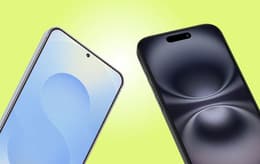
Compare models
Galaxy S25 Vs iPhone 17e
- 1-year minimum warranty
- Free delivery on all items
- Free 30-day returns
Differences at a glance
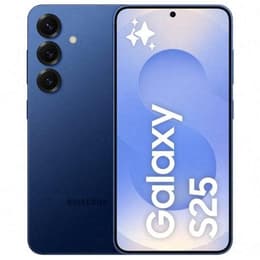
The Samsung Galaxy S25 (2025) and the iPhone 17e (2026) represent compact flagship and entry-tier options from two major smartphone manufacturers, running on the Android and iOS operating systems respectively. While they target users seeking high-end responsiveness in manageable form factors, they differ fundamentally in software ecosystem, hardware layouts, and feature prioritization. This comparison outlines these practical distinctions to help readers evaluate which device aligns with their daily needs.
Available Models
Colour
Storage
Scores
Durability
Both devices are built for longevity, though they approach software maintenance and physical resilience through different manufacturing standards and update commitments.
- Software lifecycle: The Galaxy S25 benefits from a multi-year commitment of Android OS and security updates, whereas the iPhone 17e utilizes Apple's extended iOS support cycle to ensure long-term software relevance.
- Build resilience: The Galaxy S25 incorporates structured aluminum framing and reinforced glass protection, while the iPhone 17e relies on a ceramic-shielded front and matte glass back designed to handle daily wear.
- Repair framework: Both models feature standardized internal layouts supported by growing networks of repair-conscious service providers, making a quality-assured refurbished option an eco-friendly and sustainable choice for long-term usage.
Year of Release
2025
2026
OS
Android
iOS
Foldable
No
No
Performance
Underneath the exterior, both smartphones handle demanding day-to-day applications, resource-heavy multitasking, and mobile gaming smoothly thanks to modern internal hardware architectures.
- System fluidity: Apps open instantly, and background tasks transition without noticeable stutter, ensuring reliable performance during heavy navigation or media streaming.
- Memory and storage: The Galaxy S25 pairs substantial base RAM with flexible storage configurations, while the iPhone 17e focuses on high-capacity starting tiers to accommodate large media libraries and offline files.
- Power management: Energy-efficient processing ensures both phones maintain battery levels through a full day of typical mixed usage, though heavy 3D gaming or continuous video recording will require more frequent recharging.
Screen quality
Display technology on both devices emphasizes clarity, outdoor visibility, and responsive touch feedback for comfortable daily media consumption.
- Panel technology: Both models utilize vibrant OLED displays with deep black levels and accurate color reproduction, ensuring sharp text rendering and rich media viewing.
- Brightness performance: High peak brightness modes allow screen content to remain clearly legible under direct sunlight or bright outdoor environments.
- Motion smoothness: Smooth refresh rates ensure that scrolling through web pages, documents, and social media feeds remains fluid and visually comfortable.
Resolution
1080x2340
2532 x 1170
Audiovisual
Imaging capabilities cater to varied photography and video recording preferences, balancing multi-lens versatility with straightforward point-and-shoot reliability.
- Lens configurations: The Galaxy S25 features a versatile multi-lens rear array including dedicated optical zoom, while the iPhone 17e focuses on a single high-resolution primary lens supplemented by advanced computational photography.
- Low-light capture: Both devices apply automated image processing to brighten dark environments, control noise, and preserve realistic detail during evening photography.
- Video and audio: High-definition video recording features robust stabilization and clear stereo sound capture, supported by balanced internal microphones for calls and voice memos.
Miscellaneous
Practical everyday usability is shaped by connectivity standards, physical dimensions, and biometric security features tailored to modern routines.
- Connectivity and ports: Both models support rapid 5G cellular networks, modern Wi-Fi standards, and universal USB-C connectivity for data transfer and charging.
- Security sensors: The Galaxy S25 integrates an under-display fingerprint reader alongside facial recognition, whereas the iPhone 17e relies entirely on secure facial mapping technology.
- Physical handling: Slim profiles and lightweight construction make both handsets comfortable for one-handed operation and easy pocket storage.
Weight
162 g
169 g
Screen size (in)
6.2
6.1
Mobile network
5G
5G
SIM card
Physical SIM + eSIM
Physical SIM + eSIM
Carrier compatibility
Unlocked
Unlocked
Connector
USB-C
USB-C (USB 2)
What the community thinks
User feedback from online communities highlights distinct preferences for each device. Owners of the Galaxy S25 frequently praise its flexible multi-lens camera setup and the customizable nature of its software environment, though some note that battery capacity can drain faster during extended gaming sessions. Conversely, users of the iPhone 17e appreciate its straightforward interface, generous base storage capacity, and reliable daily battery endurance, while occasionally mentioning the absence of dedicated telephoto hardware as a limitation for distant subjects.
Users prioritizing multi-lens versatility and software customization may prefer the Galaxy S25, while users prioritizing a streamlined operating system and high-capacity local storage will lean toward the iPhone 17e. Readers seeking to minimize environmental impact can also explore quality-assured refurbished options as a sustainable alternative that aligns with these functional profiles.