
Compare models

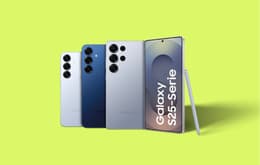
Galaxy S25 Vs Galaxy S26

  • 1-year minimum warranty
  • Free delivery on all items
  • Free 30-day returns
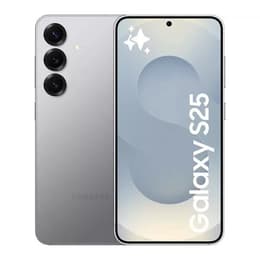
Galaxy S25
Starting at

Refurbished price:£376.00

Versus £766.13 new

See options
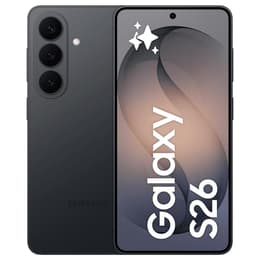
Galaxy S26
Starting at

Refurbished price:£563.00

Versus £999.00 new

See options

Differences at a glance

The Samsung Galaxy S25 (2025) and the Samsung Galaxy S26 (2026) represent consecutive generations of compact flagship smartphones. While both devices share a similar philosophy focusing on pocket-friendly dimensions and versatile triple-camera systems, the Galaxy S26 introduces updated internal hardware and refined power management that set it apart from its predecessor. Both devices run on the Android operating system paired with Samsung's custom interface, providing a consistent software experience with generational refinements.

Available Models

Colour

Storage (GB)

Scores

Durability

When evaluating hardware longevity and software support, both devices offer robust multi-year lifespans, though their release timelines place them at different stages of their support cycles.

  • Software Support Duration: Both models receive long-term operating system upgrades and security patches, with the Galaxy S26 benefiting from an extended support window due to its later release date.
  • Repairability and Build: Both smartphones feature sturdy aluminum frames and reinforced glass construction, scoring similarly in structural resilience and standard repair procedures.
  • Expected Lifespan: Users can expect several years of reliable daily operation from either model, making quality-assured refurbished options a sustainable choice for reducing electronic waste without compromising on longevity.

Year of Release

2025

2026

OS

Android

Android

Foldable

No

No

Performance

Underneath the surface, the two generations approach everyday computing and battery management with noticeable evolutionary differences.

  • Multitasking and Responsiveness: Both devices handle demanding applications, heavy multitasking, and mobile gaming smoothly, though the newer processor in the Galaxy S26 provides additional headroom for future software demands.
  • Storage Configurations: The Galaxy S26 shifts toward higher baseline storage tiers out of the box, whereas the Galaxy S25 offers flexible lower storage entry points depending on the chosen configuration.
  • Battery Behavior: The Galaxy S26 features a slightly larger battery capacity, which translates to more reliable end-of-day remaining power during intensive use compared to the Galaxy S25's more compact cell.

Screen quality

Visual output and display clarity remain core strengths for both generations, offering bright and responsive viewing surfaces.

  • Display Technology: Both models utilize vibrant OLED panels that deliver deep contrast levels, sharp text rendering, and accurate color reproduction.
  • Outdoor Visibility: High peak brightness capabilities on both devices ensure that content remains legible under direct sunlight or bright ambient lighting conditions.
  • Refresh Rate and Smoothness: Adaptive high refresh rate support ensures fluid scrolling through web pages and smooth animation transitions during general navigation.

Resolution

1080x2340

1080 x 2340

Audiovisual

Photography, video recording, and media consumption capabilities follow a familiar hardware blueprint with software-driven enhancements.

  • Camera System Setup: Both smartphones feature a versatile triple-lens arrangement comprising main, ultra-wide, and telephoto options for varied shooting perspectives.
  • Low-Light Performance: Processing algorithms on both generations manage shadow detail and noise reduction effectively, with the newer model introducing minor refinements to night video clarity.
  • Media Output: Stereo speakers on both devices deliver balanced audio for casual video playback, accompanied by clear microphone arrays suitable for voice calls and recording.

Miscellaneous

Practical everyday features, physical dimensions, and connectivity standards shape how these devices fit into daily routines.

  • Connectivity Standards: Both models support widespread 5G networks, modern Wi-Fi protocols, and Bluetooth for reliable peripheral pairing.
  • Physical Dimensions: Both maintain compact form factors with narrow bezels, though minor variations in weight and thickness affect hand-holding comfort.
  • Security Sensors: In-display fingerprint scanners and facial recognition come standard on both devices for secure authentication.

Weight

162 g

167 g

Screen size (in)

6.2

6.3

Mobile network

5G

5G

SIM card

Physical SIM + eSIM

Dual Physical SIM + eSIM

Carrier compatibility

Unlocked

Unlocked

What the community thinks

Feedback from user communities indicates that both smartphones excel at providing flagship performance in pocket-friendly footprints. Common praise for the Galaxy S25 centers on its lightweight handling and reliable processing speeds, while some users note that its battery requires more frequent top-ups during heavy usage days. Conversely, users frequently highlight the Galaxy S26 for its improved battery endurance and minor efficiency gains, though some observe that its physical and camera changes are incremental compared to the previous year.

Users prioritizing maximum daily battery longevity and extended software windows may prefer the Galaxy S26, while those seeking a streamlined, compact flagship experience at a different stage of its product lifecycle will find the Galaxy S25 well-suited to their needs. Exploring quality-assured refurbished options for either model provides an eco-friendly alternative that supports sustainable technology consumption without sacrificing core capabilities.