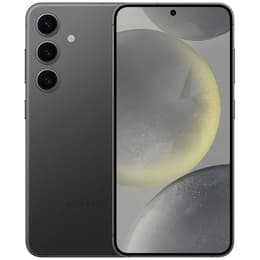


Galaxy S24 Vs Google Pixel 9a

Galaxy S24
Galaxy S24
Starting at

Refurbished price:£273.00

Versus £817.67 new

See options
Google Pixel 9a
Google Pixel 9a
Starting at

Refurbished price:£319.00

Versus £499.00 new

See options

Ratings

The Samsung Galaxy S24, released in January 2024, and the Google Pixel 9A, launched in March 2025, represent distinct approaches to the modern smartphone experience. While both devices operate on the Android platform, they differentiate themselves through their core hardware philosophies and software experiences. The Galaxy S24 focuses on a refined flagship experience with advanced processing power and a versatile camera system, whereas the Pixel 9A emphasizes a clean Android interface, robust battery life, and Google's signature computational photography.

Scores

Durability

When considering the long-term usability of these devices, both the Galaxy S24 and the Pixel 9A offer substantial software support, a key factor for extended life. However, their physical durability and ease of repair present some differences.

  • Software Longevity: Both the Samsung Galaxy S24 and the Google Pixel 9A are notable for their extended software support, with both manufacturers promising seven years of operating system and security updates from their respective release dates. This means the Galaxy S24 is expected to receive updates until 2031, and the Pixel 9A until at least March 2032, ensuring a secure and up-to-date experience for many years.
  • Physical Durability: The Galaxy S24 features an IP68 rating for dust and water protection and utilizes Gorilla Glass for screen protection, contributing to its overall resilience. The Pixel 9A also carries an IP68 rating and uses Gorilla Glass 3 for its display. However, some user reports suggest that the Pixel 9A's speaker grill mesh can be easily dislodged, potentially compromising its water resistance over time.
  • Repairability: The Galaxy S24 has received high repairability scores, with assessments noting easy access to internal components and straightforward battery replacement thanks to pull tabs. In contrast, the Pixel 9A's repairability is considered a mixed bag; while screen replacement is relatively easier, battery replacement can be challenging due to excessive adhesive, which some teardowns indicate can make removal difficult and potentially risky.

Year of Release

2024

2025

Compatible with latest Update

Yes

Yes

OS

Android

Android

Foldable

No

No

Performance

Both smartphones are equipped to handle daily tasks efficiently, but their underlying hardware and real-world performance characteristics cater to slightly different user expectations.

  • Processing Power: The Galaxy S24 is powered by a current-generation octa-core processor, which provides robust performance for demanding applications, intensive multitasking, and graphic-heavy gaming. The Pixel 9A features Google's Tensor G4 processor, designed to deliver a smooth user experience with a strong focus on artificial intelligence and machine learning tasks, ensuring responsive app usage and efficient background processes.
  • Multitasking and Storage: Both devices come with 8GB of RAM, allowing for competent multitasking. The Galaxy S24 offers storage options up to 512GB, providing ample space for extensive media libraries and applications. The Pixel 9A is available with up to 256GB of internal storage.
  • Battery Behavior: The Galaxy S24, with its 4000mAh battery, is reported by users to comfortably last through a full day of typical usage. The Pixel 9A, featuring a larger 5100mAh battery, is frequently praised for its excellent battery endurance, often extending to a day and a half for many users, making it a strong choice for those prioritizing extended uptime.

Memory (GB)

8 GB

8 GB

Screen quality

The visual experience on both devices is vibrant and clear, though there are distinctions in display technology and features that influence overall viewing.

  • Display Technology and Clarity: The Galaxy S24 features a 6.2-inch Dynamic AMOLED 2X display, offering vivid colors, deep blacks, and sharp resolution, which contributes to an immersive viewing experience. The Pixel 9A comes with a 6.3-inch OLED Actua Display, also providing rich colors and good clarity, with a slightly larger screen area.
  • Brightness and Refresh Rate: Both phones offer a smooth visual experience with a 120Hz adaptive refresh rate, allowing for fluid scrolling and responsive interactions. The Galaxy S24 can reach a peak brightness of 2600 nits, ensuring good visibility even in bright outdoor conditions. The Pixel 9A's display can achieve up to 2700 nits peak brightness, providing excellent outdoor readability.
  • Viewing Experience: The Galaxy S24's display is noted for its vibrant output and color accuracy. The Pixel 9A's screen is also well-regarded for its brightness and sharp image quality, making it suitable for media consumption and general use.

Resolution

1080 x 2340

2424 x 1080

Audiovisual

Both smartphones offer capable camera systems, but they approach photography with different strengths, influencing the final image and video output.

  • Rear Camera System: The Galaxy S24 is equipped with a versatile triple-camera setup, including a 50-megapixel main sensor, a 12-megapixel ultrawide lens, and a 10-megapixel telephoto lens with 3x optical zoom, providing flexibility for various shooting scenarios. The Pixel 9A features a dual-camera system with a 48-megapixel main sensor and a 13-megapixel ultrawide lens, relying heavily on computational photography for image enhancement.
  • Photography Performance: The Galaxy S24 delivers detailed images with improved image processing that results in more natural colors compared to previous generations. Its telephoto lens offers optical zoom capabilities. The Pixel 9A is widely praised for its camera capabilities, often rivaling more expensive devices, particularly in everyday photography and low-light conditions, producing clear and vibrant images.
  • Video and Audio: Both devices are capable of recording high-quality video. The Galaxy S24 supports 8K video recording. The Pixel 9A can record 4K video at 60 frames per second with its main camera, though some users note that video quality could be further improved. Both phones offer good microphone quality for calls and recording, and their speaker outputs provide a satisfactory media consumption experience.

Front camera

12 megapixels

13 megapixels

Miscellaneous

Beyond the core features, several practical elements contribute to the overall user experience and daily convenience of these smartphones.

  • Connectivity and Ports: Both the Galaxy S24 and Pixel 9A support 5G connectivity for fast mobile data. The Galaxy S24 includes Wi-Fi 6E and Bluetooth v5.3, along with a USB Type-C port. The Pixel 9A also features a USB Type-C port and supports dual-SIM functionality (Nano-SIM and eSIM).
  • Biometric Security: The Galaxy S24 incorporates an in-display fingerprint sensor for secure and convenient unlocking. The Pixel 9A also features an optical under-display fingerprint scanner, which users report as fast and reliable.
  • Design and Handling: The Galaxy S24 has dimensions of 147.00 x 70.60 x 7.60mm and weighs 168.00 grams, offering a compact and manageable form factor. The Pixel 9A measures 154.70 x 73.30 x 8.90mm and weighs 185.90 grams, providing a slightly larger but still comfortable in-hand feel, with a design that features flat edges and an aluminum frame.

Weight

167 g

186 g

Screen size (in)

6.2

6.3

Mobile network

5G

5G

SIM card

Dual Physical SIM + eSIM

Physical SIM + eSIM

Carrier compatibility

Unlocked

Unlocked

Connector

USB-C

USB-C

User feedback for the Samsung Galaxy S24 often highlights its exceptional battery life, robust performance for demanding tasks, and its sleek, compact design. Many appreciate the commitment to seven years of software updates, aligning it with industry leaders in longevity. Some users find Samsung's software interface to be somewhat complex, and while the cameras are capable, the telephoto performance is sometimes noted as merely adequate compared to its higher-tier siblings. The AI features are seen as a mix of genuinely useful and experimental.

The Google Pixel 9A receives frequent praise for its intuitive Android experience, outstanding battery life that often exceeds a full day, and its highly regarded camera system, which consistently produces impressive photos. Users value the timely software updates and the integration of Google's AI features. However, some criticisms point to the Pixel 9A's repairability, particularly the difficulty in replacing the battery due to excessive adhesive, and concerns about the long-term integrity of its water resistance due to the speaker grill design. The use of an older Gorilla Glass version for screen protection is also a point of contention for some.

Users prioritizing a compact device with top-tier processing power for gaming and heavy applications, coupled with strong repairability, may find the Samsung Galaxy S24 well-suited to their needs. Conversely, individuals who value an extended battery life, a clean and intuitive software experience, and a camera system that excels in computational photography might lean towards the Google Pixel 9A. Both devices offer a commitment to long-term software support, making them sustainable choices for users looking for an eco-friendly alternative to frequent upgrades. Considering a quality-assured refurbished option for either model can further enhance the value and environmental benefit of your purchase.


See all articles

Our recent comparisons