

Galaxy S24 Vs Google Pixel 9

Galaxy S24
Galaxy S24
Starting at

Refurbished price:£271.00

Versus £817.67 new

See options
Google Pixel 9
Google Pixel 9
Starting at

Refurbished price:£327.25

Versus £890.22 new

See options

Ratings

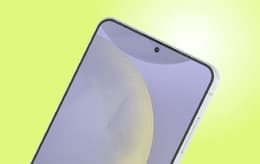
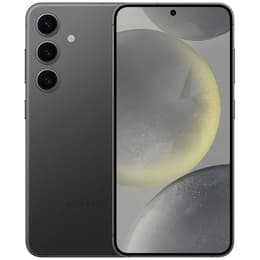
The Samsung Galaxy S24, released in January 2024, and the Google Pixel 9, launched in August 2024, represent two prominent Android smartphones from their respective manufacturers. While both devices offer a premium smartphone experience, they differentiate themselves through their approach to performance, camera capabilities, and software integration. The Galaxy S24 emphasizes a refined hardware experience and a comprehensive ecosystem, whereas the Pixel 9 focuses on advanced computational photography and deep artificial intelligence features.

Scores

Durability

Both the Galaxy S24 and the Pixel 9 are designed for extended usability, offering substantial software support and robust physical construction.

  • Software Longevity: Both devices launched with Android 14 and are committed to receiving seven years of operating system and security updates. This commitment ensures that users of either phone will benefit from long-term software support, extending well into the future.
  • Physical Durability: Both the Galaxy S24 and the Pixel 9 feature an IP68 rating for dust and water resistance, indicating protection against submersion in up to 1.5 meters of freshwater for 30 minutes. They also incorporate Corning Gorilla Glass Victus 2 on both the front and back for enhanced scratch and drop protection, with the Galaxy S24 utilizing an Enhanced Armor Aluminum frame and the Pixel 9 a polished metal frame.
  • Repairability Considerations: While specific repairability scores can vary, both manufacturers design their devices with components that can be serviced, contributing to their practical lifespan. The use of common materials like glass and aluminum means that professional repair services are generally available for these models.

Year of Release

2024

2024

Compatible with latest Update

Yes

Yes

OS

Android

Android

Foldable

No

No

Performance

The performance of the Galaxy S24 and Pixel 9 is tailored to different priorities, impacting how they handle demanding applications and daily tasks.

  • Processing Power: The Galaxy S24 is equipped with a powerful current-generation processor, delivering strong performance for intensive gaming and complex multitasking. The Pixel 9 features Google's Tensor G4 processor, which is optimized for on-device artificial intelligence tasks, enhancing features like voice recognition, image processing, and real-time translation.
  • Multitasking and Responsiveness: The Galaxy S24 typically comes with 8GB of RAM, providing a smooth experience for most users. The Pixel 9 offers 12GB of RAM, which can provide additional headroom for keeping more applications open simultaneously and switching between them without noticeable delays.
  • Storage Options: Both devices offer various internal storage configurations, including 128GB, 256GB, and 512GB, providing ample space for applications, media, and documents.

Memory (GB)

8 GB

12 GB

Screen quality

Both smartphones offer vibrant and responsive displays, though with slight differences in their visual characteristics and size.

  • Display Technology and Clarity: The Galaxy S24 features a 6.2-inch Dynamic AMOLED 2X display, while the Pixel 9 sports a 6.3-inch Actua OLED display. Both panels deliver rich colors, deep blacks, and excellent contrast, providing a clear viewing experience for various content. The Pixel 9's display is noted for being perfectly flat.
  • Brightness and Refresh Rate: Both devices offer high peak brightness levels, with the Galaxy S24 reaching up to 2600 nits and the Pixel 9 up to 2700 nits, ensuring good visibility even in bright outdoor conditions. They both feature adaptive refresh rates that can scale from 1Hz to 120Hz, contributing to smooth scrolling and fluid animations while conserving battery life.
  • Resolution: Both phones feature Full HD+ resolutions (2340x1080 for S24, 1080x2424 for Pixel 9), providing sharp visuals for everyday use, including browsing, video streaming, and gaming.

Resolution

1080 x 2340

1080 x 2424

Screen type

Dynamic LTPO AMOLED 2X

OLED

Audiovisual

The camera systems on the Galaxy S24 and Pixel 9 approach photography with distinct hardware and software philosophies.

  • Rear Camera Configuration: The Galaxy S24 features a versatile triple-camera system on the rear, including a 50-megapixel wide lens, a 12-megapixel ultrawide lens, and a 10-megapixel telephoto lens with 3x optical zoom. The base Google Pixel 9 comes with a dual-camera setup, comprising a 50-megapixel wide lens and a 48-megapixel ultrawide lens, which also supports Macro Focus.
  • Photography Performance: The Galaxy S24 offers strong performance across various lighting conditions, with its dedicated telephoto lens providing clear zoomed-in shots. The Pixel 9 leverages its advanced computational photography and AI features to enhance image quality, particularly in areas like Night Sight, Astrophotography, and features like Magic Editor.
  • Front Camera and Video: Both devices include capable front-facing cameras for selfies and video calls, with the S24 featuring a 12-megapixel sensor and the Pixel 9 a 10.5-megapixel ultrawide sensor. Both support 4K video recording, with the Galaxy S24 also offering 8K video capture.

Main camera

50 megapixels

50 megapixels

Front camera

12 megapixels

10.5 megapixels

Miscellaneous

Beyond core features, several practical elements contribute to the overall user experience of these smartphones.

  • Connectivity and Ports: Both the Galaxy S24 and Pixel 9 support 5G cellular networks, ensuring fast mobile data speeds. The Galaxy S24 supports Wi-Fi 6E, while the Pixel 9 features Wi-Fi 7, offering advanced wireless connectivity. Both devices utilize a USB-C port for charging and data transfer, but neither includes a traditional 3.5mm headphone jack.
  • Biometrics and Sensors: Both phones offer secure unlocking methods, including an under-display fingerprint sensor. The Galaxy S24 uses an ultrasonic sensor, while the Pixel 9 also includes Face Unlock and a range of sensors like a barometer and gyroscope. The Pixel 9 also introduces Satellite SOS for emergency situations without cellular or Wi-Fi connectivity.
  • Design and Handling: The Galaxy S24 measures 147 x 70.6 x 7.6 mm and weighs 168 grams, offering a compact and lightweight feel. The Pixel 9 is slightly larger and heavier at 152.8 x 72 x 8.5 mm and 198 grams. Both feature flat edges and premium build materials, contributing to a comfortable in-hand feel.

Weight

167 g

198 g

Width

7,06 cm

7.198 cm

Height

14,7 cm

15.283 cm

Depth

0,76 cm

8.54 cm

Screen size (in)

6.2

6.3

Mobile network

5G

5G

SIM card

Dual Physical SIM + eSIM

Physical SIM + eSIM

Carrier compatibility

Unlocked

Unlocked

Connector

USB-C

USB-C

User feedback for the Samsung Galaxy S24 often highlights its bright display, consistent performance across various tasks, and the comprehensive feature set offered by Samsung's One UI. Some users appreciate the dedicated telephoto lens for its versatility in photography. Criticisms sometimes revolve around the regional differences in processors, though overall performance remains strong. The Pixel 9 is frequently praised for its exceptional camera capabilities, particularly its computational photography and AI-driven features that simplify complex shots. Its long-term software support and clean Android experience are also strong points. Some discussions note that while its processor excels in AI, its raw benchmark performance might not always match some competitors.

Users prioritizing a compact design with a dedicated optical zoom lens and a feature-rich software ecosystem may find the Samsung Galaxy S24 well-suited to their needs. Its balanced performance makes it a reliable choice for a wide range of daily activities and moderate gaming. Conversely, individuals who place a high value on cutting-edge artificial intelligence features, advanced computational photography, and a streamlined Android experience will likely lean towards the Google Pixel 9. Its focus on intelligent software enhancements and unique camera capabilities provides a distinct user experience.

For those considering either device, exploring quality-assured refurbished options can provide an eco-friendly alternative to purchasing new, offering a sustainable choice without compromising on functionality.


See all articles

Our recent comparisons