
Compare models
Galaxy S24 Vs Google Pixel 8
- 1-year minimum warranty
- Free delivery on all items
- Free 30-day returns
Differences at a glance
The Samsung Galaxy S24 (released January 2024) and the Google Pixel 8 (released October 2023) are contemporary Android smartphones, each offering a distinct approach to the mobile experience. While both devices operate on the Android platform, they differentiate themselves through their underlying hardware, camera philosophies, and software features. The Galaxy S24 emphasizes a refined design and a versatile camera system, whereas the Pixel 8 focuses on advanced computational photography and a streamlined software experience.
Available Models
Colour
Storage (GB)
Scores
Durability
When considering the long-term usability of these devices, both the Galaxy S24 and the Pixel 8 offer substantial software support, contributing to their expected practical lifespan.
- Software Support: Both the Samsung Galaxy S24 and the Google Pixel 8 are committed to providing seven years of operating system and security updates from their respective release dates. This extended support ensures that both devices will remain current with the latest Android features and security protections well into the future.
- Repairability: The Galaxy S24 generally demonstrates a higher repairability score, with some assessments giving it a 9 out of 10. This is partly due to the ease of replacing components like the battery, which features a convenient pull tab. The Pixel 8, on the other hand, typically receives repairability scores ranging from 5.5 to 7 out of 10, with some reports indicating that while the screen is relatively easy to remove, the battery can be more challenging due to strong adhesives, and the main board is soldered to the charger port.
- Expected Lifespan: With both devices receiving extensive software support, users can anticipate a practical lifespan extending for many years, allowing for prolonged use before hardware or software obsolescence becomes a significant factor.
Year of Release
2024
2023
Compatible with latest Update
Yes
Yes
OS
Android
Android
Foldable
No
No
Performance
The performance of the Galaxy S24 and Pixel 8 is driven by their respective internal components, influencing how smoothly they handle daily tasks, demanding applications, and multitasking.
- Processing Power: The Galaxy S24 is equipped with a powerful current-generation processor, which allows it to manage intensive applications, complex games, and heavy multitasking with efficiency. The Pixel 8 features Google's custom-designed processor, optimized for artificial intelligence tasks and a fluid user experience, particularly in areas like image processing and on-device machine learning.
- Multitasking and Storage: Both devices typically offer 8GB of RAM, providing sufficient capacity for running multiple applications simultaneously without significant slowdowns. Storage options for both models generally start at 128GB and extend to 256GB, with the Galaxy S24 also offering a 512GB variant, providing ample space for apps, media, and files.
- Battery Behavior: The Galaxy S24 houses a 4000 mAh battery, supporting wireless and proprietary fast charging. The Pixel 8 comes with a 4575 mAh battery. User experiences with the Pixel 8's battery life are varied; some find it sufficient for a full day of mixed use, while others report more frequent charging, especially with heavy mobile data usage.
Screen quality
The visual experience on both smartphones is delivered through their displays, each offering distinct characteristics in terms of technology, clarity, and brightness.
- Display Technology and Size: The Galaxy S24 features a 6.2-inch Dynamic AMOLED 2X display, known for its deep blacks and vibrant color reproduction. The Pixel 8 utilizes a 6.2-inch OLED display, referred to as an Actua display, which also provides rich colors and strong contrast. Both displays offer a similar screen size, making them comfortable for one-handed use.
- Resolution and Brightness: The Galaxy S24 has a resolution of 2340x1080 pixels, resulting in a pixel density of approximately 416 PPI, and boasts a peak brightness of 2600 nits, ensuring excellent visibility even in bright outdoor conditions. The Pixel 8 offers a resolution of 2400x1080 pixels with a pixel density of around 428 PPI, and a peak brightness of 2000 nits, providing clear visuals and good outdoor readability.
- Refresh Rate and Protection: Both devices feature a 120Hz refresh rate, contributing to smooth scrolling and fluid animations. The Galaxy S24 is protected by Corning Gorilla Glass Victus 2, offering enhanced durability against drops and scratches. The Pixel 8 is protected by Corning Gorilla Glass Victus.
Resolution
1080 x 2340
1080 x 2400
Screen type
Dynamic LTPO AMOLED 2X
OLED
Audiovisual
The camera systems on the Galaxy S24 and Pixel 8 are central to their appeal, with each device offering different hardware and software optimizations for photography and videography.
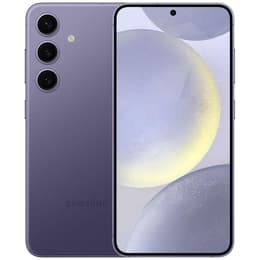
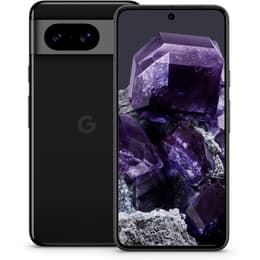
- Rear Camera System: The Galaxy S24 is equipped with a versatile triple-camera setup on the rear, including a 50 MP wide sensor, a 10 MP telephoto lens with 3x optical zoom, and a 12 MP ultrawide sensor. The Pixel 8 features a dual-camera system, comprising a 50 MP wide sensor and a 12 MP ultrawide sensor that includes autofocus for macro photography.
- Photography Performance: The Galaxy S24 delivers detailed and vibrant images across various lighting conditions, with its telephoto lens providing optical zoom capabilities. The Pixel 8 is highly regarded for its computational photography, excelling in areas like low-light performance and consistent image quality, often producing natural colors and good exposure.
- Video and Audio: Both phones offer strong video recording capabilities, with the Pixel 8 noted for its effective video stabilization and clear sound recording. The microphone quality on both devices is suitable for calls and recording, and their stereo speakers provide a capable audio experience for media consumption.
Main camera
50 megapixels
50 megapixels
Front camera
12 megapixels
10.5 megapixels
Miscellaneous
Beyond the core features, several practical elements contribute to the overall user experience and daily functionality of the Galaxy S24 and Pixel 8.
- Connectivity and Ports: Both smartphones support modern connectivity standards, including 5G for fast mobile data, and Bluetooth 5.3 for wireless accessories. The Galaxy S24 supports Wi-Fi 6, while the Pixel 8 supports the newer Wi-Fi 7 standard. Both devices utilize a USB Type-C port for charging and data transfer.
- Biometrics and Sensors: The Galaxy S24 incorporates an ultrasonic in-screen fingerprint sensor for secure unlocking. The Pixel 8 uses an optical in-screen fingerprint sensor. Both devices include a standard array of sensors such as accelerometers, gyroscopes, and ambient light sensors.
- Design and Handling: The Galaxy S24 measures 70.6 x 147 x 7.6mm and weighs 168g, offering a compact and lightweight design. The Pixel 8 is slightly larger and heavier at 150.5 x 70.8 x 8.9 mm and 187g. Both phones feature a premium build with glass backs and aluminum frames, contributing to a solid in-hand feel.
Weight
167 g
187 g
Screen size (in)
6.2
6.2
Mobile network
5G
5G
SIM card
Dual Physical SIM + eSIM
Physical SIM + eSIM
Carrier compatibility
Unlocked
Unlocked
What the community thinks
The Samsung Galaxy S24 and Google Pixel 8 each present compelling options for smartphone users, catering to slightly different priorities. Users often praise the Galaxy S24 for its bright and vibrant display, versatile camera system with optical zoom, and refined design. Its strong repairability score is also a notable advantage for those concerned with device longevity.
The Google Pixel 8 receives acclaim for its exceptional computational photography capabilities, delivering consistent and high-quality images, particularly in challenging lighting. Its commitment to seven years of software updates is a significant draw for users prioritizing long-term software support. However, some users have expressed mixed opinions regarding its battery performance, especially under heavy mobile data usage.
For users who prioritize a comprehensive camera system with dedicated optical zoom and a slightly more compact, lighter design, the Galaxy S24 may be a more suitable choice. Conversely, individuals who value cutting-edge computational photography, a streamlined software experience with advanced AI features, and an extended software update commitment might find the Pixel 8 aligns better with their needs. Both devices represent quality-assured options, and considering a refurbished model can be an eco-friendly alternative for acquiring either of these capable smartphones.