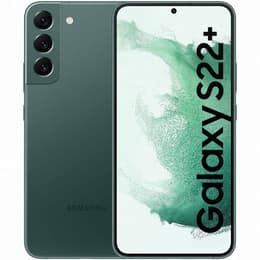

Galaxy S22+ 5G Vs iPhone 16 Pro

Galaxy S22+ 5G
Galaxy S22+ 5G
Starting at

Refurbished price:£167.00

Versus £1,174.01 new

See options
iPhone 16 Pro
iPhone 16 Pro
Starting at

Refurbished price:£564.00

Versus £999.00 new

See options

Ratings

The Samsung Galaxy S22 Plus 5G, released in February 2022, and the Apple iPhone 16 Pro, launched in September 2024, represent different generations of flagship smartphones. While both offer premium experiences, the iPhone 16 Pro benefits from a newer release, bringing advancements in processing power, camera technology, and display refinements. The Galaxy S22 Plus operates on Android, offering a customizable interface, whereas the iPhone 16 Pro runs on Apple's iOS, known for its integrated ecosystem and long-term software support.

Scores

Durability

When considering the longevity of these devices, their respective release timelines and software support policies are key factors. The Galaxy S22 Plus, released in early 2022, typically receives around four major Android OS updates and five years of security updates from Samsung. In contrast, the iPhone 16 Pro, launched in late 2024, is expected to receive major iOS updates for approximately five to seven years, with security patches often extending beyond that period.

  • Software Longevity: The iPhone 16 Pro offers a longer expected period of major operating system updates, providing access to new features and security enhancements for more years compared to the Galaxy S22 Plus.
  • Physical Durability: Both devices feature robust builds with IP68 ratings for dust and water resistance. The Galaxy S22 Plus uses Gorilla Glass Victus+ on its front and back with an aluminum frame, while the iPhone 16 Pro incorporates a Ceramic Shield front and a titanium frame, which is known for its strength and lighter weight.
  • Repairability: While specific repairability scores can vary, both manufacturers design their devices with certain repair considerations. Opting for a quality-assured refurbished option for either model can extend its practical lifespan and contribute to a more sustainable choice.

Year of Release

2022

2024

Compatible with latest Update

Yes

Yes

Foldable

No

No

Performance

The performance capabilities of these two smartphones reflect their generational difference, impacting how smoothly they handle demanding applications and multitasking.

  • Processing Power: The iPhone 16 Pro is equipped with a significantly newer and more advanced processor, which translates to faster app loading times, smoother transitions, and enhanced performance in graphically intensive games and complex tasks. The Galaxy S22 Plus, while powerful for its time, uses an earlier generation processor that still handles everyday tasks efficiently but may show limitations with the most demanding current applications.
  • Multitasking and Responsiveness: Both devices offer 8GB of RAM, which is sufficient for managing multiple applications simultaneously. However, the iPhone 16 Pro's optimized hardware and software integration often result in a perception of greater overall system responsiveness and efficiency, particularly when switching between heavy applications.
  • Storage Options: The Galaxy S22 Plus is available with 128GB or 256GB of internal storage. The iPhone 16 Pro offers a wider range of storage configurations, starting from 128GB and extending up to 1TB, providing more flexibility for users with extensive storage needs.

Memory (GB)

8 GB

8 GB

Screen quality

The visual experience on both devices is delivered through high-quality displays, though with some notable differences in specifications and characteristics.

  • Display Technology and Clarity: Both smartphones feature vibrant OLED displays, offering deep blacks and excellent contrast. The iPhone 16 Pro boasts a 6.3-inch Super Retina XDR OLED display with a higher resolution of 2622 x 1206 pixels and a pixel density of approximately 460 ppi, resulting in a sharper image. The Galaxy S22 Plus has a 6.6-inch Dynamic AMOLED 2X display with a resolution of 1080 x 2340 pixels and around 393 ppi.
  • Brightness and Outdoor Visibility: The iPhone 16 Pro's display offers a higher typical SDR brightness of 1200 nits and a peak brightness of 2000 nits, which can improve visibility in bright outdoor conditions. The Galaxy S22 Plus provides a peak brightness of 1750 nits.
  • Refresh Rate: Both devices feature adaptive refresh rates up to 120Hz, ensuring smooth scrolling and fluid animations. The iPhone 16 Pro's ProMotion technology dynamically adjusts the refresh rate to optimize power consumption while maintaining visual fluidity.

Resolution

1080 x 2340

1206 x 2622

Screen type

Dynamic AMOLED 2X

LTPO Super Retina XDR OLED

Audiovisual

Both the Galaxy S22 Plus and the iPhone 16 Pro offer advanced camera systems designed to capture high-quality photos and videos, but with different strengths and capabilities.

  • Rear Camera System: The iPhone 16 Pro features a versatile triple-camera setup, including a 48 MP main sensor, a 48 MP ultrawide sensor with a 120-degree field of view optimized for low light, and a 12 MP telephoto lens capable of 5x optical zoom. The Galaxy S22 Plus also has a triple-camera system with a 50 MP wide lens, a 12 MP ultrawide lens, and a 10 MP telephoto lens offering 3x optical zoom.
  • Photography Performance: The iPhone 16 Pro's newer sensors and computational photography enhancements contribute to improved detail, dynamic range, and low-light performance, particularly with its upgraded ultrawide camera. The Galaxy S22 Plus delivers strong daylight photos and capable low-light performance for its generation.
  • Video Recording and Audio: The iPhone 16 Pro supports 4K Dolby Vision video recording at up to 120 frames per second, offering advanced video capabilities. The Galaxy S22 Plus can record up to 8K video at 24fps and 4K at 30/60fps. Both devices offer quality microphone and speaker systems for calls and media consumption, with the iPhone 16 Pro often noted for its enhanced audio recording features.

Main camera

50 megapixels

48 megapixels

Front camera

10 megapixels

12 megapixels

Miscellaneous

Beyond core performance and display, several practical elements differentiate these two smartphones, influencing daily usability and connectivity.

  • Connectivity Standards: The iPhone 16 Pro supports Wi-Fi 7, offering faster and more efficient wireless internet connections compared to the Wi-Fi 6E on the Galaxy S22 Plus. Both devices are 5G capable, ensuring access to the latest cellular networks.
  • Charging Port and SIM: The iPhone 16 Pro has adopted a USB-C port, aligning with the Galaxy S22 Plus, which also uses USB-C. A notable difference is that the iPhone 16 Pro supports dual eSIM and is not compatible with physical SIM cards, whereas the Galaxy S22 Plus supports physical Nano-SIMs and eSIM.
  • Biometric Security: The iPhone 16 Pro relies on Face ID for secure facial recognition. The Galaxy S22 Plus features an ultrasonic in-display fingerprint sensor for biometric authentication.
  • Physical Characteristics: The iPhone 16 Pro measures 149.6 x 71.5 x 8.25 mm and weighs 199 grams, featuring a titanium design. The Galaxy S22 Plus is slightly larger at 157.4 x 75.8 x 7.6 mm and weighs 195 grams, with an aluminum frame.

Weight

195 g

199 g

Screen size (in)

6.6

6.3

Mobile network

5G

5G

SIM card

Physical SIM + eSIM

Physical SIM + eSIM

Carrier compatibility

Unlocked

Unlocked

Connector

USB-C

USB-C (USB 3)

The Samsung Galaxy S22 Plus 5G and the iPhone 16 Pro cater to users with varying priorities. The Galaxy S22 Plus, as an earlier flagship, is often praised for its balanced features, vibrant display, and capable camera system, providing a solid Android experience. Users frequently highlight its good battery life for daily use and the flexibility of the Android operating system. Some criticisms have occasionally pointed to its battery performance under heavy 5G usage or the processing power compared to newer devices.

The iPhone 16 Pro, being a more recent release, benefits from significant advancements. Users commend its powerful performance, enhanced camera capabilities (especially the ultrawide and telephoto lenses), and the extended software support from Apple. Its brighter display and improved battery optimization are also frequently noted as strong points. Some user feedback mentions the learning curve for those new to iOS or occasional software glitches, which are often addressed in subsequent updates.

Users prioritizing the latest technology, extended software longevity, and advanced camera features, particularly for video and low-light photography, may find the iPhone 16 Pro well-suited to their needs. Its robust performance makes it ideal for demanding applications and future-proofing. Conversely, individuals who prefer the Android ecosystem, a slightly larger display, and a device that still offers strong performance for everyday tasks might lean towards the Galaxy S22 Plus. Both devices offer premium experiences, and choosing a quality-assured refurbished option for either can provide an eco-friendly alternative to purchasing new, allowing consumers to make informed decisions that align with both their needs and environmental considerations.

See all articles

Our recent comparisons