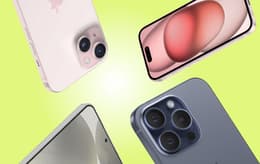
Galaxy S21 5G Vs iPhone 15

Galaxy S21 5G
Galaxy S21 5G
Starting at

Refurbished price:£133.00

Versus £829.00 new

See options
iPhone 15
iPhone 15
Starting at

Refurbished price:£326.00

Versus £699.00 new

See options

Ratings

The Samsung Galaxy S21 5G, released in January 2021, and the iPhone 15, launched in September 2023, represent different generations from two prominent smartphone manufacturers. While both offer a premium smartphone experience, the iPhone 15 benefits from more recent advancements in camera technology and processing power, whereas the Galaxy S21 5G provides a robust feature set from an earlier flagship era. Both devices operate on distinct ecosystems, with the Galaxy S21 5G running Android and the iPhone 15 running iOS.

Scores

Durability

When considering the long-term usability of these devices, their respective release timelines and software support policies are key factors.

  • Release Timeline: The Galaxy S21 5G was introduced in January 2021, making it an earlier model compared to the iPhone 15, which arrived in September 2023. This difference in launch dates directly impacts their expected software support windows.
  • Software Longevity: Samsung typically provides four major Android OS updates and five years of security updates for its flagship devices, meaning the Galaxy S21 5G is likely to receive updates up to Android 15 and security patches until 2026. Apple, on the other hand, generally supports its iPhones with major iOS updates for five to seven years, suggesting the iPhone 15 will continue to receive software support for a longer duration, potentially until iOS 22-24.
  • Repairability: The Galaxy S21 5G has been noted for a relatively good repairability score, with some assessments giving it around 7.5 out of 10, partly due to its plastic back and modular components, though battery removal can be challenging. The iPhone 15 initially received a lower repairability score, but subsequent software changes for parts serialization have improved its standing, with some assessments now placing it around 7 out of 10.

Year of Release

2021

2023

Compatible with latest Update

Yes

Yes

OS

Android

iOS

Foldable

No

No

Performance

The performance of a smartphone is crucial for daily tasks, from navigating apps to demanding multimedia use.

  • Processing Power: The iPhone 15 features a more recent generation processor, which translates to smoother operation and greater efficiency for demanding applications and multitasking. The Galaxy S21 5G, while still capable, utilizes a processor from an earlier generation, providing robust performance for everyday use and most applications.
  • Multitasking and Responsiveness: Both devices offer ample memory for efficient multitasking. The iPhone 15, with its newer internal architecture, generally exhibits slightly faster app loading times and more fluid transitions, particularly with graphically intensive tasks. The Galaxy S21 5G, equipped with 8GB of RAM, handles multiple applications competently, ensuring a responsive user experience.
  • Storage Options: Both models offer various internal storage capacities, starting from 128GB. The iPhone 15 extends to 512GB, while the Galaxy S21 5G is available up to 256GB. Neither device supports expandable storage via microSD cards.

Memory (GB)

8 GB

6 GB

Screen quality

The display is a primary interface for smartphone interaction, and both devices offer distinct viewing experiences.

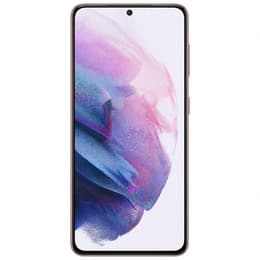
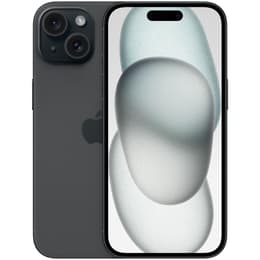
  • Display Technology and Clarity: The Galaxy S21 5G features a 6.2-inch Dynamic AMOLED 2X display, known for its vibrant colors and deep blacks. The iPhone 15 comes with a 6.1-inch Super Retina XDR OLED display, also delivering excellent contrast and color accuracy. Both provide sharp visuals suitable for various content.
  • Brightness and Outdoor Visibility: The iPhone 15's display offers higher peak brightness, especially in outdoor conditions, reaching up to 2000 nits, which can enhance visibility under direct sunlight. The Galaxy S21 5G's display reaches a peak brightness of 1300 nits, providing good visibility in most environments.
  • Refresh Rate and Smoothness: The Galaxy S21 5G features a 120Hz adaptive refresh rate, contributing to smoother scrolling and a more fluid feel during animations and gaming. The iPhone 15 has a standard 60Hz refresh rate, which is sufficient for most users but does not offer the same level of visual fluidity as a higher refresh rate display.

Resolution

1080 x 2400

1179 x 2556

Screen type

Dynamic AMOLED 2X

Super Retina XDR OLED

Audiovisual

Both smartphones are equipped with advanced camera systems designed to capture high-quality photos and videos.

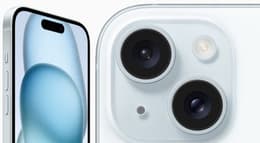
  • Rear Camera System: The Galaxy S21 5G features a versatile triple-camera setup, including a 12MP wide, a 64MP telephoto with 3x hybrid optical zoom, and a 12MP ultrawide lens. The iPhone 15 sports a dual-camera system with a 48MP main sensor that uses pixel binning to produce detailed 24MP photos and offers a 2x telephoto option via sensor crop, alongside a 12MP ultrawide lens.
  • Photography Performance: The iPhone 15 benefits from computational photography enhancements and a larger main sensor, which can result in improved detail and low-light performance. The Galaxy S21 5G also offers strong low-light capabilities and a dedicated telephoto lens for optical zoom flexibility. Both are capable of capturing vibrant and detailed images in various conditions.
  • Video Recording and Audio: The Galaxy S21 5G supports 8K video recording, offering high-resolution footage. The iPhone 15 records up to 4K video with advanced stabilization and cinematic modes. Both devices provide clear microphone quality for calls and recordings, and stereo speakers for media consumption.

Main camera

12 megapixels

48 megapixels

Front camera

10 megapixels

12 megapixels

Miscellaneous

Beyond core features, several other aspects contribute to the overall user experience and practicality of these devices.

  • Connectivity and Ports: Both phones support 5G connectivity for faster mobile data speeds. The iPhone 15 has transitioned to a USB-C port, aligning with a more universal standard, though its data transfer speeds are at USB 2.0 levels. The Galaxy S21 5G also uses a USB-C port. Neither device includes a traditional 3.5mm headphone jack.
  • Biometric Security: The Galaxy S21 5G features an ultrasonic under-display fingerprint sensor for secure unlocking and authentication. The iPhone 15 relies on Face ID, Apple's facial recognition system.
  • Build Materials and Handling: The iPhone 15 features a Ceramic Shield front and a color-infused glass back within an aluminum frame, offering a durable and refined feel. The Galaxy S21 5G combines a glass front (Gorilla Glass Victus) with a plastic back and an aluminum frame, providing a balance of durability and a lighter feel. Both devices carry an IP68 rating for dust and water resistance.

Weight

169 g

171 g

Screen size (in)

6.2

6.1

Mobile network

5G

5G

SIM card

Dual Physical SIM + eSIM

Physical SIM + eSIM

Carrier compatibility

Unlocked

Unlocked

The Samsung Galaxy S21 5G and iPhone 15 cater to users with differing priorities, reflecting their respective ecosystems and release timelines. Users often praise the Galaxy S21 5G for its vibrant 120Hz AMOLED display and versatile camera system, particularly its dedicated telephoto lens and 8K video capabilities. Some users, however, have noted its plastic back as a less premium material compared to its predecessors, and its battery life, while adequate, may require more frequent charging for heavy use. The iPhone 15 is frequently lauded for its powerful and efficient processor, significant camera improvements, and the integration of the Dynamic Island, enhancing the user interface. Criticisms sometimes point to its 60Hz display, which some users find less fluid than higher refresh rate screens available on other devices, and its USB-C port, while universal, operates at USB 2.0 speeds.

Users prioritizing a high refresh rate display and a dedicated optical zoom lens in a slightly older, yet still capable, Android flagship may find the Galaxy S21 5G well-suited to their needs. Conversely, those who value a more recent device with a longer software support window, superior processing power, and advanced computational photography features, all within the iOS ecosystem, will likely lean toward the iPhone 15. Both devices offer a quality-assured refurbished option, providing an eco-friendly alternative for consumers seeking to make informed and sustainable choices.
See all articles

Our recent comparisons