
Galaxy S21 5G Vs Google Pixel 8

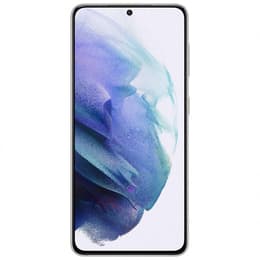
Galaxy S21 5G
Galaxy S21 5G
Starting at

Refurbished price:£128.00

Versus £829.00 new

See options
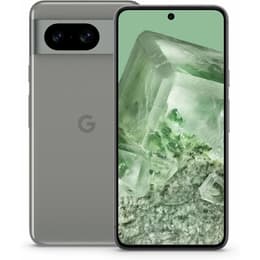
Google Pixel 8
Google Pixel 8
Starting at

Refurbished price:£187.00

Versus £699.99 new

See options

Ratings

The Samsung Galaxy S21 5G, released in January 2021, and the Google Pixel 8, launched in October 2023, represent different generations of Android smartphones. While both devices offer a premium experience within their respective ecosystems, they feature distinct approaches to hardware and software. The Pixel 8 emphasizes advanced computational photography and extended software support, whereas the Galaxy S21 5G, as an earlier model, provided a versatile camera system and a vibrant display at its release. Both operate on the Android platform, but the Pixel 8 benefits from a more recent version and a longer update commitment.

Scores

Durability

When considering the longevity of these devices, their release timelines and software support policies are key differentiators.

  • Release Timeline: The Galaxy S21 5G was introduced in January 2021, making it an older device compared to the Google Pixel 8, which launched in October 2023. This age difference directly impacts their remaining support cycles.
  • Software Support: The Google Pixel 8 stands out with an industry-leading commitment of seven years of OS upgrades, security updates, and feature drops, extending its support until October 2030. In contrast, the Galaxy S21 5G typically received around three to four years of major Android OS updates and five years of security updates from its release. This means the Pixel 8 offers significantly longer software longevity, ensuring access to new features and security patches for an extended period.
  • Practical Lifespan: Both devices feature IP68 ratings for water and dust resistance, contributing to their physical durability. However, the Pixel 8's extended software support means it is designed to remain current and secure for a considerably longer duration, which can be a significant factor for users planning to keep their device for many years.

Year of Release

2021

2023

Compatible with latest Update

Yes

Yes

OS

Android

Android

Foldable

No

No

Performance

The performance of a smartphone is influenced by its internal components, affecting everything from app responsiveness to battery endurance.

  • Processor Capabilities: The Google Pixel 8 features a more recent generation processor, which contributes to smoother operation and more efficient handling of demanding applications and multitasking. The Galaxy S21 5G, while powerful at its release, utilizes an earlier generation octa-core processor (either Exynos 2100 or Snapdragon 888 depending on region), which still provides capable performance for everyday tasks but may show its age with future software and application demands.
  • System Responsiveness: Users of the Pixel 8 generally experience fluid navigation and quick app loading times, benefiting from the newer processor and optimized software integration. The Galaxy S21 5G also offers a responsive user experience, though the Pixel 8's newer hardware provides more headroom for future performance.
  • Battery Behavior: The Pixel 8 is equipped with a 4575 mAh battery, which for many users provides sufficient power to last through a full day of moderate use, often achieving around six hours of screen-on time. The Galaxy S21 5G has a 4000 mAh battery, which typically offers a full day of use for average users, but heavy usage might require more frequent charging.

Memory (GB)

8 GB

8 GB

Screen quality

The display is a primary interface for smartphone interaction, and both devices offer high-quality viewing experiences with some notable differences.

  • Display Technology and Resolution: Both the Galaxy S21 5G and the Pixel 8 feature OLED displays, known for their deep blacks and vibrant colors. Both offer a Full HD+ resolution (1080 x 2400 pixels), resulting in sharp and clear visuals for everyday viewing.
  • Refresh Rate and Smoothness: The Galaxy S21 5G boasts a 120Hz refresh rate, providing a very smooth scrolling experience. The Pixel 8 also offers a variable refresh rate that can go up to 120Hz, adapting to content for both smoothness and power efficiency.
  • Brightness Levels: The Pixel 8 features a higher peak brightness of up to 2000 nits for outdoor visibility and 1400 nits for HDR content, making it exceptionally bright in various lighting conditions. The Galaxy S21 5G offers a peak brightness of up to 1300 nits, which is still ample for most environments.

Resolution

1080 x 2400

1080 x 2400

Screen type

Dynamic AMOLED 2X

OLED

Audiovisual

Both smartphones prioritize camera performance, but they approach imaging with different hardware and software philosophies.

  • Rear Camera Systems: The Galaxy S21 5G features a versatile triple-lens setup, including a 12MP wide-angle, a 64MP telephoto with 3x hybrid zoom, and a 12MP ultrawide camera. This configuration allows for a range of photographic options. The Pixel 8 opts for a dual-camera system, with a 50MP main sensor and a 12MP ultrawide lens. Google's approach heavily relies on computational photography to enhance image quality.
  • Photography Performance: The Pixel 8 is known for its consistent image processing, producing natural colors and excellent detail, particularly in challenging lighting conditions, thanks to its advanced software algorithms. The Galaxy S21 5G also delivers strong image quality, especially with its 64MP telephoto lens offering detailed zoomed shots.
  • Video Recording and Front Camera: Both devices support 4K video recording, with the Galaxy S21 5G capable of 8K video capture. The Pixel 8 records 4K video at up to 60 frames per second. For selfies, the Galaxy S21 5G has a 10MP front camera, while the Pixel 8 features a 10.5MP front camera.

Main camera

12 megapixels

50 megapixels

Front camera

10 megapixels

10.5 megapixels

Miscellaneous

Beyond core features, several practical elements contribute to the overall user experience of these smartphones.

  • Connectivity and Ports: Both devices support 5G connectivity, Wi-Fi, and Bluetooth for wireless communication. The Pixel 8 supports the newer Wi-Fi 7 standard and Bluetooth 5.3, offering potentially faster and more stable wireless connections compared to the Galaxy S21 5G's Wi-Fi 6 and Bluetooth 5.0. Both utilize a USB-C port for charging and data transfer, and neither includes a traditional 3.5mm headphone jack.
  • Biometrics and Build Materials: The Pixel 8 incorporates an optical in-screen fingerprint sensor and supports face unlock for security. The Galaxy S21 5G also features an in-display fingerprint sensor. In terms of build, the Pixel 8 has a glass front (Gorilla Glass Victus) and a glossy glass back with a matte aluminum frame. The Galaxy S21 5G features a glass front (Gorilla Glass Victus), a plastic back, and a metal frame.
  • Dimensions and Handling: The Pixel 8 measures 150.5 x 70.8 x 8.9 mm and weighs 187g. The Galaxy S21 5G is slightly taller and wider but thinner, at 151.7 x 71.2 x 7.9 mm, and lighter at 169-171g. These differences result in a slightly more compact and potentially easier-to-handle form factor for the Pixel 8, while the S21 5G is marginally lighter.

Weight

169 g

187 g

Screen size (in)

6.2

6.2

Mobile network

5G

5G

SIM card

Dual Physical SIM + eSIM

Physical SIM + eSIM

Carrier compatibility

Unlocked

Unlocked

The Samsung Galaxy S21 5G and the Google Pixel 8 cater to users with varying priorities, reflecting their different release dates and design philosophies. Users often praise the Pixel 8 for its exceptional camera capabilities, particularly its computational photography features that deliver consistent and high-quality images across various conditions. Its commitment to seven years of software updates is also a frequently highlighted advantage, ensuring long-term usability and access to the latest Android features and security. Some users, however, have noted that while the battery life is generally sufficient for a day, it might not be class-leading for heavy users.

The Galaxy S21 5G, on the other hand, was well-regarded for its vibrant Dynamic AMOLED 2X display with a smooth 120Hz refresh rate and its versatile triple-camera system, including a dedicated telephoto lens. Its design, featuring a plastic back, was sometimes a point of discussion, though it contributed to a lighter overall feel. As an older device, its software support cycle is naturally shorter than the Pixel 8's.

Users prioritizing long-term software support, cutting-edge computational photography, and a compact form factor may find the Google Pixel 8 well-suited to their needs. Its extended update policy makes it a sustainable choice for those who prefer to keep their devices for many years. Conversely, users who value a dedicated telephoto lens, a slightly lighter build, and a still-capable performance for everyday tasks might consider the Galaxy S21 5G. Both devices offer a quality Android experience, and choosing between them often comes down to the importance placed on software longevity versus specific hardware features. For those seeking an eco-friendly alternative, both models are available as quality-assured refurbished options, extending their useful life and reducing electronic waste.


See all articles

Our recent comparisons