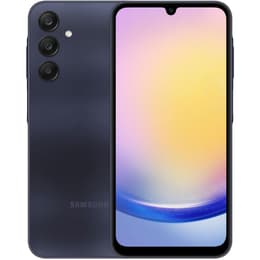

Galaxy A25 Vs Galaxy A36

Galaxy A25
Galaxy A25
Starting at

Refurbished price:£121.00

Versus £272.58 new

See options
Galaxy A36
Galaxy A36
Starting at

Refurbished price:£205.00

Versus £369.00 new

See options

Ratings

The Samsung Galaxy A25 (released in December 2023) and the Samsung Galaxy A36 (launched in March 2025) are both mid-range Android smartphones from Samsung's popular A-series. While they share a commitment to delivering essential smartphone features, the newer Galaxy A36 introduces advancements in display technology, charging speed, and overall durability, building upon the solid foundation of its predecessor.

Scores

Durability

When considering the longevity of these devices, their release timelines and software support policies are key factors.

  • Release Timeline: The Galaxy A25 was introduced in December 2023, while the Galaxy A36 followed in March 2025. This nearly 15-month difference means the A36 benefits from a more recent starting point for its software lifecycle.
  • OS and Security Updates: The Galaxy A25 is slated to receive four generations of Android OS upgrades and five years of security updates from its release date. The Galaxy A36, being a newer model, offers an extended commitment with six generations of OS upgrades and six years of security updates. This longer support period for the A36 translates to a potentially longer practical lifespan, ensuring access to the latest features and security patches for an extended duration.
  • Physical Durability: The Galaxy A36 features Gorilla Glass Victus+ on both its front and back, along with an IP67 rating for dust and water resistance, offering enhanced protection against daily wear and accidental exposure. The Galaxy A25, while still durable, uses Gorilla Glass 5 for its display and does not carry an official IP rating.

Year of Release

2023

2025

OS

Android

Android

Foldable

No

No

Performance

Both smartphones are designed to handle everyday tasks efficiently, though they utilize different internal components to achieve this.

  • Processing Power: The Galaxy A25 is equipped with an Exynos 1280 processor, which provides responsive performance for general use, app navigation, and moderate multitasking. The Galaxy A36 features a Qualcomm Snapdragon 6 Gen 3 processor, which offers a newer architecture and generally improved efficiency for smoother operation, especially with more demanding applications and gaming.
  • Multitasking and Storage: The Galaxy A25 is available with 6GB or 8GB of RAM and 128GB or 256GB of internal storage, expandable via a microSD card up to 1TB. The Galaxy A36 offers more RAM options, including 6GB, 8GB, and 12GB, with 128GB or 256GB of internal storage. Some variants of the A36 may not include microSD expansion, which could be a consideration for users requiring extensive expandable storage.
  • Battery Behavior: Both devices house a 5000 mAh battery, designed to provide a full day of use for most users. User reports indicate that the Galaxy A25 generally offers solid battery life, often lasting through a day of heavy use. The Galaxy A36 also delivers good battery performance, with some reviews noting slightly better endurance in certain usage scenarios due to its more efficient processor.

Memory (GB)

6 GB

6 GB

Screen quality

Both the Galaxy A25 and A36 offer vibrant viewing experiences, but the A36 brings some notable enhancements to its display.

  • Display Technology and Size: Both phones feature Super AMOLED displays with a 120Hz refresh rate, ensuring fluid scrolling and responsive visuals. The Galaxy A25 has a 6.5-inch display, while the Galaxy A36 offers a slightly larger 6.7-inch screen, providing a more expansive viewing area.
  • Brightness and Clarity: Both displays offer Full HD+ resolution (1080x2340 pixels) for sharp images and text. The Galaxy A25 can reach a peak brightness of 1000 nits in High Brightness Mode (HBM), making it suitable for outdoor use. The Galaxy A36 elevates this with a higher HBM of 1200 nits and a peak brightness of 1900 nits, significantly improving visibility in bright sunlight.
  • Durability: The Galaxy A36's display is protected by Gorilla Glass Victus+, offering superior scratch and drop resistance compared to the Gorilla Glass 5 found on the Galaxy A25's screen.

Resolution

1080 x 2340

1080 x 2340

Audiovisual

Both devices are equipped with versatile camera systems designed for capturing everyday moments, with some distinctions in their capabilities.

  • Rear Camera System: Both the Galaxy A25 and A36 feature a triple-camera setup on the rear. They share a 50 MP main camera with Optical Image Stabilization (OIS) for clearer photos, especially in challenging conditions. Both also include an 8 MP ultrawide lens for broader landscape shots. The macro lens differs slightly, with the A25 having a 2 MP sensor and the A36 featuring a 5 MP macro sensor, potentially offering more detail for close-up shots.
  • Photography Performance: The main cameras on both phones perform well in good lighting, producing vibrant and detailed images. However, user feedback suggests that both devices, particularly the A25, can struggle with low-light photography, though the A36's performance in this area has also received mixed reviews.
  • Video Recording and Front Camera: Both phones support 4K video recording at 30 frames per second with their main rear cameras. For selfies, the Galaxy A25 has a 13 MP front camera, while the Galaxy A36 features a 12 MP front camera. A notable upgrade for the A36 is its front camera's ability to record 4K video at 30fps with 10-bit HDR, offering higher quality video calls and vlogging capabilities compared to the A25's 1080p front video recording.

Front camera

13 megapixels

12

Miscellaneous

Beyond core specifications, several practical elements contribute to the overall user experience of these smartphones.

  • Connectivity and Ports: Both the Galaxy A25 and A36 support 5G connectivity, ensuring access to faster mobile networks. They both include Wi-Fi (802.11 a/b/g/n/ac for A25, likely similar or newer for A36), Bluetooth (v5.3 for A25, likely similar for A36), NFC for contactless payments, and a USB-C port for charging and data transfer. Importantly, both devices retain a 3.5mm headphone jack, a feature appreciated by users who prefer wired audio. The Galaxy A36 also introduces eSIM support, offering more flexibility for network management.
  • Security Features: The Galaxy A25 features a side-mounted fingerprint sensor for secure unlocking. The Galaxy A36 incorporates an in-display fingerprint sensor, which some users find to be a more modern and convenient placement, though some reviews note it can be slower than physical sensors. Both also offer face recognition.
  • Design and Handling: The Galaxy A25 has dimensions of 162 x 77.5 x 8.3 mm and weighs 197 grams. The Galaxy A36 is slightly larger with a 6.7-inch screen but is thinner at 7.4 mm and reportedly lighter than its predecessor, which can contribute to a more comfortable in-hand feel despite the larger display. The A36 also boasts a more premium build with Gorilla Glass Victus+ on the back and an IP67 rating, enhancing its resistance to dust and water.

Weight

197 g

195 g

Screen size (in)

6.5

6,74

Mobile network

5G

5G

SIM card

Dual Physical SIM

Dual Physical SIM + eSIM

Carrier compatibility

Unlocked

Unlocked

Connector

USB-C

USB-C

The Samsung Galaxy A25 and Galaxy A36 both offer compelling features within Samsung's mid-range lineup, catering to slightly different priorities. The Galaxy A25 is often praised for its vibrant AMOLED display, reliable performance for daily tasks, and solid battery life. Users appreciate its competent camera system in good lighting and Samsung's commitment to software updates, making it a dependable choice for its release period.

On the other hand, the newer Galaxy A36 builds upon this with several key upgrades. It receives commendation for its larger, brighter display with enhanced durability (Gorilla Glass Victus+ and IP67 rating), faster 45W charging, and an even longer software support commitment. While its overall performance is generally considered adequate, some user feedback points to its camera performance in low light and the speed of its in-display fingerprint sensor as areas that could see improvement.

Users prioritizing extended software longevity, superior screen brightness for outdoor visibility, faster charging, and enhanced physical durability will find the Galaxy A36 well-suited to their needs. Its larger display also offers a more immersive viewing experience. Conversely, those who value a slightly more compact form factor, expandable storage via microSD (which may be absent in some A36 variants), and a still-capable device with good software support might lean towards the Galaxy A25. Both models represent quality-assured refurbished options, providing an eco-friendly alternative for consumers seeking reliable technology.


See all articles

Our recent comparisons