Galaxy S20 FE Vs Galaxy S21 5G

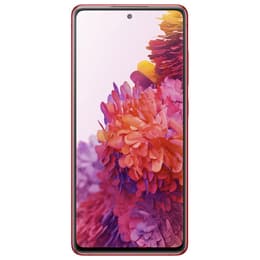
Galaxy S20 FE
Galaxy S20 FE
Starting at

Refurbished price:£124.00

Versus £900.00 new

See options
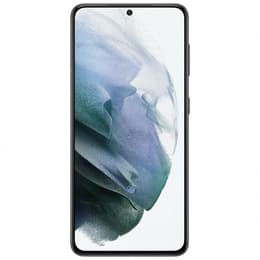
Galaxy S21 5G
Galaxy S21 5G
Starting at

Refurbished price:£132.00

Versus £1,000.00 new

See options

Ratings

The Samsung Galaxy S20 FE (Fan Edition), released in October 2020, and the Samsung Galaxy S21 5G, launched in January 2021, are both Android-based smartphones from Samsung's popular Galaxy S series. While sharing a similar design philosophy, the Galaxy S21 5G offers a slightly more refined build and a newer generation processor, whereas the S20 FE was positioned to deliver key flagship features at its release. Both devices operate on the Android platform, offering a consistent software experience with Samsung's One UI.

Scores

Durability

When considering the longevity of these devices, their release timelines and subsequent software support are key factors. The Galaxy S20 FE, released in late 2020, has concluded its software update lifecycle, with its final security patch in October 2025. The Galaxy S21 5G, launched in early 2021, received its final major Android OS update (Android 15/One UI 7) in May 2025 and its last security update in November 2025, with some regional variations extending to February 2026.

  • Software Support: The Galaxy S20 FE received three major Android updates and five years of security patches, concluding its support in late 2025. The Galaxy S21 5G, being a slightly newer model, received four major Android OS updates and security patches until late 2025 or early 2026, offering a marginally longer period of official software support.
  • Repairability: Both the Galaxy S20 FE and the Galaxy S21 5G are considered moderately repairable, with both scoring around 7.5 out of 10 in some assessments. Disassembly for both devices involves some adhesive, particularly for the back cover and battery, but components are generally accessible with effort.
  • Physical Durability: The Galaxy S20 FE features a plastic back and Gorilla Glass 3 on the front, offering a degree of resilience against impacts. The Galaxy S21 5G also has a plastic back, but it upgrades to Gorilla Glass Victus for enhanced screen protection.

Year of Release

2020

2021

Compatible with latest Update

No

Yes

OS

Android

Android

Foldable

No

No

Performance

The performance of these smartphones is largely driven by their internal components, influencing how smoothly they handle daily tasks and demanding applications. Both devices offer capable performance for general use, but the generational difference in their core processing units provides distinct advantages.

  • Processing Power: The Galaxy S20 FE is equipped with a powerful processor from its release year, capable of handling demanding apps and multitasking efficiently. The Galaxy S21 5G features a newer generation processor, which translates to faster app loading times, smoother transitions, and improved performance in graphically intensive games or complex computational tasks.
  • Multitasking and Responsiveness: Both models generally offer 6GB or 8GB of RAM, providing sufficient capacity for running multiple applications simultaneously without significant slowdowns. The Galaxy S21 5G's newer processor contributes to a slightly more responsive overall system, particularly noticeable during heavy usage.
  • Storage Options: Both devices typically come with 128GB or 256GB of internal storage. The Galaxy S20 FE includes a microSD card slot for expandable storage, offering flexibility for users who require more space for media and files. The Galaxy S21 5G, however, does not feature a microSD card slot, meaning users must rely solely on the internal storage configuration chosen at purchase.

Memory

6 GB

8 GB

Screen quality

The visual experience on both the Galaxy S20 FE and the Galaxy S21 5G is characterized by vibrant displays, though there are differences in their underlying technology and adaptive capabilities.

  • Display Technology and Clarity: The Galaxy S20 FE features a 6.5-inch Super AMOLED display with a Full HD+ resolution, providing vivid colors and deep blacks. The Galaxy S21 5G comes with a 6.2-inch Dynamic AMOLED 2X display, also with Full HD+ resolution, which offers enhanced color accuracy and brightness.
  • Refresh Rate and Smoothness: Both phones boast a 120Hz refresh rate, ensuring smooth scrolling and fluid animations. The Galaxy S21 5G's display is adaptive, meaning it can intelligently adjust its refresh rate between 48Hz and 120Hz based on content, which can contribute to power efficiency. The S20 FE's 120Hz refresh rate is generally fixed or switches between 60Hz and 120Hz.
  • Brightness and Outdoor Visibility: Both displays offer good brightness levels for comfortable viewing in various lighting conditions. The Galaxy S21 5G's Dynamic AMOLED 2X panel can achieve higher peak brightness, making it slightly more legible in direct sunlight.

Resolution

1080 x 2400

1080 x 2400

Screen type

Super AMOLED

Dynamic AMOLED 2X

Audiovisual

Both the Galaxy S20 FE and the Galaxy S21 5G offer versatile camera systems designed to capture a wide range of photos and videos, with some notable distinctions in their capabilities and features.

  • Rear Camera System: The Galaxy S20 FE features a triple-camera setup with a 12MP main sensor, a 12MP ultrawide lens, and an 8MP telephoto lens with 3x optical zoom. The Galaxy S21 5G also has a triple-camera system, comprising a 12MP main sensor, a 12MP ultrawide lens, and a 64MP telephoto lens that enables 3x hybrid optical zoom.
  • Photography Performance: Both devices deliver good image quality in well-lit conditions, with vibrant colors and sharp details. The S20 FE's 3x optical zoom provides clear zoomed-in shots. The S21 5G's 64MP telephoto sensor, while using hybrid zoom for 3x, offers higher resolution for cropping and can achieve up to 30x digital zoom. The S21 5G also shows improvements in low-light performance and dynamic range.
  • Video Recording and Features: Both phones support 4K video recording at 60 frames per second. The Galaxy S21 5G introduces 8K video recording at 24 frames per second and a 'Director's View' mode, allowing users to record with multiple cameras simultaneously. Both offer good video stabilization.

Main camera

12 megapixels

12 megapixels

Front camera

32 megapixels

10 megapixels

Miscellaneous

Beyond the core performance and display, several other practical elements differentiate the user experience between the Galaxy S20 FE and the Galaxy S21 5G.

  • Connectivity and Ports: Both devices support 5G connectivity, Wi-Fi 6, and Bluetooth 5.0, ensuring fast wireless communication. Both utilize a USB-C port for charging and data transfer. Neither phone includes a traditional 3.5mm headphone jack.
  • Biometric Security: The Galaxy S20 FE features an optical in-display fingerprint sensor and supports face recognition. The Galaxy S21 5G upgrades to a second-generation ultrasonic in-display fingerprint sensor, which is generally faster and more secure, alongside face recognition.
  • Design and Handling: The Galaxy S20 FE has dimensions of 159.8 x 74.5 x 8.4 mm and weighs 190 grams, featuring a plastic back and aluminum frame. The Galaxy S21 5G is slightly more compact and lighter at 151.7 x 71.2 x 7.9 mm and 169 grams, also with a plastic back and aluminum frame. Both devices carry an IP68 rating for dust and water resistance.

Weight

193 g

169 g

Width

7,45 cm

7,12 cm

Height

15,98 cm

15,17 cm

Depth

0,84 cm

0,79 cm

Screen size (in)

6.5

6.2

Network

4G

5G

SIM card

Physical SIM

Dual Physical SIM + eSIM

Carrier compatibility

Unlocked

Unlocked

The Samsung Galaxy S20 FE and Galaxy S21 5G both offer compelling smartphone experiences, each with distinct strengths that cater to different user priorities. User feedback often praises the S20 FE for its robust battery life and the inclusion of expandable storage, which was a popular feature among many users. Some common criticisms for the S20 FE at its launch included its plastic back, though many found it practical for durability.

The Galaxy S21 5G is frequently lauded for its more refined design, improved camera capabilities, particularly with video features like 8K recording and Director's View, and its slightly more powerful, newer generation processor. A frequent point of discussion for the S21 5G was the removal of the microSD card slot, which some users found to be a drawback.

Users prioritizing extended software support and a slightly more compact form factor with a newer processor may find the Galaxy S21 5G better suited to their needs. Conversely, those who value a larger battery capacity and the flexibility of expandable storage might lean towards the Galaxy S20 FE. Both devices represent solid choices within the Android ecosystem, and opting for a quality-assured refurbished option for either model can be an eco-friendly alternative to purchasing new.
See all articles

Our recent comparisons