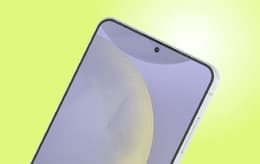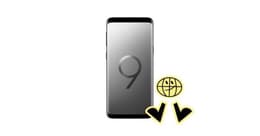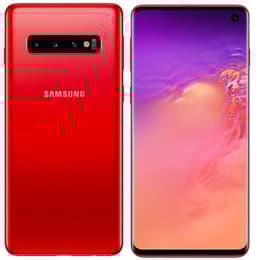
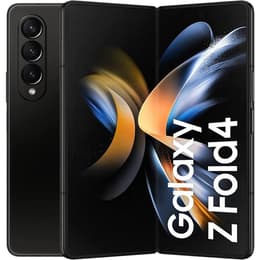

Galaxy S10 Vs Galaxy Z Fold4

Galaxy S10
Galaxy S10
Starting at

Refurbished price:£108.00

Versus £639.00 new

See options
Galaxy Z Fold4
Galaxy Z Fold4
Starting at

Refurbished price:£352.00

Versus £1,889.00 new

See options

Ratings

The Samsung Galaxy S10, released in March 2019, represents a traditional smartphone design, while the Samsung Galaxy Z Fold4, launched in August 2022, introduces a foldable form factor. These devices cater to different user preferences, primarily distinguished by their display technology and overall user experience. Both run on the Android operating system, but the Z Fold4 benefits from a more recent software foundation and optimizations for its unique design.

Scores

Durability

The practical lifespan of a smartphone is influenced by its release timeline, software support, and repairability.

  • Release Timeline: The Galaxy S10 was released in March 2019, making it an older device. The Galaxy Z Fold4, released in August 2022, is a much newer model, offering a longer period of relevance from its launch date.
  • OS Support Duration: The Galaxy S10 has reached the end of its major Android OS and security updates, having received three major Android OS upgrades and four years of security updates. In contrast, the Galaxy Z Fold4 is eligible for up to four major Android OS updates and five years of security updates, extending its software longevity significantly further into the future.
  • Repairability: The Galaxy S10 received a low repairability score of 3 out of 10 from iFixit, indicating that it is challenging to repair due to factors like glued-in batteries and soldered components. While specific repairability scores for the Z Fold4 are not as widely published, foldable devices generally present more complex repair challenges due to their intricate hinge mechanisms and specialized display technology.

Year of Release

2019

2022

Compatible with latest Update

No

Yes

OS

Android

Android

Foldable

No

Yes

Performance

Performance differences between these two devices are notable, primarily due to the generational gap in their internal components.

  • Processor Capabilities: The Galaxy Z Fold4 features a significantly newer and more efficient processor, allowing for smoother operation, faster app loading, and more capable handling of demanding applications and multitasking. The Galaxy S10, while a flagship in its time, will exhibit slower performance in comparison, particularly with modern, resource-intensive tasks.
  • Multitasking and RAM: The Galaxy Z Fold4 comes with 12 GB of RAM, providing ample capacity for extensive multitasking and keeping numerous applications open simultaneously without performance degradation. The Galaxy S10 typically offers 8 GB of RAM, which is sufficient for general use but may show limitations when managing many active applications or switching between heavy tasks.
  • Battery Behavior: The Galaxy Z Fold4 is equipped with a 4400 mAh battery, designed to support its larger and dual-screen setup, with users generally reporting all-day battery life. The Galaxy S10 has a 3400 mAh battery, which provided a full day of use for many users at its release, but its performance will have naturally degraded over time. The Z Fold4 also supports faster wired and wireless charging.

Memory (GB)

8 GB

12 GB

Screen quality

The display experience is a primary differentiator, with the Galaxy Z Fold4 offering a unique and expansive viewing area.

  • Display Technology and Size: The Galaxy S10 features a single 6.1-inch Dynamic AMOLED display with a resolution of 3040 x 1440 pixels. The Galaxy Z Fold4, in contrast, has two Dynamic AMOLED 2X displays: a 6.2-inch cover screen and a large 7.6-inch foldable main screen when unfolded. The foldable screen offers a tablet-like experience, enhancing productivity and media consumption.
  • Refresh Rate and Brightness: The Galaxy Z Fold4's displays both support a 120 Hz adaptive refresh rate, providing smoother scrolling and more fluid animations compared to the S10's standard refresh rate. The Z Fold4's main screen can also reach a peak brightness of 1200 nits, improving visibility in bright outdoor conditions.
  • Clarity and Viewing Experience: Both devices offer vibrant colors and deep blacks characteristic of AMOLED technology. The Z Fold4's larger unfolded screen provides a more immersive viewing experience, particularly for videos and multitasking, while the S10 offers a traditional, high-quality smartphone display.

Resolution

1440 x 3040

1812 x 2176

Screen type

Dynamic AMOLED

Foldable Dynamic AMOLED 2X

Audiovisual

Camera capabilities have evolved significantly between the release of these two models, with the Z Fold4 featuring a more advanced system.

  • Rear Camera System: The Galaxy S10 features a triple-lens rear camera setup with a 12 MP main lens, a 12 MP telephoto lens with 2x optical zoom, and a 16 MP ultra-wide lens. The Galaxy Z Fold4 also has a triple rear camera system, but with upgraded sensors: a 50 MP main sensor, a 12 MP ultra-wide, and a 10 MP telephoto lens with 3x optical zoom.
  • Photography Performance: The Z Fold4's larger main sensor and improved telephoto lens contribute to better low-light performance and more detailed zoomed-in shots compared to the S10. While the S10 was praised for its balanced and vibrant photos at its release, the Z Fold4 offers more modern image processing and sensor technology.
  • Front Cameras and Video: The Galaxy S10 has a 10 MP front camera. The Z Fold4 features a 10 MP cover screen camera and a 4 MP under-display camera on the main screen, which is primarily for video calls. Both devices are capable of 4K video recording, with the Z Fold4 offering more advanced stabilization and features.

Main camera

12 megapixels

50 megapixels

Front camera

10 megapixels

4 megapixels

Miscellaneous

Beyond core features, several practical elements distinguish these two Samsung smartphones.

  • Connectivity Options: The Galaxy S10 supports 4G LTE and Wi-Fi 6 (802.11ax), with a specific S10 5G variant offering 5G connectivity. The Galaxy Z Fold4 supports 5G across all models and features Wi-Fi 6E, offering faster and more reliable wireless connections. Both include Bluetooth (5.0 for S10, 5.2 for Fold4) and NFC for contactless payments.
  • Ports and Biometrics: The Galaxy S10 includes a 3.5mm headphone jack and a USB-C port, along with an ultrasonic in-display fingerprint sensor. The Galaxy Z Fold4 does not feature a headphone jack, relying solely on its USB-C port for wired connections and charging. It uses a side-mounted capacitive fingerprint scanner.
  • Physical Characteristics: The Galaxy S10 has a traditional slab design, weighing around 157 grams. The Galaxy Z Fold4 is a heavier device at 263 grams due to its foldable design and dual screens. Its folded dimensions are thicker than the S10, but it unfolds into a wider, tablet-like form. The Z Fold4 also boasts an IPX8 water resistance rating, while the S10 has IP68.

Weight

175 g

263 g

Screen size (in)

6.1

7.6

Mobile network

4G

5G

SIM card

Physical SIM

Dual Physical SIM + eSIM

Carrier compatibility

Unlocked

Unlocked

The Samsung Galaxy S10 and Galaxy Z Fold4 cater to distinct user needs, primarily separated by their form factor and generational advancements. Users often praise the Galaxy S10 for its traditional, pocketable design and the inclusion of a headphone jack, which is absent in many newer flagships. Its camera system, while older, still delivers capable results for everyday photography. However, a common criticism is its lack of ongoing software support, which can be a concern for long-term security and access to new features.

The Galaxy Z Fold4, on the other hand, is frequently lauded for its innovative foldable display, offering a large, immersive screen for productivity and media consumption. Users appreciate the enhanced multitasking capabilities and the more modern camera system. Some common concerns for foldable devices, including the Z Fold4, often revolve around their increased weight and thickness when folded, as well as the inherent durability considerations of a folding screen.

Users prioritizing a compact, traditional smartphone experience with a proven design might find the Galaxy S10 suitable, especially if long-term software updates are not a primary concern. Conversely, those who value cutting-edge technology, a versatile large display for productivity, and a modern camera system will likely prefer the Galaxy Z Fold4. Its extended software support also makes it a more future-proof option. For consumers evaluating these devices, considering a quality-assured refurbished option can provide an eco-friendly alternative to extend the life cycle of these technologies.
See all articles

Our recent comparisons