Galaxy S10 Vs Galaxy S10e

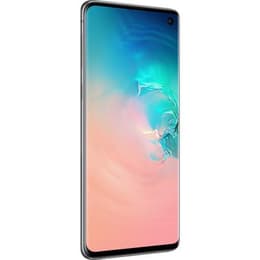
Galaxy S10
Galaxy S10
Starting at

Refurbished price:£112.00

Versus £459.00 new

See options
Galaxy S10e
Galaxy S10e
Starting at

Refurbished price:£92.00

Versus £439.00 new

See options

Ratings

The Samsung Galaxy S10 and Galaxy S10e, both released in March 2019, are part of Samsung's tenth generation of Galaxy S series smartphones. While sharing a core design philosophy and the Android operating system, the Galaxy S10 offers a larger, curved display and a more versatile camera system, whereas the Galaxy S10e presents a more compact form factor with a flat screen and a slightly different biometric sensor placement.

Scores

Durability

Both the Galaxy S10 and Galaxy S10e were launched in March 2019, meaning they have been on the market for several years. They initially ran on Android 9 Pie and received major operating system updates up to Android 12. As of early 2023, both models have ceased receiving quarterly security updates, marking the end of their official software support period.

  • Software Longevity: Users should be aware that major Android version updates are no longer provided for either device, and security updates have also concluded. This means newer applications or features requiring the latest Android versions may not be fully compatible.
  • Physical Durability: Both devices feature glass on the front and back, with the Galaxy S10 utilizing Gorilla Glass 6 for its display and the Galaxy S10e using Gorilla Glass 5. Both also carry an IP68 rating for dust and water resistance, indicating protection against immersion in up to 1.5 meters of fresh water for up to 30 minutes.
  • Expected Lifespan: While hardware can remain functional for an extended period, the absence of ongoing software and security updates means that the practical lifespan for users who prioritize the latest features and security protocols may be limited. However, for those who use their devices for basic tasks and are comfortable with an older software version, the hardware remains capable.

Year of Release

2019

2019

Compatible with latest Update

No

No

OS

Android

Android

Foldable

No

No

Performance

The Galaxy S10 and S10e were equipped with flagship-level processors at their release, providing robust performance for a variety of tasks. Both models offer configurations that handle everyday applications and multitasking efficiently.

  • Storage and RAM: The Galaxy S10 typically comes with 8GB of RAM and storage options of 128GB or 512GB. The Galaxy S10e offers 6GB or 8GB of RAM, with 128GB or 256GB of internal storage. Both devices support expandable storage via a microSD card, allowing users to increase their storage capacity.
  • Everyday Responsiveness: For general use, such as web browsing, social media, and email, both phones offer a smooth and responsive experience. Applications launch quickly, and navigation through the user interface is fluid.
  • Demanding Applications and Gaming: Both devices are capable of running demanding applications and graphically intensive games. The Galaxy S10, with its higher base RAM configuration, might offer a slight edge in maintaining more applications in the background without needing to reload them. Users have reported that even high-end games ran very well on the Galaxy S10e at its release, thanks to its powerful processor.
  • Battery Capacity: The Galaxy S10 features a 3400 mAh battery, while the Galaxy S10e has a 3100 mAh battery. Actual battery life varies based on usage patterns and network conditions. For heavy users, the smaller battery capacity of the S10e may necessitate more frequent charging.

Memory

8 GB

6 GB

Screen quality

Both the Galaxy S10 and S10e feature Dynamic AMOLED displays, known for their vibrant colors and deep blacks, but they differ in size, resolution, and design.

  • Display Technology and Clarity: Both phones utilize Dynamic AMOLED technology, which provides excellent contrast and color reproduction. The Galaxy S10 boasts a 6.1-inch display with a resolution of 3040 x 1440 pixels (QHD+), resulting in a pixel density of approximately 550 ppi. The Galaxy S10e has a more compact 5.8-inch display with a resolution of 2280 x 1080 pixels (FHD+), offering a pixel density of around 438 ppi. While the S10 offers a sharper display, the S10e's screen still provides crisp visuals, with some users noting that the lower resolution on a smaller screen is not a significant drawback.
  • Brightness and Viewing Experience: Both displays offer good brightness levels, making them suitable for outdoor use. The S10e, for instance, can reach a peak brightness that ensures good legibility even in bright sunlight. The Galaxy S10 features curved edges that subtly wrap around the sides of the device, contributing to an immersive viewing experience. In contrast, the Galaxy S10e has a flat display, which some users may prefer for its practicality and reduced accidental touches.
  • Refresh Rate: Both the Galaxy S10 and S10e feature a standard 60Hz refresh rate, providing a smooth experience for typical smartphone interactions.

Resolution

1440 x 3040

1080 x 2280

Screen type

Dynamic AMOLED

Dynamic AMOLED

Audiovisual

The camera systems on the Galaxy S10 and S10e offer capable photography and videography experiences, with the primary distinction being the number of rear lenses.

  • Rear Camera System: The Galaxy S10 is equipped with a versatile triple-camera setup on the rear, consisting of a 12MP wide-angle lens, a 12MP telephoto lens with 2x optical zoom, and a 16MP ultra-wide-angle lens. This telephoto lens allows for closer shots without significant loss of detail. The Galaxy S10e features a dual-camera system on the back, comprising a 12MP wide-angle lens and a 16MP ultra-wide-angle lens, but it omits the telephoto lens found on the S10.
  • Photography Performance: Both phones deliver good image quality in well-lit conditions, capturing detailed and vibrant photos. The addition of the telephoto lens on the S10 provides greater flexibility for zooming in on subjects. Both models include an ultra-wide-angle lens, which is useful for capturing expansive landscapes or group shots.
  • Video Recording and Audio: Both devices are capable of recording 4K video. They also feature stereo speakers, enhancing the media consumption experience, and retain a 3.5mm headphone jack for wired audio connections.

Main camera

12 megapixels

12 megapixels

Front camera

10 megapixels

10 megapixels

Miscellaneous

Beyond core specifications, several practical elements differentiate the user experience between the Galaxy S10 and S10e.

  • Connectivity and Ports: Both devices support 4G LTE networks, Wi-Fi 6, and Bluetooth 5.0, ensuring modern wireless connectivity. They both feature a USB-C port for charging and data transfer, and notably, both retain the 3.5mm headphone jack, a feature that has become less common in newer smartphones.
  • Biometric Security: The Galaxy S10 incorporates an ultrasonic in-display fingerprint sensor, allowing users to unlock the device by touching the screen. The Galaxy S10e, on the other hand, features a capacitive fingerprint sensor integrated into the power button on the side of the device. Both models also offer face recognition for unlocking.
  • Dimensions and Handling: The Galaxy S10 measures 149.9 x 70.4 x 7.8 mm and weighs 157 grams. The Galaxy S10e is more compact, with dimensions of 142.2 x 69.9 x 7.9 mm and a weight of 150 grams. This makes the S10e a lighter and potentially more comfortable device for one-handed use.
  • Build Materials: Both phones are constructed with a glass front and back, framed by aluminum, contributing to a premium feel.

Weight

157 g

150 g

Screen size (in)

6.1

5.8

Network

4G

4G

SIM card

Dual Physical SIM

Dual Physical SIM

Carrier compatibility

Unlocked

Unlocked

The Samsung Galaxy S10 and Galaxy S10e, while sharing a common lineage, cater to slightly different user preferences. User sentiment often praises the Galaxy S10 for its expansive, high-resolution curved display and the added versatility of its telephoto camera. Many appreciate the immersive viewing experience and the ability to capture a wider range of photographic subjects. Criticisms, particularly in the current landscape, often revolve around the cessation of major software and security updates, which can be a concern for users prioritizing long-term software support.

The Galaxy S10e is frequently lauded for its compact size, making it an appealing choice for those who prefer a smaller device that is easier to handle with one hand. Its flat display is also a point of preference for some users over the curved screen of the S10. While its dual-camera setup is capable, the absence of a telephoto lens is a noted difference. For both models, battery life, especially for heavy users, can be a consideration given their age.

Users prioritizing a larger, higher-resolution display with curved edges and a more comprehensive camera system, including a telephoto lens, may find the Galaxy S10 better suited to their needs. Conversely, users who value a more compact form factor, a flat screen, and a side-mounted fingerprint sensor will likely lean towards the Galaxy S10e. Both devices, even several years after their initial release, continue to offer capable performance for everyday tasks. Opting for a quality-assured refurbished option for either model can be an eco-friendly alternative for those seeking a reliable smartphone without contributing to new manufacturing.


See all articles

Our recent comparisons