
Galaxy A56 Vs Galaxy S23 FE

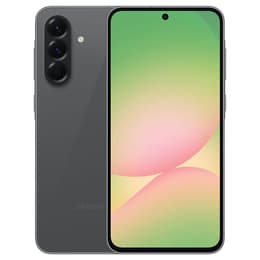
Galaxy A56
Galaxy A56
Starting at

Refurbished price:£274.00

Versus £422.50 new

See options
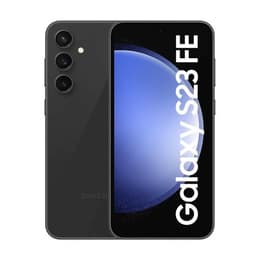
Galaxy S23 FE
Galaxy S23 FE
Starting at

Refurbished price:£162.00

Versus £605.75 new

See options

Ratings

The Samsung Galaxy A56, released in March 2025, and the Samsung Galaxy S23 FE (Fan Edition), launched in October 2023, represent distinct offerings within Samsung's smartphone lineup. While both devices run on the Android operating system with Samsung's One UI, they cater to different user priorities through their hardware and software philosophies. The A56 emphasizes extended software support and a larger display, whereas the S23 FE focuses on a more powerful processor and advanced camera capabilities.

Scores

Durability

When considering the long-term usability of these devices, their release timelines and software support policies are key factors. The Galaxy A56, being the newer device, benefits from a significantly longer commitment to software updates, while the Galaxy S23 FE, though still well-supported, has a shorter projected lifespan for major OS upgrades.

  • Software Longevity: The Galaxy A56 launched with Android 15 and is promised six major Android OS upgrades and six to seven years of security updates, extending its support until at least 2031 or 2032. In contrast, the Galaxy S23 FE, which debuted with Android 13, is slated to receive four major Android OS updates and five years of security patches, with support expected to continue until Android 17/2027.
  • Physical Durability: Both phones offer robust build quality with aluminum frames. The Galaxy A56 features Corning Gorilla Glass Victus+ on both the front and back, coupled with an IP67 rating for dust and water resistance. The Galaxy S23 FE uses Corning Gorilla Glass 5 for its display and back, and boasts a slightly higher IP68 rating, indicating enhanced protection against dust and water immersion.
  • Repairability: While specific repairability scores can vary by region and component availability, both Samsung devices are designed with modern smartphone construction, meaning professional repair services are generally recommended for significant damage. Opting for a quality-assured refurbished option can extend the life cycle of either device, offering a sustainable choice.

Year of Release

2025

2023

Compatible with latest Update

Yes

Yes

OS

Android

Android

Foldable

No

No

Performance

The performance of the Galaxy A56 and Galaxy S23 FE differs primarily due to their internal processing units, impacting how smoothly they handle demanding applications and multitasking. Both offer ample storage and RAM configurations to suit various user needs.

  • Processing Power: The Galaxy S23 FE is equipped with a processor that was considered flagship-tier at its release, providing robust performance for intensive gaming and complex applications. The Galaxy A56 features a newer, capable mid-range processor designed for efficient everyday use and smooth navigation through most apps. Users may notice the S23 FE offering a slightly smoother experience with animations and heavy workloads.
  • Multitasking and Storage: Both devices come with 8GB of RAM, with the A56 also offering a 12GB RAM option, ensuring efficient multitasking. Storage options for both include 128GB and 256GB. A notable difference is that the Galaxy A56 supports expandable storage via a microSD card up to 1TB, providing flexibility for users who require significant local storage, a feature absent in the Galaxy S23 FE.
  • Battery Performance: The Galaxy A56 houses a larger 5000mAh battery, generally translating to longer usage times between charges, especially for moderate users. The Galaxy S23 FE has a 4500mAh battery, which, while still capable, may require more frequent charging for heavy users. The A56 also supports faster 45W wired charging compared to the S23 FE's 25W wired charging.

Memory (GB)

8 GB

8 GB

Screen quality

The visual experience on both the Galaxy A56 and Galaxy S23 FE is vibrant and clear, thanks to their high-quality AMOLED displays, though there are distinctions in size, brightness, and display technology.

  • Display Technology and Size: The Galaxy A56 features a larger 6.7-inch Super AMOLED display, offering an expansive viewing area. The Galaxy S23 FE comes with a 6.4-inch Dynamic AMOLED 2X display, which some users might find more color-accurate and slightly sharper due to a higher pixel density, despite the A56's higher peak brightness. Both displays offer a crisp Full HD+ resolution.
  • Brightness and Smoothness: The Galaxy A56 boasts a higher peak brightness of 1900 nits, making it exceptionally visible in bright outdoor conditions. The Galaxy S23 FE reaches a peak brightness of 1450 nits, which is still very good for most environments. Both phones feature a 120Hz refresh rate, ensuring smooth scrolling and fluid animations, contributing to a responsive user experience.
  • Viewing Experience: Users prioritizing a larger screen for media consumption or productivity might lean towards the Galaxy A56. Those who prefer a slightly more compact device with potentially richer color reproduction may find the Galaxy S23 FE's display appealing. Both provide an immersive viewing experience for videos and browsing.

Resolution

1080 x 2340

1080 x 2340

Screen type

Super AMOLED

Dynamic AMOLED 2X

Audiovisual

The camera systems on the Galaxy A56 and Galaxy S23 FE offer different strengths, with one prioritizing versatility through a telephoto lens and the other focusing on detailed close-up shots.

  • Rear Camera Setup: The Galaxy S23 FE features a triple camera system comprising a 50MP main sensor with optical image stabilization (OIS), a 12MP ultrawide lens, and an 8MP telephoto lens capable of 3x optical zoom. This telephoto lens allows for clear zoomed-in shots without significant loss of detail. The Galaxy A56 also has a 50MP main sensor with OIS and a 12MP ultrawide lens, but it includes a 5MP macro lens instead of a telephoto, designed for capturing intricate details from very close distances.
  • Photography Performance: In everyday lighting, both phones deliver detailed and vibrant photos. The S23 FE's telephoto lens provides an advantage for distant subjects and portrait photography with natural background blur. The A56's macro lens is beneficial for users who enjoy close-up photography. Low-light performance is generally strong on both, with the S23 FE often producing brighter images with good contrast.
  • Video Recording and Front Camera: The Galaxy S23 FE offers more advanced video capabilities, supporting up to 8K resolution at 24 frames per second and 4K at 60 frames per second for both its rear and front cameras. The Galaxy A56 records video at a maximum of 4K resolution at 30 frames per second for both front and rear cameras. For selfies, the A56 has a 12MP front camera, while the S23 FE features a 10MP front camera, both capable of capturing detailed self-portraits.

Main camera

4K@30fps

50 megapixels

Front camera

13 megapixels

10 megapixels

Miscellaneous

Beyond core specifications, several practical elements differentiate the Galaxy A56 and Galaxy S23 FE, influencing daily usability and connectivity.

  • Connectivity and Ports: Both devices support 5G connectivity, ensuring fast mobile data speeds. They also feature USB-C ports for charging and data transfer, but neither includes a traditional 3.5mm headphone jack. The Galaxy A56 supports Wi-Fi 6 and Bluetooth 5.3, while the S23 FE also offers modern Wi-Fi and Bluetooth standards.
  • Security and Biometrics: Both smartphones incorporate an optical in-display fingerprint sensor for secure and convenient unlocking. They also support face recognition for an alternative biometric security method. User experiences suggest the fingerprint sensors on both devices offer similar responsiveness.
  • Design and Handling: The Galaxy A56 is slightly larger and lighter at 198 grams, with dimensions of 162.2 x 77.5 x 7.4 mm. The Galaxy S23 FE is a bit more compact but heavier at 209 grams, measuring 158 x 76.5 x 8.2 mm. The A56 features a glass front and back with an aluminum frame, while the S23 FE also uses glass for its back and an aluminum frame. The S23 FE's design is often noted for feeling more solid.

Weight

197 g

209 g

Screen size (in)

6.5

6.4

Mobile network

5G

5G

SIM card

Dual Physical SIM + eSIM

Dual Physical SIM

Carrier compatibility

Unlocked

Unlocked

The Samsung Galaxy A56 and Galaxy S23 FE each present a compelling package, tailored to different user preferences. User feedback often highlights the Galaxy A56's impressive battery life and its commitment to long-term software support as significant advantages. Some users appreciate its larger display for media consumption. Conversely, the Galaxy S23 FE is frequently praised for its more powerful processing capabilities, which translate to a smoother experience in demanding applications and gaming. Its camera system, particularly the inclusion of a telephoto lens and advanced video recording options, is also a common point of appreciation. Criticisms for the S23 FE sometimes revolve around its battery life for heavy users and its slightly thicker bezels compared to more premium devices. The A56, while offering excellent battery life, might not match the raw processing power of the S23 FE for performance-intensive tasks.

Users prioritizing extended software longevity, a larger display, and superior battery endurance for daily tasks will find the Galaxy A56 well-suited to their needs. Its expandable storage is also a key differentiator for those who require ample local storage. On the other hand, users who value a more powerful processor for gaming and demanding apps, along with a versatile camera system featuring optical zoom and higher-resolution video recording, may lean towards the Galaxy S23 FE. The inclusion of wireless charging on the S23 FE is another practical feature for some. Both devices offer a reliable Android experience, and considering a quality-assured refurbished option for either model can provide an eco-friendly alternative to new purchases, ensuring a device that meets performance and sustainability expectations.


See all articles

Our recent comparisons