
Google Pixel 6A Vs iPhone 12 Pro

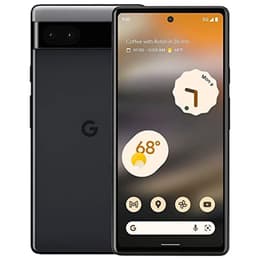
Google Pixel 6A
Google Pixel 6A
Starting at

Refurbished price:£107.00

Versus £459.00 new

See options
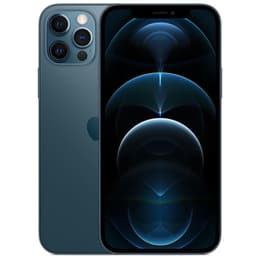
iPhone 12 Pro
iPhone 12 Pro
Starting at

Refurbished price:£205.00

Versus £879.00 new

See options

Ratings

The Google Pixel 6A, released in July 2022, and the iPhone 12 Pro, launched in October 2020, represent distinct approaches to smartphone design and functionality from their respective manufacturers. While both devices offer capable performance and camera systems, they differ significantly in their operating systems, build materials, and specific feature sets. The Pixel 6A runs on the Android platform, emphasizing computational photography and a streamlined user experience, whereas the iPhone 12 Pro operates within the iOS ecosystem, known for its integrated services and premium construction.

Scores

Durability

When considering the longevity of these devices, their release timelines and software support policies are key factors. The practical lifespan of a smartphone is often tied to its ability to receive ongoing software and security updates, as well as its physical durability.

  • Software Support: The Google Pixel 6A, released in July 2022, is expected to receive major Android operating system updates until at least July 2025 and security updates until July 2027. The iPhone 12 Pro, launched in October 2020, typically receives iOS updates for 5 to 7 years from its release. Given that the current iOS version is 26.3.1 as of March 2026, the iPhone 12 Pro is still receiving updates and is anticipated to continue doing so for a period, likely until around 2027.
  • Build Materials and Durability: The iPhone 12 Pro features a Ceramic Shield front cover, which offers enhanced drop performance, along with a textured matte glass back and a stainless steel frame. The Pixel 6A utilizes Corning Gorilla Glass 3 for its display protection, paired with a plastic back and an aluminum frame. Both devices carry water and dust resistance ratings, with the iPhone 12 Pro rated IP68 and the Pixel 6A rated IP67.
  • Expected Practical Lifespan: Both phones are designed for several years of use. The iPhone 12 Pro's premium materials may offer a more resilient feel, while the Pixel 6A's software support timeline provides a clear expectation for its functional longevity within the Android ecosystem.

Year of Release

2022

2020

Compatible with latest Update

Yes

Yes

OS

Android

iOS

Foldable

No

No

Performance

The performance of a smartphone is crucial for daily tasks, from navigating applications to managing multiple processes simultaneously. Both the Pixel 6A and the iPhone 12 Pro offer capable internal hardware designed to handle a variety of user demands.

  • Processing Power: The Google Pixel 6A is equipped with a processor that allows it to handle demanding applications and multitasking smoothly, contributing to a responsive user experience. The iPhone 12 Pro features a processor that delivers strong performance for everyday activities, gaming, and intensive applications, ensuring a fluid interaction with the iOS operating system.
  • Battery Behavior: The Pixel 6A houses a 4410 mAh battery, with users often reporting that it can comfortably last through a full day of typical use. The iPhone 12 Pro, with a 2815 mAh battery, generally provides sufficient power for a day of moderate use, though heavy users might find themselves needing to recharge more frequently.
  • Multitasking and Storage: Both devices come with 6GB of RAM, which aids in efficient multitasking and app management. For internal storage, the Pixel 6A is available with 128GB, while the iPhone 12 Pro offers more options, including 128GB, 256GB, and 512GB configurations.

Memory (GB)

6 GB

6 GB

Screen quality

The display is a primary interface for smartphone interaction, influencing everything from content consumption to daily navigation. Both devices feature high-quality screens, though with some distinctions in their specifications.

  • Display Technology and Resolution: The Google Pixel 6A features a 6.1-inch OLED display with a resolution of 1080 x 2400 pixels, providing clear and vibrant visuals. The iPhone 12 Pro also has a 6.1-inch display, utilizing Super Retina XDR OLED technology with a resolution of 1170 x 2532 pixels, offering deep blacks and rich colors.
  • Brightness and Refresh Rate: Both phones feature a standard 60Hz refresh rate, which provides a smooth experience for most everyday tasks. While the Pixel 6A's 60Hz display is a point of discussion for some, many users find it to be adequately smooth due to software optimizations. The iPhone 12 Pro's display offers higher peak brightness, particularly beneficial for viewing HDR content.
  • Viewing Experience: Both devices deliver an immersive viewing experience for their size, with the OLED technology ensuring excellent contrast. The iPhone 12 Pro's Ceramic Shield front cover provides additional durability for its display.

Resolution

1080 x 2400

1170 x 2532

Screen type

OLED

Super Retina XDR OLED

Audiovisual

Camera capabilities are a significant consideration for many smartphone users, and both the Pixel 6A and iPhone 12 Pro offer advanced systems for capturing photos and videos.

  • Rear Camera Systems: The Google Pixel 6A is equipped with a dual-camera setup, featuring a 12.2 MP wide lens and a 12 MP ultrawide lens. It is particularly recognized for its computational photography, producing strong still images, especially in various lighting conditions. The iPhone 12 Pro boasts a triple-camera system, including 12 MP wide, 12 MP ultrawide, and 12 MP telephoto lenses, complemented by a LiDAR scanner. This setup provides greater versatility, including optical zoom capabilities.
  • Photography and Video Performance: The Pixel 6A excels in everyday photography and low-light scenarios, leveraging its software for impressive results. The iPhone 12 Pro offers a versatile system with its telephoto lens for zoomed shots and benefits from the LiDAR scanner for improved autofocus in low light. Its video recording quality and features are also a strong point.
  • Front Camera and Audio: For selfies and video calls, the Pixel 6A includes an 8 MP front camera, while the iPhone 12 Pro features a 12 MP front camera. Both phones provide good audio output through their stereo speakers, enhancing the media consumption experience.

Main camera

12.2 megapixels

12 megapixels

Front camera

8 megapixels

12 megapixels

Miscellaneous

Beyond core performance and display, several practical features and design elements contribute to the overall user experience of a smartphone.

  • Connectivity and Ports: Both devices support 5G connectivity for faster mobile data speeds. The Google Pixel 6A features Wi-Fi 6E and Bluetooth 5.2, and utilizes a USB-C 3.1 port for charging and data transfer. The iPhone 12 Pro supports Wi-Fi 6 and Bluetooth 5.0, and uses Apple's proprietary Lightning port.
  • Biometric Security and Design: The Pixel 6A incorporates an under-display fingerprint sensor for secure unlocking. The iPhone 12 Pro relies on Face ID, Apple's facial recognition system. In terms of physical design, the Pixel 6A has a plastic back and an aluminum frame, weighing 178 grams with dimensions of 152.2 x 71.8 x 8.9 mm. The iPhone 12 Pro features a more premium build with a textured matte glass back, a stainless steel frame, and a Ceramic Shield front, weighing 189 grams with dimensions of 146.7 x 71.5 x 7.4 mm.
  • Other Features: The iPhone 12 Pro also includes MagSafe technology for magnetic accessories and wireless charging.

Weight

250 g

187 g

Screen size (in)

6.1

6.1

Mobile network

5G

5G

SIM card

Physical SIM + eSIM

Physical SIM + eSIM

Carrier compatibility

Unlocked

Unlocked

Connector

USB-C

Lightning

The Google Pixel 6A and the iPhone 12 Pro cater to different user preferences, each offering a distinct set of strengths. Users frequently praise the Pixel 6A for its exceptional camera capabilities, particularly its computational photography, which delivers impressive still images. Its clean Android experience and compact size are also commonly highlighted as positive attributes. However, some users have noted its 60Hz display and the performance of its in-display fingerprint sensor as areas for improvement.

Conversely, the iPhone 12 Pro is often lauded for its premium build quality, robust performance, and the versatility of its triple-camera system, especially the inclusion of a telephoto lens. The consistent and integrated iOS ecosystem is another significant draw for its users. Common criticisms sometimes revolve around its battery life compared to newer models and its slightly heavier feel due to the stainless steel frame.

Users prioritizing advanced computational photography, a pure Android experience, and a compact form factor may find the Google Pixel 6A well-suited to their needs. On the other hand, those who value a premium design, a versatile camera system with optical zoom, and the integrated services of the iOS ecosystem may lean towards the iPhone 12 Pro. Both devices remain capable smartphones, and choosing a quality-assured refurbished option can be an eco-friendly alternative for either model.

See all articles

Our recent comparisons