

Compare models

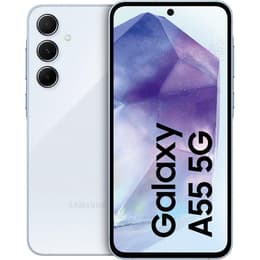
Galaxy A55 Vs iPhone 17 Pro

  • 1-year minimum warranty
  • Free delivery on all items
  • Free 30-day returns
Galaxy A55
Starting at

Refurbished price:£179.00

Versus £356.69 new

See options
iPhone 17 Pro
Starting at

Refurbished price:£837.00

Versus £1,099.00 new

See options

Differences at a glance

The Samsung Galaxy A55 (2024) and the iPhone 17 Pro (2025) represent two distinct approaches to modern smartphone engineering, spanning different market segments and software ecosystems. While the Galaxy A55 runs on the open Android platform with Samsung's custom interface, the iPhone 17 Pro operates on Apple's tightly integrated iOS system. Despite their contrasting positioning, both devices serve users seeking reliable daily communication, capable optics, and modern connectivity, though they cater to vastly different expectations regarding performance ceilings and hardware capabilities.

Available Models

Colour

Storage

Scores

Durability

Long-term software support and hardware durability vary significantly between these two models based on their release timelines and intended device class.

  • Software support timelines: The iPhone 17 Pro benefits from Apple's extended update schedule, receiving major system upgrades for many years. The Galaxy A55 also features a multi-year update commitment, though its overall lifecycle aligns with its mid-range positioning.
  • Repairability and build resilience: Both handsets incorporate robust exterior materials, such as durable glass and reinforced framing, to withstand routine wear and tear while maintaining standard repair pathways.
  • Expected practical lifespan: Users can anticipate smooth daily operation from both models over several years, with the iPhone model retaining high performance headroom for demanding applications further into its lifecycle.

Year of Release

2024

2025

Compatible with latest Update

Yes

Yes

OS

Android

iOS

Foldable

No

No

Performance

System responsiveness and hardware capabilities reflect the different processing tiers and storage configurations offered by each manufacturer.

  • Multitasking and daily fluidity: The iPhone 17 Pro handles heavy mobile gaming, intensive editing suites, and rapid app switching effortlessly. The Galaxy A55 manages routine tasks, social media browsing, and moderate multitasking smoothly with its balanced mid-range processor configuration.
  • Storage and memory management: Both devices offer multiple internal storage tiers to accommodate personal files and media libraries, paired with efficient memory allocation to keep active applications running reliably.
  • Battery behavior in daily routines: Power efficiency varies under heavy workloads, with larger battery capacities in both models designed to support a full day of standard mixed usage before requiring a recharge.

Screen quality

Visual output and display technologies deliver bright, sharp viewing experiences tailored for media consumption and navigation.

  • Display panels and visual clarity: Both smartphones utilize advanced OLED display technology, delivering deep blacks, high contrast ratios, and sharp resolutions that render text and images with great clarity.
  • Outdoor visibility and brightness: High peak brightness levels on both screens ensure that menus, maps, and photos remain clearly legible under direct sunlight or bright ambient lighting conditions.
  • Refresh rate and scrolling smoothness: High refresh rate support ensures fluid motion during scrolling animations, web browsing, and interactive gaming experiences across both device interfaces.

Resolution

1080 x 2340

2622x1206

Screen type

Super AMOLED

Super Retina XDR

Audiovisual

Optics and media capture systems provide flexible tools for recording everyday moments, video calls, and creative projects.

  • Multi-lens camera versatility: The iPhone 17 Pro features a sophisticated multi-sensor rear camera array, including dedicated telephoto zoom capabilities. The Galaxy A55 equips a primary, ultra-wide, and macro lens setup suited for standard photography needs.
  • Low-light and video performance: Advanced image processing on the iPhone model excels in challenging lighting conditions and high-resolution video recording. The Galaxy A55 captures balanced, clear daylight photos and stable video clips for casual sharing.
  • Audio output and media playback: Integrated stereo speakers deliver clear voice calls and immersive sound output for streaming music and watching videos without requiring external accessories.

Main camera

50 megapixels

48 megapixels

Front camera

32 megapixels

18 megapixels

Miscellaneous

Physical dimensions, connectivity standards, and daily usability features define the ergonomic profile of each device.

  • Biometric security and sensors: The iPhone 17 Pro relies on advanced facial recognition, whereas the Galaxy A55 utilizes an in-display fingerprint sensor alongside facial recognition options.
  • Connectivity and physical ports: Both models support modern fifth-generation cellular networks, rapid Wi-Fi standards, and universal USB-C connectivity for charging and data transfer.
  • Handling and ergonomics: Weight distribution and physical sizing differ slightly, impacting how the devices rest in pockets or hands during prolonged one-handed operation. Choosing a quality-assured refurbished option can make these advanced features a more sustainable choice for environmentally conscious buyers.

Weight

213 g

206 g

Screen size (in)

6.6

6.3

Mobile network

5G

5G

SIM card

Dual Physical SIM

Physical SIM + eSIM

Carrier compatibility

Unlocked

Unlocked

Connector

USB-C

USB-C

What the community thinks

User discussions across community forums highlight distinct preferences for each device based on operating system familiarity and hardware expectations. Owners of the Galaxy A55 frequently praise its reliable daily battery life, clean screen quality, and balanced feature set relative to its class. Conversely, iPhone 17 Pro users often emphasize the advanced camera flexibility, robust processing speed, and long-term ecosystem integration as primary advantages. Common criticisms for the mid-range model typically center on occasional processing limitations during heavy gaming, while feedback on the Apple flagship occasionally notes its heavier weight and advanced complexity.

Users prioritizing a closed, high-performance ecosystem with advanced photography tools may prefer the iPhone 17 Pro, while users seeking a dependable, everyday device for messaging, media, and browsing will find the Galaxy A55 well-suited to their needs. Reviewing a quality-assured refurbished option provides a sustainable choice for consumers aiming to reduce environmental impact while acquiring reliable technology. Ultimately, the decision rests on matching personal software preferences and performance demands with the specific strengths of each smartphone.