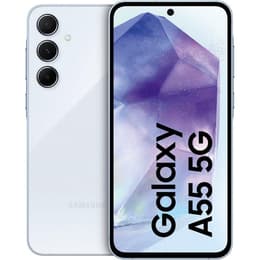
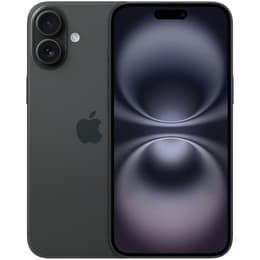

Galaxy A55 Vs iPhone 16 Plus

Galaxy A55
Galaxy A55
Starting at

Refurbished price:£192.21

Versus £479.00 new

See options
iPhone 16 Plus
iPhone 16 Plus
Starting at

Refurbished price:£502.00

Versus £799.00 new

See options

Ratings

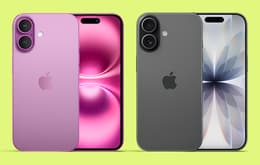
The Samsung Galaxy A55 5G, released in March 2024, is a mid-range Android smartphone, while the iPhone 16 Plus, launched in September 2024, represents Apple's larger-screen, high-end iOS offering. These devices cater to different user ecosystems and priorities, with the Galaxy A55 focusing on a feature-rich Android experience and the iPhone 16 Plus emphasizing seamless integration within the Apple ecosystem. Key differentiators include their operating systems, performance tiers, and camera philosophies.

Scores

Durability

When considering the longevity of these devices, both offer substantial software support and improved repairability, contributing to their practical lifespan.

  • Software Updates: The Samsung Galaxy A55 5G is slated to receive four major Android OS upgrades and five years of security updates, extending its software support until approximately March 2029. In contrast, the iPhone 16 Plus, running iOS, typically receives major iOS updates for six to seven years, suggesting support until around 2031.
  • Repairability: The Galaxy A55 5G has a high repairability score, often cited around 8.5 out of 10, due to its modular design, easier component access, and pull tabs for battery removal. The iPhone 16 Plus also marks a significant improvement in repairability for Apple devices, achieving an iFixit score of 7 out of 10, featuring a new battery removal method and a design that allows access from both the front and back.
  • Physical Durability: The Galaxy A55 5G features a metal frame and Gorilla Glass Victus+ on the front, along with an IP67 rating for dust and water resistance. The iPhone 16 Plus incorporates an aluminum design with a Ceramic Shield front and color-infused glass back, offering IP68 water resistance.

Year of Release

2024

2024

Compatible with latest Update

Yes

Yes

Foldable

No

No

Performance

The performance of these smartphones varies significantly due to their distinct hardware and software architectures, impacting how they handle daily tasks and demanding applications.

  • Processing Power: The Samsung Galaxy A55 5G is powered by an in-house processor designed to handle everyday tasks and moderate gaming smoothly, showing improved efficiency compared to its predecessors. The iPhone 16 Plus features a current-generation chip with a new CPU, GPU, and Neural Engine, delivering a substantial leap in performance and efficiency, which supports demanding applications and advanced gaming.
  • Multitasking and Storage: The Galaxy A55 5G offers configurations with up to 12GB of RAM and provides expandable storage via a microSD card slot, allowing users to increase storage capacity. The iPhone 16 Plus comes with 8GB of RAM and offers various internal storage options up to 512GB, without expandable storage.
  • Battery Performance: The Galaxy A55 5G is equipped with a 5000mAh battery, which generally provides a full day of use for many users, though heavy usage or the 120Hz display can lead to more frequent charging. The iPhone 16 Plus features a 4674 mAh battery and is noted for its extended battery life, often lasting into a second day for many users, even with considerable use.

Memory (GB)

8 GB

8 GB

Screen quality

Both devices offer vibrant displays, but they differ in technology and refresh rate, influencing the visual experience for users.

  • Display Technology and Clarity: The Samsung Galaxy A55 5G features a 6.6-inch Super AMOLED display with a Full HD+ resolution (2340x1080 pixels), providing sharp and vibrant visuals with deep blacks. The iPhone 16 Plus sports a 6.7-inch Super Retina XDR OLED display with a resolution of 2796x1290 pixels, offering high clarity and excellent color accuracy.
  • Brightness and Refresh Rate: The Galaxy A55 5G boasts a 120Hz refresh rate for smooth scrolling and animations, with a peak brightness of 1000 nits, ensuring good visibility in various lighting conditions. The iPhone 16 Plus maintains a 60Hz refresh rate, which provides a consistent visual experience, and offers high brightness levels, reaching up to 2000 nits peak brightness outdoors for clear viewing even in direct sunlight.
  • Design Elements: The iPhone 16 Plus includes the Dynamic Island, an interactive area at the top of the display that adapts to alerts and activities. The Galaxy A55 5G features a punch-hole cutout for its front camera.

Resolution

1080 x 2340

1290 x 2796

Screen type

Super AMOLED

Super Retina XDR OLED

Audiovisual

The camera systems on both smartphones are designed to capture high-quality images and videos, though they approach photography with different hardware and software enhancements.

  • Rear Camera System: The Samsung Galaxy A55 5G is equipped with a triple rear camera setup, including a 50MP main sensor with optical image stabilization, a 12MP ultrawide lens, and a 5MP macro lens. It offers improved AI image processing for low-light conditions and 12-bit HDR video. The iPhone 16 Plus features an advanced dual-camera system with a 48MP Fusion Main camera that uses sensor-shift optical image stabilization and can achieve 2x telephoto-like shots through sensor cropping, alongside a 12MP Ultra Wide camera.
  • Photography Features: The Galaxy A55 5G's main camera is noted for capturing detailed images with good color vibrancy and dynamic range in daylight, and its nightography is considered effective. The iPhone 16 Plus includes features like Photonic Engine, Deep Fusion, Smart HDR 5, and next-generation Photographic Styles, enhancing image quality across various scenarios, particularly in low light. It also introduces a dedicated Camera Control button for fine-tuning settings.
  • Video Capabilities and Front Camera: Both devices support 4K video recording at 30 frames per second from their main cameras. The iPhone 16 Plus extends this with 4K Dolby Vision video recording at up to 60 frames per second, Cinematic mode, and spatial video recording. For selfies, the Galaxy A55 5G has a 32MP front camera, while the iPhone 16 Plus features a 12MP front camera with autofocus.

Main camera

50 megapixels

48 megapixels

Front camera

32 megapixels

12 megapixels

Miscellaneous

Beyond core features, several practical elements contribute to the overall user experience and connectivity of these smartphones.

  • Connectivity and Ports: Both devices support 5G connectivity for fast mobile data. The Samsung Galaxy A55 5G includes Wi-Fi and Bluetooth 5.3, along with a USB Type-C 2.0 port. The iPhone 16 Plus offers more advanced Wi-Fi 7 (802.11be) and Bluetooth 5.3, a USB Type-C port, and satellite capabilities for emergency services.
  • Biometrics and User Interface: The Galaxy A55 5G features an in-display fingerprint sensor for secure unlocking. The iPhone 16 Plus relies on Face ID for facial recognition and includes a customizable Action button, which can be programmed for various functions like launching the camera or flashlight.
  • Design and Handling: The Galaxy A55 5G weighs 213 grams and measures 161.1 x 77.0 x 8.2mm. The iPhone 16 Plus is slightly lighter at 199 grams and has dimensions of 160.9 x 77.8 x 7.8mm, offering a large screen experience in a relatively manageable form factor.

Weight

213 g

199 g

Screen size (in)

6.6

6.7

Mobile network

5G

5G

SIM card

Dual Physical SIM

Physical SIM + eSIM

Carrier compatibility

Unlocked

Unlocked

Connector

USB-C

USB-C (USB 2)

The Samsung Galaxy A55 5G and iPhone 16 Plus offer distinct experiences tailored to different user preferences. Users often praise the Galaxy A55 5G for its vibrant AMOLED display, expandable storage, and robust software support policy for a mid-range device. Some users, however, have noted mixed results regarding its battery life under heavy drain tests and find its daylight camera performance to be average compared to some competitors. The iPhone 16 Plus is frequently lauded for its exceptional battery life, powerful performance, and significant improvements in camera capabilities, including new photographic controls. A common point of discussion for the iPhone 16 Plus is its 60Hz display, which some users find less fluid than higher refresh rate screens available on other devices.

Users prioritizing an extensive Android ecosystem, customizable storage, and a high repairability score may find the Samsung Galaxy A55 5G well-suited to their needs. Conversely, those who value long-lasting battery performance, a powerful and efficient operating system, and deep integration with Apple's services will likely lean towards the iPhone 16 Plus. Both devices represent solid choices within their respective categories, and opting for a quality-assured refurbished option can provide an eco-friendly alternative for either model, extending their lifecycle and offering a sustainable choice.

See all articles

Our recent comparisons