Compare models
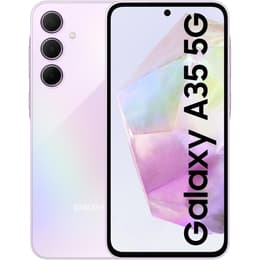
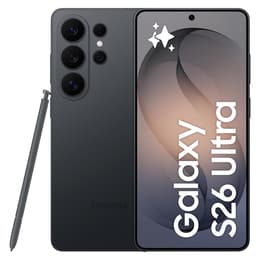
Galaxy A35 Vs Galaxy S26 Ultra
- 1-year minimum warranty
- Free delivery on all items
- Free 30-day returns
Differences at a glance
The Samsung Galaxy A35 (2024) and the Samsung Galaxy S26 Ultra (2026) represent two entirely different tiers within the smartphone market, catering to vastly distinct user requirements. While the Galaxy A35 focuses on delivering core everyday capabilities through a balanced mid-range approach, the Galaxy S26 Ultra serves as a flagship powerhouse packed with advanced technological capabilities. Both devices operate on the Android operating system, though they offer varying levels of interface depth and software feature longevity.
Understanding how these two models diverge in daily performance, build philosophy, and hardware sophistication helps users identify which device aligns best with their specific lifestyle and workflow priorities.
Available Models
Colour
Storage (GB)
Scores
Durability
When examining longevity and durability, both models offer distinct timelines regarding software support and physical construction quality.
- Software support timeline: The Galaxy S26 Ultra benefits from an extended multi-year update policy typical of modern high-end devices, ensuring long-term security. The Galaxy A35 also receives multi-year security patches, though its total active window concludes earlier than its flagship counterpart.
- Repairability and physical endurance: Both handsets feature robust front glass protection and dust-resistance certifications, but high-end flagships frequently utilize advanced titanium or armor aluminum alloys designed to withstand structural stress more effectively during accidental drops.
- Expected practical lifespan: Users can anticipate several years of reliable operation from either device, though the higher hardware headroom on the flagship ensures it remains responsive through heavier software advancements over time.
Year of Release
2024
2026
Compatible with latest Update
Yes
Yes
OS
Android
Android
Foldable
No
No
Performance
Underneath the surface, processing capability and memory configurations dictate how smoothly each smartphone manages day-to-day operations and demanding workloads.
- Everyday multitasking and app execution: The Galaxy S26 Ultra handles resource-heavy applications, advanced mobile gaming, and rapid multitasking without stuttering, thanks to its high-tier internal processor and generous memory capacity. The Galaxy A35 handles standard messaging, web browsing, and social media smoothly, though heavy multitasking may occasionally introduce minor loading delays.
- Storage configurations: The Galaxy S26 Ultra starts with significantly higher base storage and offers expansive upper tiers for large media libraries, while the Galaxy A35 provides modest baseline storage paired with expandable memory options via microSD cards.
- Battery behavior: Both devices manage daily energy efficiently, but the flagship includes optimized power management features that sustain intensive usage profiles through a full day before requiring a recharge.
Screen quality
Visual output and display responsiveness play a critical role in the user experience, especially for media consumption and navigation.
- Display technology and clarity: Both models utilize vibrant OLED panels that deliver deep contrast levels and sharp resolution, ensuring text and images appear crisp during reading or video playback.
- Outdoor visibility and brightness: The Galaxy S26 Ultra achieves exceptionally high peak brightness levels, making content easily legible under direct sunlight, whereas the Galaxy A35 offers sufficient brightness for standard outdoor environments but may require shading on exceptionally sunny days.
- Refresh rate and fluidity: Both devices support high refresh rate capabilities, resulting in smooth scrolling through menus and web pages, though advanced dynamic refresh technology on the flagship adjusts automatically to conserve power during static viewing.
Resolution
1080 x 2340
1440 x 3120
Audiovisual
Imaging hardware and multimedia output vary significantly, reflecting the divergent market positions of each device.
- Camera versatility: The Galaxy S26 Ultra features a multi-lens array including an ultra-high-resolution main sensor, dedicated telephoto lenses for distant subjects, and a wide-angle option. The Galaxy A35 provides a capable main and ultra-wide sensor setup suitable for casual snapshots and landscape photography.
- Low-light and video performance: The flagship captures detailed low-light imagery with minimal noise and supports advanced stabilization for high-definition video recording, while the mid-range model performs adequately in well-lit conditions but introduces grain in dim environments.
- Audio and media consumption: Stereo speakers on both smartphones deliver clear dialogue for videos, though the flagship provides a wider soundstage with deeper bass response for music playback.
Front camera
13 megapixels
12.0
Miscellaneous
Practical physical attributes and connectivity standards shape how easily each smartphone integrates into daily routines.
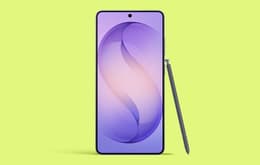
- Build materials and handling: The Galaxy S26 Ultra features a substantial footprint with flat-edge titanium styling and an integrated stylus slot, whereas the Galaxy A35 utilizes a lighter plastic frame with rounded glass edges that feel compact in the hand.
- Connectivity standards: Both options support 5G cellular networks and modern wireless standards, though the flagship incorporates faster Wi-Fi protocols for rapid data transfers.
- Biometric security: Both devices offer responsive optical under-display fingerprint scanners alongside facial recognition features for secure unlocking.
Weight
209 g
214 g
Screen size (in)
6.6
6.9
Mobile network
5G
5G
SIM card
Dual Physical SIM
Physical SIM + eSIM
Carrier compatibility
Unlocked
Unlocked
Connector
USB-C
USB-C
What the community thinks
Choosing between the Samsung Galaxy A35 and the Samsung Galaxy S26 Ultra depends heavily on individual usage patterns and performance expectations. Users prioritizing long-term processing headroom, versatile multi-lens photography, and a vibrant high-brightness display will find the Galaxy S26 Ultra well-suited to their needs. Conversely, users seeking a straightforward, reliable device for messaging, browsing, and media consumption without advanced flagship complexity often prefer the practical balance offered by the Galaxy A35.
For conscious consumers looking to minimize environmental impact, opting for a quality-assured refurbished option provides a sustainable pathway to acquiring either device. Evaluating these core differences ensures a satisfying choice that aligns with personal daily routines and preferences.