
Compare models
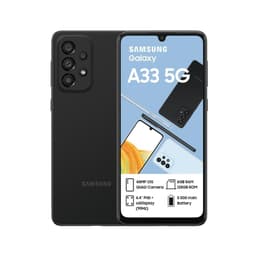
Galaxy A33 5G Vs iPhone 17 Pro
- 1-year minimum warranty
- Free delivery on all items
- Free 30-day returns
Differences at a glance
The Samsung Galaxy A33 5G (2022) and the iPhone 17 Pro (2025) represent entirely different tiers of the smartphone market, catering to distinct expectations regarding technology and utility. While the Galaxy A33 5G focuses on providing core connectivity and essential daily features at a broad consumer level, the iPhone 17 Pro delivers advanced mobile innovations and high-end hardware capabilities. Operating on Android and iOS respectively, these two devices shape user experiences through distinct software ecosystems and hardware philosophies.
Available Models
Colour
Storage (GB)
Scores
Durability
When evaluating the long-term viability of these devices, differences in their release timelines and support frameworks shape expectations for everyday use.
- Software longevity: The iPhone 17 Pro benefits from an extended software support window typical of recent flagship models, whereas the Galaxy A33 5G operates on a mid-range update schedule that covers several years of security patches and system updates.
- Repairability and build: Both devices feature sealed structures that require professional intervention for major internal repairs, though common component replacements are widely supported by service networks globally.
- Expected lifespan: Users choosing a quality-assured refurbished option can expect reliable day-to-day operation from either device, with the newer model retaining peak performance headroom further into the decade.
Year of Release
2022
2025
Compatible with latest Update
Yes
Yes
OS
Android
iOS
Foldable
No
No
Performance
Day-to-day execution speeds and hardware resource handling vary significantly between these two models due to their contrasting internal architectures.
- Multitasking and processing: The iPhone 17 Pro handles demanding mobile games and heavy creative applications without thermal throttling, while the Galaxy A33 5G manages standard everyday tasks, messaging, and casual media streaming smoothly.
- Storage configurations: Both devices offer multiple internal storage tiers to accommodate varying media libraries, though neither model includes expandable storage via memory cards.
- Battery behavior: Power management systems on both phones generally support a full day of mixed usage, though heavy media consumption or navigation draws down capacity faster on the mid-range model compared to its high-end counterpart.
Screen quality
Visual output and panel characteristics define how comfortably each device handles media consumption, reading, and outdoor visibility.
- Display technology: Both models utilize vibrant OLED display panels that deliver deep contrast levels and rich colors, though the iPhone 17 Pro incorporates advanced adaptive refresh rate technology for smoother scrolling.
- Brightness and outdoor clarity: Peak outdoor brightness levels are notably higher on the iPhone 17 Pro, making text easier to read under direct sunlight compared to the Galaxy A33 5G.
- Panel dimensions: Screen sizes differ slightly, offering choices between compact handling and expansive viewing space depending on user preference for pocketability versus screen real estate.
Resolution
1080 x 2400
2622x1206
Screen type
Super AMOLED
Super Retina XDR
Audiovisual
Imaging hardware and audio-visual reproduction capabilities differ substantially, reflecting the distinct market positioning of each smartphone.
- Camera versatility: The iPhone 17 Pro features a multi-lens system including advanced telephoto capabilities and high-resolution recording formats, whereas the Galaxy A33 5G equips a reliable multi-camera setup suited for casual snapshots and standard documentation.
- Low-light performance: Advanced sensor hardware on the iPhone 17 Pro captures greater detail and dynamic range in challenging lighting conditions than the mid-range sensor on the Galaxy A33 5G.
- Media and audio output: Stereo speaker setups on both devices deliver clear sound for hands-free calls and video playback, with the higher-tier model offering deeper bass response and wider sound separation.
Main camera
48 megapixels
48 megapixels
Front camera
13 megapixels
18 megapixels
Miscellaneous
Physical dimensions, build materials, and connectivity standards dictate how each device integrates into daily routines and travel requirements.
- Build materials: The iPhone 17 Pro utilizes titanium framing and textured glass for a resilient exterior structure, while the Galaxy A33 5G employs a durable plastic frame and rear panel designed for lightweight handling.
- Connectivity standards: Both smartphones support modern 5G networks, fast Wi-Fi protocols, and Bluetooth connectivity for wireless accessories.
- Physical ports: The iPhone 17 Pro uses a universal USB-C standard for charging and data transfer, matching the modern connection standard found on the Galaxy A33 5G.
Weight
186 g
206 g
Screen size (in)
6.4
6.3
Mobile network
5G
5G
SIM card
Dual Physical SIM
Physical SIM + eSIM
Carrier compatibility
Unlocked
Unlocked
What the community thinks
Consumer feedback indicates that the Samsung Galaxy A33 5G satisfies users looking for a dependable communication tool that handles messaging, web browsing, and social media without unnecessary complexity. Common praise highlights its reliable daily battery performance and straightforward interface, while some users note occasional stuttering during intensive multitasking. Conversely, the iPhone 17 Pro draws frequent praise for its responsive processing speeds, versatile camera array, and refined display fluidity, though users occasionally point out its heavier physical profile.
Users prioritizing long-term processing headroom, advanced photography tools, and fluid display technologies may prefer the iPhone 17 Pro, while users seeking a sustainable choice focused on essential communication and everyday utility often lean toward the Galaxy A33 5G. Exploring a quality-assured refurbished option can provide an eco-friendly alternative for acquiring either device. Ultimately, the choice depends on matching individual workflow requirements and media consumption habits with the appropriate hardware profile.