

Galaxy A33 5G Vs Google Pixel 9

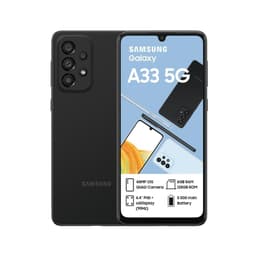
Galaxy A33 5G
Galaxy A33 5G
Starting at

Refurbished price:£102.00

Versus £389.00 new

See options
Google Pixel 9
Google Pixel 9
Starting at

Refurbished price:£327.25

Versus £890.22 new

See options

Ratings

The Samsung Galaxy A33 5G, released in 2022, and the Google Pixel 9, launched in 2024, are both Android smartphones designed for different user priorities. While the Galaxy A33 5G focuses on delivering a balanced experience within a specific segment, the Pixel 9 emphasizes advanced computational photography, a more powerful processor, and extended software support. Both devices operate on the Android platform, but the Pixel 9 benefits from Google's direct software integration and longer update commitment.

Scores

Durability

The practical lifespan of a smartphone is significantly influenced by its release timeline and the manufacturer's commitment to software updates and repairability.

  • Release Timeline and Age: The Galaxy A33 5G was released in April 2022, making it an older model compared to the Google Pixel 9, which launched in August 2024. This two-year difference in release directly impacts their respective support cycles.
  • OS Support Duration: The Galaxy A33 5G is guaranteed to receive four generations of Android OS updates and five years of security updates from its release, extending its software support until approximately April 2027. In contrast, the Google Pixel 9 offers a more extensive commitment with seven years of OS, security, and Pixel Drop updates, meaning it will receive support until at least August 2031.
  • Repairability and Durability: Both devices feature dust and water resistance, with the Galaxy A33 5G rated IP67 and the Pixel 9 boasting an IP68 rating, indicating slightly better protection against immersion for the Pixel. The Pixel 9 also uses Corning Gorilla Glass Victus 2 for its display, an upgrade from the Gorilla Glass 5 found on the Galaxy A33 5G, suggesting enhanced screen durability.

Year of Release

2022

2024

Compatible with latest Update

Yes

Yes

OS

Android

Android

Foldable

No

No

Performance

Performance in smartphones is determined by the underlying hardware and how efficiently the software utilizes it, impacting daily tasks and demanding applications.

  • Processor Capabilities: The Galaxy A33 5G is equipped with a processor that handles everyday applications and general multitasking smoothly. The Google Pixel 9, featuring a more recent-generation processor, delivers a more responsive experience, particularly with demanding applications, complex computations, and advanced AI features.
  • System Responsiveness and Multitasking: Users of the Galaxy A33 5G will find it capable for typical smartphone usage. The Pixel 9, with its advanced processor and generally higher RAM configuration (12GB compared to the A33 5G's 6GB or 8GB options), offers a noticeably smoother and faster experience when switching between multiple applications or running graphically intensive games.
  • Storage Options: Both devices offer 128GB and 256GB internal storage options. The Galaxy A33 5G includes a microSD card slot for expandable storage up to 1TB, a feature not present on the Google Pixel 9.

Memory (GB)

6 GB

12 GB

Screen quality

The display is a primary interface for smartphone interaction, and differences in technology and specifications can significantly alter the viewing experience.

  • Display Technology and Clarity: The Galaxy A33 5G features a 6.4-inch Super AMOLED display, providing vibrant colors and deep blacks. The Google Pixel 9 comes with a 6.3-inch Actua OLED display, also known for its rich colors and contrast, but with advancements that contribute to overall visual quality. Both offer Full HD+ resolution, ensuring sharp visuals for typical viewing distances.
  • Brightness and Refresh Rate: The Galaxy A33 5G has a 90Hz refresh rate, offering smoother scrolling and animations than standard 60Hz displays. The Pixel 9 elevates this with a 60-120Hz adaptive refresh rate, providing even smoother motion and potentially conserving battery life when high refresh rates are not needed. The Pixel 9 also achieves significantly higher peak brightness levels, reaching up to 2700 nits, which improves visibility in bright outdoor conditions compared to the A33 5G.
  • Screen Protection: The Galaxy A33 5G's display is protected by Corning Gorilla Glass 5. The Pixel 9 features the more advanced Corning Gorilla Glass Victus 2, offering enhanced resistance against scratches and drops.

Resolution

1080 x 2400

1080 x 2424

Screen type

Super AMOLED

OLED

Audiovisual

Camera capabilities are a key differentiator, with both hardware and software playing crucial roles in image and video quality.

  • Rear Camera Systems: The Galaxy A33 5G features a versatile quad-camera setup, including a 48MP main sensor with optical image stabilization (OIS), an 8MP ultrawide, a 5MP macro, and a 2MP depth sensor. The Google Pixel 9 opts for a dual-camera system, featuring a 50MP main sensor with OIS and a 48MP ultrawide lens that also supports macro focus. The Pixel 9's larger main sensor and higher-resolution ultrawide often result in more detailed and versatile shots.
  • Photography Performance: The Galaxy A33 5G delivers competent photos in good lighting conditions, with OIS aiding in sharper images. The Pixel 9, however, leverages its advanced computational photography to produce consistently high-quality images across various lighting scenarios, including impressive low-light performance and dynamic range. Users often report that Pixel phones excel in capturing natural colors and fine details.
  • Video Recording and Audio: Both phones are capable of recording 4K video at 30 frames per second (fps). The Pixel 9 extends this capability to 4K at 60fps for both its rear and front cameras, offering smoother video capture. The Pixel 9 also generally provides a more refined audio experience for media consumption and calls, often featuring stereo loudspeakers, while the A33 5G has a mono speaker.

Main camera

48 megapixels

50 megapixels

Front camera

13 megapixels

10.5 megapixels

Miscellaneous

Beyond core features, several practical elements contribute to the overall user experience and device utility.

  • Connectivity Standards: The Galaxy A33 5G supports 5G connectivity, Wi-Fi 5 (802.11ac), and Bluetooth 5.1. The Google Pixel 9, being a newer device, features more advanced connectivity options, including 5G, Wi-Fi 6E (802.11ax), and Bluetooth 5.3, offering faster and more reliable wireless connections.
  • Ports and Biometrics: Both devices utilize a USB-C port for charging and data transfer, though the Pixel 9 features the faster USB 3.2 standard compared to the A33 5G's USB 2.0. Neither phone includes a 3.5mm headphone jack. For security, both offer in-display fingerprint sensors, with the Pixel 9 also providing face unlock capabilities. The Pixel 9 further includes a Satellite SOS service for emergency situations without cellular or Wi-Fi.
  • Design and Handling: The Galaxy A33 5G measures 159.7 x 74 x 8.1 mm and weighs 186g, featuring a plastic back and frame. The Pixel 9 is slightly more compact at 152.8 x 72 x 8.5 mm and weighs 198g, with a design that often incorporates a glass back and aluminum frame, contributing to a more premium feel.

Weight

186 g

198 g

Screen size (in)

6.4

6.3

Mobile network

5G

5G

SIM card

Dual Physical SIM

Physical SIM + eSIM

Carrier compatibility

Unlocked

Unlocked

Connector

USB-C

USB-C

The Samsung Galaxy A33 5G and the Google Pixel 9 cater to different segments of the smartphone market, primarily due to their release years and feature sets. Users often praise the Galaxy A33 5G for its reliable battery life and vibrant Super AMOLED display, making it a solid choice for everyday use. Some common criticisms for the A33 5G might include its processor performance compared to newer devices and its plastic build.

The Google Pixel 9, on the other hand, is frequently lauded for its exceptional camera performance, driven by advanced computational photography, and its commitment to long-term software updates. Users also appreciate its smooth performance and the integration of Google's AI features. Potential concerns for the Pixel 9 might revolve around its battery life compared to some larger-capacity phones, though many users report it lasts a full day, and the design, which some find divisive.

Users prioritizing extended software longevity, cutting-edge camera technology, and a more powerful, responsive experience will find the Google Pixel 9 well-suited to their needs. Its robust build and advanced connectivity also appeal to those seeking a modern flagship experience. Conversely, users who value expandable storage, a slightly larger battery capacity, and a more budget-conscious approach to a 5G-capable smartphone may lean toward the Galaxy A33 5G. Both devices, especially when considering quality-assured refurbished options, represent eco-friendly alternatives for making informed purchasing decisions.


See all articles

Our recent comparisons