

Compare models
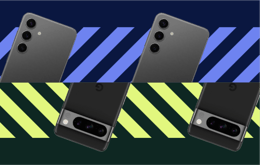
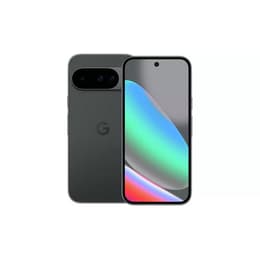
Google Pixel 10 Vs Google Pixel 8 Pro
- 1-year minimum warranty
- Free delivery on all items
- Free 30-day returns
Differences at a glance
The Google Pixel 10 (2025) and Google Pixel 8 Pro (2023) represent different generations and tiers within Google's smartphone ecosystem. While the Pixel 8 Pro offers a larger screen and a legacy professional camera layout, the newer Pixel 10 brings a refreshed hardware platform and a more compact form factor. Both devices run the Android operating system with deep software integration, but they cater to distinct device sizes and generational updates.
Available Models
Colour
Storage (GB)
Scores
Durability
Evaluating device longevity requires looking at release timelines, software update commitments, and physical build resilience to estimate daily practical lifespan.
- Software support lifecycle: Both models benefit from Google's extended update policy, though the Pixel 10 benefits from a later release year, ensuring active system updates extend further into the future.
- Repairability and build: Both handsets incorporate durable glass and metal frames with robust water resistance ratings, supporting long-term daily usage when properly maintained.
- Expected lifespan: The Pixel 10 offers a fresher hardware baseline for long-term ownership, whereas the Pixel 8 Pro provides enduring software backing from an earlier generation.
Year of Release
2025
2023
Compatible with latest Update
Yes
Yes
OS
Android
Android
Foldable
No
No
Performance
Daily operation, multitasking capability, and energy management differ notably due to the generational gap in internal hardware architecture.
- Processing capability: The Pixel 10 handles demanding apps, multitasking, and on-device machine learning tasks smoothly via its current-generation processor, while the Pixel 8 Pro relies on a mature, capable previous-generation architecture.
- Memory and storage: Both models feature generous RAM provisions to keep background tasks active, paired with standard internal storage tiers for apps and media.
- Battery behavior: The Pixel 10 utilizes a balanced battery capacity paired with an efficient modern chipset, whereas the Pixel 8 Pro powers a larger display canvas with a slightly older power profile.
Screen quality
Visual immersion, panel dimensions, and outdoor visibility vary between the compact modern standard and the larger legacy flagship display.
- Display technology: Both devices use vibrant OLED panels with deep contrast ratios and adaptive refresh rates scaling up to a smooth 120Hz for fluid scrolling.
- Size and resolution: The Pixel 10 features a more compact 6.3-inch screen designed for easier single-handed reach, while the Pixel 8 Pro offers a larger 6.7-inch workspace with higher resolution.
- Brightness levels: Both screens reach high peak brightness thresholds, ensuring legibility under direct sunlight and clear outdoor viewing conditions.
Resolution
1080x2424
1344 x 2992
Screen type
OLED
LTPO OLED
Audiovisual
Optics, video capabilities, and media playback hardware differ based on the design philosophy of each device generation.
- Camera systems: The Pixel 10 introduces a versatile triple-lens arrangement on a standard model, whereas the Pixel 8 Pro utilizes a dedicated professional multi-lens setup featuring high-resolution zoom capabilities.
- Everyday photography: Both models leverage advanced computational photography processing to capture detailed images in diverse lighting environments.
- Media and audio: Stereo speakers provide clear audio output for calls and video playback on both handsets, though media immersion benefits from the larger frame of the older Pro model.
Front camera
42 megapixels
10.5 megapixels
Miscellaneous
Physical dimensions, connectivity standards, and daily handling characteristics establish distinct ergonomic profiles for each device.
- Handling and ergonomics: The Pixel 10 provides a lighter, more compact profile that rests easily in smaller hands or pockets, while the Pixel 8 Pro offers a heavier, larger footprint.
- Connectivity: Both smartphones support modern 5G networks, high-speed Wi-Fi standards, and Bluetooth protocols for reliable wireless accessories.
- Security sensors: Secure biometric authentication is handled via responsive facial recognition and fingerprint sensors integrated into each device body.
Weight
204 g
213 g
Screen size (in)
6.3
6.7
Mobile network
5G
5G
SIM card
Physical SIM + eSIM
Physical SIM + eSIM
Carrier compatibility
Unlocked
Unlocked
Connector
USB-C
USB-C
What the community thinks
User discussions across community forums highlight the Pixel 8 Pro for its expansive screen estate and robust legacy camera capabilities, while the Pixel 10 receives praise for its lighter, more manageable physical footprint and updated internal efficiency. Users prioritizing a larger display and dedicated long-range zoom photography often lean toward the Pixel 8 Pro. Conversely, users who prefer a compact device size with modern hardware efficiency will find the Pixel 10 well-suited to their needs.
For those exploring sustainable choices, a quality-assured refurbished option provides an eco-friendly alternative that extends device life cycles without sacrificing core functionality. Selecting between these two models ultimately depends on whether a user values a spacious viewing area or a streamlined, pocket-friendly design.