

Google Pixel 6A Vs Google Pixel 8

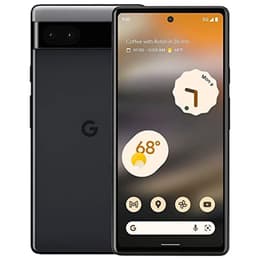
Google Pixel 6A
Google Pixel 6A
Starting at

Refurbished price:£107.00

Versus £459.00 new

See options
Google Pixel 8
Google Pixel 8
Starting at

Refurbished price:£187.00

Versus £699.99 new

See options

Ratings

The Google Pixel 6a, released in July 2022, and the Google Pixel 8, launched in October 2023, represent different tiers within Google's smartphone lineup. While both devices operate on the Android platform and offer a clean software experience, the Pixel 8 introduces a newer processor, an enhanced display, and a significantly extended software support policy, setting it apart from its predecessor.

Scores

Durability

The longevity of a smartphone is influenced by its release timeline, software support, and physical durability.

  • Software Support: The Pixel 6a, released in July 2022, is guaranteed to receive Android OS updates until at least July 2025 and security updates until July 2027. In contrast, the Pixel 8, launched in October 2023, benefits from an extended commitment, receiving seven years of both OS and security updates, extending its support until October 2030.
  • Repairability: Both devices demonstrate a reasonable degree of repairability. The Pixel 6a received a repairability score of 7 out of 10, with particular ease noted for battery replacement. The Pixel 8 also scored 7 out of 10 in some assessments, indicating that self-repairs are possible, though not always recommended for inexperienced users.
  • Physical Durability: The Pixel 6a features Gorilla Glass 3 on its display and a plastic back with a recycled aluminum frame. The Pixel 8 upgrades to Gorilla Glass Victus for both its front and back, coupled with an aluminum frame, offering enhanced scratch and drop resistance.

Year of Release

2022

2023

Compatible with latest Update

Yes

Yes

OS

Android

Android

Foldable

No

No

Performance

Performance differences between these two Pixel generations are notable, impacting app responsiveness, multitasking, and overall user experience.

  • Processing Power: The Pixel 6a is powered by Google's first-generation Tensor chip, which provides capable performance for daily tasks and computational photography. The Pixel 8 features the newer Google Tensor G3 processor, offering improved CPU and GPU speeds, which translates to smoother handling of demanding applications, more efficient multitasking, and enhanced gaming experiences.
  • System Responsiveness: Users upgrading from the Pixel 6a to the Pixel 8 often report a noticeably smoother overall experience, with faster app loading times and more fluid navigation, attributed to the newer processor and increased RAM. The Pixel 6a, while still performing well for its class, can exhibit occasional sluggishness with intensive use.
  • Memory and Storage: The Pixel 6a comes with 6GB of RAM and 128GB of internal storage, without an option for expansion. The Pixel 8 offers 8GB of RAM, providing more headroom for multitasking, and is available with either 128GB or 256GB of internal storage.

Memory (GB)

6 GB

8 GB

Screen quality

The display is a key area of distinction, affecting visual clarity, brightness, and overall viewing comfort.

  • Display Technology and Size: The Pixel 6a features a 6.1-inch OLED display with a resolution of 1080 x 2400 pixels. The Pixel 8 has a slightly larger 6.2-inch Actua OLED display, maintaining the same 1080 x 2400 pixel resolution. Both offer vibrant colors and deep blacks characteristic of OLED technology.
  • Refresh Rate and Smoothness: A significant difference lies in the refresh rate. The Pixel 6a has a standard 60Hz refresh rate, which provides a consistent but less fluid scrolling experience. The Pixel 8 features an adaptive refresh rate that can go up to 120Hz, resulting in noticeably smoother animations and scrolling, particularly beneficial for gaming and general interface navigation.
  • Brightness: The Pixel 8's display offers significantly higher peak brightness, reaching up to 2000 nits, which improves outdoor visibility in bright sunlight. The Pixel 6a's display is bright enough for most outdoor viewing, but may struggle in direct, intense sunlight.

Resolution

1080 x 2400

1080 x 2400

Screen type

OLED

OLED

Audiovisual

Both Pixel phones are known for their camera capabilities, leveraging computational photography, though the Pixel 8 brings hardware and software advancements.

  • Rear Camera System: The Pixel 6a features a dual-camera setup with a 12.2 MP main sensor and a 12 MP ultrawide sensor. Despite using older sensor hardware, its computational photography delivers strong results, especially in everyday and low-light conditions. The Pixel 8 upgrades to a 50 MP main sensor with a wider aperture and a 12 MP ultrawide sensor with a wider field of view and macro focus capabilities. This results in improved detail, better low-light performance, and more versatile shooting options.
  • Front Camera and Video: The Pixel 6a has an 8 MP front camera. The Pixel 8 features a 10.5 MP front camera. Both devices offer good video recording quality, with the Pixel 8 providing enhancements in stabilization and overall clarity.
  • Computational Photography Features: Both phones benefit from Google's software-driven camera features like Night Sight and Magic Eraser. The Pixel 8, with its newer processor, often handles these features with greater speed and potentially more refined results.

Main camera

12.2 megapixels

50 megapixels

Front camera

8 megapixels

10.5 megapixels

Miscellaneous

Beyond core features, several practical elements contribute to the overall user experience and daily convenience.

  • Connectivity and Ports: Both devices support 5G connectivity. The Pixel 6a includes Wi-Fi 6E and Bluetooth 5.2, with a USB-C 3.1 port. The Pixel 8 features newer standards with Wi-Fi 7 and Bluetooth 5.3, alongside a USB-C 3.2 port, offering potentially faster wireless and wired data transfer speeds.
  • Biometric Security: Both phones incorporate an in-display fingerprint sensor for secure unlocking. The Pixel 8 adds the convenience of Face Unlock, providing an additional biometric authentication method.
  • Design and Handling: The Pixel 6a weighs 178g and has dimensions of 152.2 x 71.8 x 8.9 mm. The Pixel 8 is slightly heavier at 187g but has slightly more compact dimensions at 150.5 x 70.8 x 8.9 mm, contributing to a comfortable in-hand feel. The Pixel 6a has a plastic back, while the Pixel 8 features a glass back, offering a different tactile experience.

Weight

250 g

187 g

Screen size (in)

6.1

6.2

Mobile network

5G

5G

SIM card

Physical SIM + eSIM

Physical SIM + eSIM

Carrier compatibility

Unlocked

Unlocked

User sentiment for the Pixel 6a often highlights its strong camera performance for its segment, clean Android experience, and comfortable, compact size. Common criticisms include its 60Hz display, the absence of wireless charging, and some reports of inconsistent battery life. Many users found it to be a capable device that delivered excellent value.

The Pixel 8 generally receives praise for its brighter and smoother 120Hz display, improved camera capabilities with advanced AI features, and a more compact design compared to its predecessor. A significant draw for many users is Google's commitment to seven years of software updates, which enhances its long-term viability. While its battery life is improved, some users note it still doesn't lead its class, and its performance, while strong, may not always match the absolute top-tier flagships.

Users prioritizing extended software support, a smoother display experience, and enhanced camera features, particularly in low light and with AI processing, may find the Pixel 8 better suited to their needs. Its newer hardware provides a more responsive and future-proof experience. Conversely, individuals who value a more budget-conscious option that still delivers a strong camera and a pure Android experience, and who are content with a standard refresh rate display, might find the Pixel 6a to be a practical choice. Both devices offer a quality-assured refurbished option, providing an eco-friendly alternative for consumers.


See all articles

Our recent comparisons