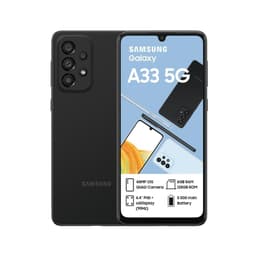
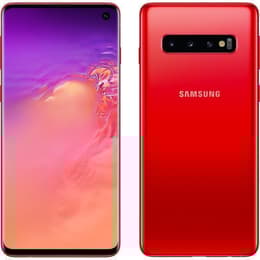

Galaxy A33 5G Vs Galaxy S10+

Galaxy A33 5G
Galaxy A33 5G
Starting at

Refurbished price:£102.00

Versus £389.00 new

See options
Galaxy S10+
Galaxy S10+
Starting at

Refurbished price:£115.32

Versus £330.00 new

See options

Ratings

The Samsung Galaxy A33 5G, released in March 2022, and the Samsung Galaxy S10 Plus, launched in March 2019, represent different segments and generations within Samsung's smartphone lineup. While both devices offer a comprehensive Android experience with Samsung's One UI, they cater to varying user priorities through distinct hardware and feature sets. The A33 5G focuses on modern connectivity and extended software support, whereas the S10 Plus, a former flagship, emphasizes premium build and advanced camera capabilities from its era.

Scores

Durability

The expected practical lifespan of a smartphone is significantly influenced by its release date and the manufacturer's commitment to software updates.

  • Release Timeline: The Galaxy A33 5G, being a 2022 release, benefits from a more recent launch, positioning it for a longer period of active software support compared to the Galaxy S10 Plus, which debuted in 2019.
  • Software Longevity: Samsung has committed to providing four generations of Android OS updates and five years of security updates for the Galaxy A33 5G. In contrast, the Galaxy S10 Plus typically received three major Android OS updates, reaching Android 12 or 11 depending on the region. This means the A33 5G will continue to receive official software enhancements and security patches for a longer duration.
  • Repairability: The Galaxy A33 5G has a repairability score of approximately 7.5 to 7.75 out of 10, indicating a relatively straightforward disassembly process with accessible components like the battery. While specific repairability scores for the S10 Plus are less readily available, older flagship devices can sometimes present more complex repair challenges due to their intricate designs.

Year of Release

2022

2019

Compatible with latest Update

Yes

No

OS

Android

Android

Foldable

No

No

Performance

Performance in daily use is shaped by the device's internal components, affecting everything from app responsiveness to multitasking efficiency.

  • Processor Capabilities: The Galaxy A33 5G is equipped with a modern octa-core processor built on a 5nm architecture, which contributes to efficient power usage and smooth handling of everyday applications and multitasking. The Galaxy S10 Plus, while older, featured a flagship-tier octa-core processor (either Exynos 9820 or Snapdragon 855) at its release, offering robust performance for demanding tasks and gaming during its prime.
  • Battery Behavior: The Galaxy A33 5G houses a larger 5000mAh battery, which, combined with its efficient processor and 90Hz display, often translates to extended usage times, with many users reporting up to two days of battery life on a single charge. The Galaxy S10 Plus features a 4100mAh battery, which provided good endurance for its time, often lasting a full day of heavy use or longer with moderate usage.
  • Storage and Multitasking: Both devices offer various storage options, with the A33 5G starting at 128GB and supporting microSD expansion up to 1TB, while the S10 Plus offered configurations up to 1TB internal storage and microSD expansion up to 512GB. Both come with ample RAM (6GB/8GB for A33 5G, 8GB/12GB for S10 Plus) to facilitate smooth app switching and multitasking.

Memory (GB)

6 GB

8 GB

Screen quality

The display is a primary interface for smartphone interaction, and its quality significantly impacts the user experience.

  • Display Technology and Resolution: Both phones feature Super AMOLED or Dynamic AMOLED displays, known for deep blacks and vibrant colors. The Galaxy A33 5G has a 6.4-inch FHD+ (1080x2400) display. The Galaxy S10 Plus also has a 6.4-inch display but boasts a higher QHD+ (1440x3040) resolution, offering greater pixel density and sharpness.
  • Refresh Rate and Smoothness: The Galaxy A33 5G features a 90Hz refresh rate, providing a smoother scrolling experience and more fluid animations compared to the Galaxy S10 Plus's standard 60Hz refresh rate.
  • Brightness and Protection: Both displays offer good brightness levels for outdoor visibility. The A33 5G is protected by Corning Gorilla Glass 5, while the S10 Plus features the slightly more durable Corning Gorilla Glass 6.

Resolution

1080 x 2400

1440 x 3040

Screen type

Super AMOLED

Dynamic AMOLED

Audiovisual

Camera capabilities are a key consideration for many users, with both devices offering versatile setups for photography and videography.

  • Rear Camera Systems: The Galaxy A33 5G features a quad-camera setup with a 48MP main sensor that includes Optical Image Stabilization (OIS), an 8MP ultrawide, a 5MP macro, and a 2MP depth sensor. The Galaxy S10 Plus has a triple-camera system, comprising a 12MP main sensor with variable aperture and OIS, a 12MP telephoto lens with 2x optical zoom and OIS, and a 16MP ultrawide lens. The S10 Plus's dedicated telephoto lens offers true optical zoom, a feature not present on the A33 5G.
  • Photography Performance: The A33 5G's OIS on its main camera enhances low-light performance and video stability. The S10 Plus, as a former flagship, was praised for its excellent color reproduction, dynamic range, and overall image quality in good lighting conditions, with its ultrawide lens offering a broad perspective.
  • Video Recording and Selfie Cameras: Both phones are capable of recording 4K video at 30fps with their main cameras, with the S10 Plus also offering 4K at 60fps on its rear camera. For selfies, the A33 5G has a 13MP front camera, while the S10 Plus features a dual front camera setup with a 10MP main sensor and an 8MP depth sensor, which was noted for its detailed and natural-looking portraits.

Main camera

48 megapixels

12 megapixels

Front camera

13 megapixels

10 megapixels

Miscellaneous

Beyond core performance and display, several other features contribute to the overall user experience and device utility.

  • Connectivity Standards: A significant difference lies in network capabilities; the Galaxy A33 5G supports 5G connectivity, offering faster mobile data speeds where available. The Galaxy S10 Plus is limited to 4G LTE networks. Both support modern Wi-Fi standards (Wi-Fi 5 for A33 5G, Wi-Fi 6 for S10 Plus) and Bluetooth (5.1 for A33 5G, 5.0 for S10 Plus).
  • Ports and Sensors: The Galaxy S10 Plus includes a 3.5mm headphone jack, a feature absent on the Galaxy A33 5G. Both devices utilize USB-C for charging and data transfer. For security, the A33 5G has an optical in-display fingerprint sensor, while the S10 Plus features an ultrasonic in-display fingerprint sensor, known for its advanced security.
  • Build and Handling: The A33 5G features a plastic back and frame with a Gorilla Glass 5 front, offering IP67 dust and water resistance. The S10 Plus boasts a more premium build with Gorilla Glass 6 on the front, Gorilla Glass 5 on the back, and an aluminum frame, providing IP68 dust and water resistance. The S10 Plus also offers wireless and reverse wireless charging capabilities, which the A33 5G lacks.

Weight

186 g

175 g

Screen size (in)

6.4

6.4

Mobile network

5G

4G

SIM card

Dual Physical SIM

Dual Physical SIM

Carrier compatibility

Unlocked

Unlocked

Choosing between the Galaxy A33 5G and the Galaxy S10 Plus involves weighing modern mid-range advancements against former flagship features. Users often praise the Galaxy A33 5G for its robust battery life, extended software support, and the inclusion of 5G connectivity, making it a forward-looking option for those who prioritize longevity and current network standards. Some users note that while its camera is capable, it may not match the versatility of older flagships in all scenarios, and the absence of a headphone jack is a point of consideration.

The Galaxy S10 Plus, despite its age, is frequently lauded for its premium build quality, higher-resolution display, and the comprehensive camera system that includes a dedicated telephoto lens. Its inclusion of a 3.5mm headphone jack and wireless charging are also appreciated features. However, its 4G-only connectivity and shorter remaining software support window are common concerns for users looking for a device with a longer future-proof lifespan.

Users prioritizing long-term software updates, 5G connectivity, and superior battery endurance may find the Galaxy A33 5G better suited to their needs. Conversely, individuals who value a premium design, a sharper display, optical zoom capabilities, and legacy features like a headphone jack might lean towards the Galaxy S10 Plus. Both devices, especially when considered as quality-assured refurbished options, offer a practical and sustainable choice for different user profiles.


See all articles

Our recent comparisons