
Galaxy A33 5G Vs Galaxy S10

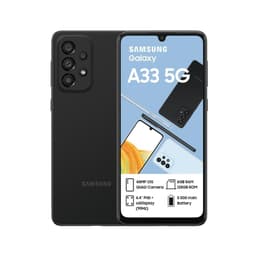
Galaxy A33 5G
Galaxy A33 5G
Starting at

Refurbished price:£102.00

Versus £389.00 new

See options
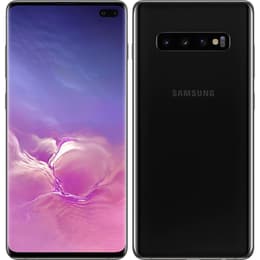
Galaxy S10
Galaxy S10
Starting at

Refurbished price:£108.00

Versus £639.00 new

See options

Ratings

The Samsung Galaxy A33 5G (released March 2022) and the Samsung Galaxy S10 (released March 2019) represent different segments and generations of Samsung's smartphone lineup. While both run on the Android operating system with Samsung's One UI, the A33 5G is a more recent mid-range offering, focusing on modern connectivity and extended software support, whereas the S10 was a flagship device from a few years prior, known for its premium features at the time of its launch. The primary differentiators lie in their release timelines, software longevity, and specific hardware advancements.

Scores

Durability

When considering the practical lifespan of these devices, their respective release dates and Samsung's software support policies are key factors.

  • Release Timeline and OS Support: The Galaxy A33 5G, launched in March 2022, benefits from Samsung's commitment to provide four generations of Android OS upgrades and five years of security updates from its release date. This means it is expected to receive updates until Android 16 and security patches until 2027. In contrast, the Galaxy S10, released in March 2019, received three major Android OS updates and four years of security updates. As of early 2024, the Galaxy S10 series has reached the end of its official software and security update support, meaning it will no longer receive regular updates unless critical security flaws emerge.
  • Software Longevity Expectations: Users prioritizing long-term software support and access to the latest Android features will find the Galaxy A33 5G to be the more future-proof option. The Galaxy S10, while still functional, will not benefit from new Android versions or consistent security patches, which can impact compatibility with newer applications and overall device security over time.
  • Expected Practical Lifespan: The A33 5G is designed for a longer practical lifespan due to its extended software support. The S10, despite its initial flagship status, is now primarily suitable for users who do not require the latest software features or who are comfortable with a device that has concluded its official update cycle.

Year of Release

2022

2019

Compatible with latest Update

Yes

No

OS

Android

Android

Foldable

No

No

Performance

The performance of these two devices reflects their different market positions and release years, impacting how they handle daily tasks and demanding applications.

  • Processor Capabilities: The Galaxy A33 5G features a more modern, efficient processor designed for smooth everyday use, capable of handling multitasking and moderate gaming without significant slowdowns. The Galaxy S10, while housing a flagship-tier processor from its release year, may show its age with more demanding current applications, though it remains capable for many common tasks.
  • Battery Behavior: The Galaxy A33 5G is equipped with a larger 5000 mAh battery, which typically translates to extended usage times, with many users reporting it can last up to two days on a single charge under typical use. The Galaxy S10 has a 3400 mAh battery, which at its launch was considered sufficient for a full day of use for many users, but heavy users might find themselves needing to recharge more frequently.
  • Storage and Responsiveness: Both devices offer 128GB of internal storage in their base models and support expandable storage via a microSD card. The A33 5G typically comes with 6GB or 8GB of RAM, while the S10 generally features 8GB of RAM. The A33 5G's newer architecture and optimized software contribute to overall system responsiveness for current applications.

Memory (GB)

6 GB

8 GB

Screen quality

The display experience on the Galaxy A33 5G and Galaxy S10 offers distinct characteristics, catering to different user preferences.

  • Display Technology and Clarity: Both phones feature AMOLED display technology, known for vibrant colors and deep blacks. The Galaxy S10 boasts a Dynamic AMOLED display with a higher QHD+ resolution (3040x1440 pixels), offering a sharper image, particularly noticeable with fine details. The Galaxy A33 5G uses a Super AMOLED display with a Full HD+ resolution (1080x2400 pixels), which still provides a clear and enjoyable viewing experience for most content.
  • Brightness and Refresh Rate: The Galaxy S10 offers higher peak brightness, which can be beneficial for outdoor visibility in direct sunlight. The Galaxy A33 5G, however, features a 90Hz refresh rate, providing a smoother scrolling experience and more fluid animations compared to the S10's standard 60Hz refresh rate.
  • Screen Size and Viewing Experience: The Galaxy A33 5G has a 6.4-inch display, while the Galaxy S10 has a slightly smaller 6.1-inch display. The A33 5G's larger screen offers a more expansive viewing area for media consumption and general browsing, while the S10's slightly smaller size might appeal to users preferring a more compact device.

Resolution

1080 x 2400

1440 x 3040

Screen type

Super AMOLED

Dynamic AMOLED

Audiovisual

The camera systems on the Galaxy A33 5G and Galaxy S10 approach photography with different strengths and capabilities.

  • Rear Camera System: The Galaxy A33 5G features a quad-camera setup with a 48MP main sensor that includes Optical Image Stabilization (OIS), an 8MP ultrawide, a 5MP macro, and a 2MP depth sensor. The Galaxy S10 has a triple-lens rear camera system, consisting of a 12MP main lens with OIS and a variable aperture, a 12MP telephoto lens with OIS, and a 16MP ultrawide lens. The S10's telephoto lens offers optical zoom capabilities, which the A33 5G lacks.
  • Photography Performance: The A33 5G's OIS on its main sensor helps in capturing clearer photos in various conditions, including low light, and supports 4K video recording at 30fps. The S10, with its variable aperture and dedicated telephoto lens, offers versatility for different photographic scenarios, including good low-light performance and the ability to capture detailed zoomed-in shots. It also supports 4K video recording at 60fps.
  • Front Camera and Audio: The A33 5G has a 13MP front camera, while the S10 features a 10MP front camera. Both devices offer stereo speakers, enhancing the media consumption experience. The S10 also includes a 3.5mm headphone jack, which is absent on the A33 5G.

Main camera

48 megapixels

12 megapixels

Front camera

13 megapixels

10 megapixels

Miscellaneous

Beyond core performance and display, several practical features differentiate the Galaxy A33 5G and Galaxy S10, influencing daily usability.

  • Connectivity Options: The Galaxy A33 5G supports 5G connectivity, offering faster mobile data speeds where available, along with Wi-Fi 5 and Bluetooth 5.1. The Galaxy S10 supports 4G LTE, Wi-Fi 6, and Bluetooth 5.0. For users in areas with 5G infrastructure, the A33 5G provides access to the latest network speeds.
  • Port Types and Sensors: Both devices feature a USB-C port for charging and data transfer. The Galaxy S10 retains a 3.5mm headphone jack, a feature absent on the A33 5G. For biometric security, both include in-display fingerprint sensors. The S10 also offers face recognition.
  • Build Materials and Durability: The Galaxy A33 5G features a plastic back and Gorilla Glass 5 on the front, with an IP67 rating for dust and water resistance. The Galaxy S10 has a more premium build with a glass back and Gorilla Glass 6 on the front, offering an IP68 rating for enhanced dust and water resistance. The S10 is also slightly lighter and more compact than the A33 5G.

Weight

186 g

175 g

Screen size (in)

6.4

6.1

Mobile network

5G

4G

SIM card

Dual Physical SIM

Physical SIM

Carrier compatibility

Unlocked

Unlocked

Connector

USB-C

USB-C + Jack 3.5mm

The Samsung Galaxy A33 5G and Galaxy S10 cater to different user needs, reflecting their distinct positions in the smartphone market. The A33 5G is often praised for its robust battery life, with many users appreciating its ability to last for extended periods, sometimes up to two days on a single charge. Its 90Hz Super AMOLED display and IP67 water resistance are also frequently highlighted as strong points for a modern mid-range device. However, some users have noted that its performance, while capable for everyday tasks, might feel less fluid compared to higher-end devices, and the absence of a headphone jack is a common criticism.

The Galaxy S10, despite its age, is still valued by users for its premium build quality, higher-resolution Dynamic AMOLED display, and the versatility of its triple camera system, particularly the inclusion of a telephoto lens and a headphone jack. Its performance, while no longer cutting-edge, remains sufficient for many daily activities. A frequent concern for the S10, however, is its battery life, which some users find to be less enduring compared to newer devices, especially with heavy use. The most significant consideration for the S10 is its end-of-life status for software and security updates, which can impact its long-term usability and security.

Users prioritizing long-term software support, extended battery life, and modern 5G connectivity will find the Galaxy A33 5G well-suited to their needs. It offers a reliable and up-to-date experience for students, professionals, and general users who value longevity and efficiency. Conversely, users who prioritize a premium build, a higher-resolution display, optical zoom capabilities, and the convenience of a headphone jack may lean towards the Galaxy S10, understanding that it comes with limited future software updates. Both devices, when considered as quality-assured refurbished options, provide an eco-friendly alternative for consumers looking to make informed and sustainable choices.

See all articles

Our recent comparisons