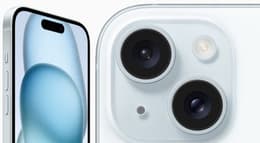
Galaxy A26 Vs iPhone 15 Pro

Galaxy A26
Galaxy A26
Starting at

Refurbished price:£153.00

Versus £419.55 new

See options
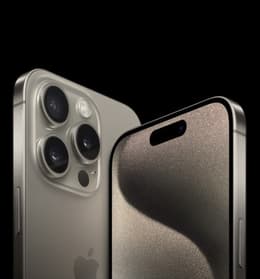
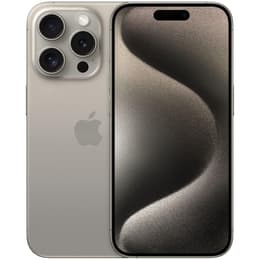
iPhone 15 Pro
iPhone 15 Pro
Starting at

Refurbished price:£428.00

Versus £999.00 new

See options

Ratings

The Samsung Galaxy A26 and the iPhone 15 Pro represent distinct approaches to smartphone design and functionality, catering to different user priorities. While the iPhone 15 Pro, released in September 2023, is a premium device known for its advanced features and robust ecosystem, the Galaxy A26, anticipated to follow the lineage of Samsung's A-series, is expected to offer a balanced experience with a focus on essential capabilities. This comparison will delve into their core differences, helping users understand which device aligns best with their daily needs and preferences.

Scores

Durability

The longevity of a smartphone is influenced by its initial release date, software support, and physical resilience. These two devices offer different timelines and durability features.

  • Release Timeline and Software Support: The iPhone 15 Pro, launched in September 2023, benefits from Apple's extended software support, typically receiving major iOS updates for at least five years, potentially extending its functional life until late 2028 or beyond. [2] The Galaxy A26, following the pattern of its predecessor (Galaxy A25 5G, released December 2023), is expected to receive four major Android OS upgrades and five years of security updates, providing support until late 2028. [5, 6, 17]
  • Physical Durability: The iPhone 15 Pro features a robust titanium frame and a Ceramic Shield front cover, offering enhanced resistance against drops and scratches. [2, 12, 21] It also carries an IP68 rating for dust and water resistance, allowing for submersion in water. [12, 23] The Galaxy A26, based on Samsung's A-series build, is likely to feature a plastic construction for its back and sides. Samsung documentation indicates the Galaxy A26 5G has an IP67 rating, providing good protection against dust and water splashes, and limited submersion. [5, 17, 36]
  • Repairability and Practical Lifespan: While specific repairability scores vary, both devices are designed with components that can be serviced. The iPhone 15 Pro's premium materials contribute to its perceived long-term resilience, while the Galaxy A26's expected build aims for everyday practicality. Users seeking maximum software longevity and premium material durability may find the iPhone 15 Pro more aligned with their needs, whereas the Galaxy A26 offers a solid lifespan within its segment.

Year of Release

2024

2023

Compatible with latest Update

Yes

Yes

OS

Android

iOS

Foldable

No

No

Performance

Performance is a key differentiator, impacting how smoothly applications run and how efficiently tasks are handled. These devices are built with different processing capabilities and memory configurations.

  • Processing Power: The iPhone 15 Pro is equipped with a highly advanced processor, designed to deliver exceptional speed and efficiency for demanding applications, complex multitasking, and high-fidelity gaming. [1, 23] This results in very fluid navigation and rapid app loading times. The Galaxy A26, inheriting the performance characteristics of the Galaxy A25 5G, features a capable mid-range processor that handles everyday tasks like web browsing, social media, and streaming smoothly. [6, 15] It is well-suited for moderate gaming and general multitasking. [15]
  • Multitasking and Storage: The iPhone 15 Pro typically comes with 8GB of RAM, facilitating seamless switching between numerous applications without slowdowns. [12, 23] It offers various internal storage options, starting from 128GB. [12, 24] The Galaxy A26 is expected to offer configurations with 6GB or 8GB of RAM, providing adequate capacity for typical smartphone usage and multitasking. [3, 6, 9] It also offers internal storage options, often with the added flexibility of expandable storage via a microSD card, which is not available on the iPhone. [3, 6, 9]
  • Battery Behavior: The iPhone 15 Pro's battery is optimized for its operating system and hardware, providing reliable power for a full day of varied use. [12] The Galaxy A26, with its larger 5000 mAh battery, is noted for its extensive battery life, often lasting a full day or even up to two days with lighter usage patterns. [7, 13, 22, 28]

Memory (GB)

8 GB

8 GB

Screen quality

The visual experience is central to smartphone interaction, and both devices offer distinct display technologies and characteristics.

  • Display Technology and Clarity: The iPhone 15 Pro features a 6.1-inch Super Retina XDR OLED display, known for its deep blacks, vibrant colors, and high contrast ratio. [1, 8, 12] Its resolution of 2556x1179 pixels results in a sharp pixel density of approximately 460 ppi. [1, 8, 12] The Galaxy A26 is expected to come with a 6.5-inch Super AMOLED display, offering rich colors and good clarity with a Full HD+ resolution of 1080x2340 pixels, resulting in about 396 ppi. [3, 4, 5, 9, 10]
  • Brightness and Refresh Rate: The iPhone 15 Pro's display can reach up to 1000 nits typical brightness and a peak of 2000 nits for outdoor visibility and HDR content, ensuring excellent readability in various lighting conditions. [1, 8] It also features ProMotion technology, offering an adaptive refresh rate up to 120Hz for smooth scrolling and responsive visuals. [1, 8, 12] The Galaxy A26's display also offers a peak brightness of 1000 nits, providing clear outdoor visibility. [4, 6] It supports a 120Hz refresh rate, contributing to a smoother visual experience during scrolling and animations. [4, 5, 6, 9, 10]
  • Additional Display Features: The iPhone 15 Pro includes features like Dynamic Island and an Always-On display, enhancing user interaction and information glanceability. [1, 8] The Galaxy A26's display is protected by Gorilla Glass 5, offering a degree of scratch resistance. [5, 9]

Resolution

1080 x 2340

1179 x 2556

Audiovisual

Camera capabilities are a significant factor for many users, and both smartphones provide different photographic and videographic experiences.

  • Rear Camera Systems: The iPhone 15 Pro boasts a versatile triple-camera system, including a 48MP main sensor with optical image stabilization (OIS), a 12MP ultra-wide lens, and a 12MP 3x telephoto lens with OIS. [1, 16, 20, 23, 24] This setup is designed for professional-grade photography across various focal lengths. The Galaxy A26 is expected to feature a triple-camera array with a 50MP main sensor with OIS, an 8MP ultra-wide lens, and a 2MP macro sensor. [4, 5, 6, 9, 11]
  • Photography Performance: The iPhone 15 Pro excels in capturing detailed images with advanced computational photography features like Photonic Engine, Deep Fusion, and Smart HDR 5, which enhance low-light performance, dynamic range, and color accuracy. [1, 16, 29] It also supports Apple ProRAW for advanced editing. The Galaxy A26's 50MP main camera is capable of capturing clear and detailed photos in good lighting conditions, with the ultra-wide lens providing a broader perspective. [6, 17] Its performance in challenging low-light scenarios may not match the iPhone's advanced processing. [13]
  • Video Recording and Front Camera: The iPhone 15 Pro offers high-quality video recording up to 4K at 60fps, with advanced features like Cinematic mode, Action mode, and ProRes video recording, including spatial video capabilities for future viewing. [1, 8, 16, 20] Its 12MP front camera provides detailed selfies and supports 4K video. [1, 8] The Galaxy A26 supports 4K video recording at 30fps with its main rear camera. [4, 5, 11] The 13MP front camera is suitable for clear selfies and video calls. [4, 5, 11]

Front camera

13 megapixels

12 megapixels

Miscellaneous

Beyond core features, several practical elements contribute to the overall user experience and device utility.

  • Connectivity and Ports: Both devices support 5G connectivity for fast mobile data. [5, 23] The iPhone 15 Pro features a USB-C port, aligning with modern universal standards for charging and data transfer. [2, 21] The Galaxy A26 also includes a USB-C port and notably retains a 3.5mm headphone jack, offering more audio connectivity options without adapters. [5, 6, 9] Both support current Wi-Fi standards and Bluetooth for wireless connections. [5, 9, 25]
  • Biometric Security and Navigation: The iPhone 15 Pro relies on Face ID for secure facial recognition. [23] The Galaxy A26 typically incorporates a side-mounted fingerprint sensor for biometric authentication. [5, 9, 14] Both devices offer robust GPS and navigation capabilities. [5, 9]
  • Design and Handling: The iPhone 15 Pro features a premium design with a lightweight titanium frame, contributing to a refined in-hand feel and reduced weight (191g). [2, 21, 24] The Galaxy A26, with its plastic construction, is designed for practical everyday use and weighs around 197g. [3, 5, 9, 18] Its dimensions are slightly larger due to its bigger screen. [3, 5, 18]
  • Unique Features: The iPhone 15 Pro introduces a customizable Action Button, replacing the traditional mute switch, which can be programmed for various functions. [20, 21] The Galaxy A26, following its series, focuses on delivering a comprehensive set of features at an accessible point, including expandable storage. [3, 6, 9]

Weight

197 g

187 g

Screen size (in)

6.5

6.1

Mobile network

5G

5G

SIM card

Dual Physical SIM

Physical SIM + eSIM

Carrier compatibility

Unlocked

Unlocked

Connector

USB-C

USB-C

The iPhone 15 Pro and the Samsung Galaxy A26 cater to distinct user needs, reflecting their different market positions. The iPhone 15 Pro is frequently praised by users for its exceptional camera system, powerful performance that handles any task with ease, and its premium build quality with a lightweight titanium frame. [2, 20, 21, 23, 24] Users appreciate the vibrant and smooth ProMotion display, as well as the long-term software support from Apple. [2, 12, 23] Criticisms sometimes point to its higher entry point and the closed nature of the iOS ecosystem, though these are often accepted trade-offs for its benefits.

The Galaxy A26, drawing from the positive reception of its predecessor, the Galaxy A25 5G, is generally lauded for its bright and fluid Super AMOLED display with a 120Hz refresh rate, impressive battery life that often extends beyond a single day, and competent cameras for its segment. [6, 7, 13, 17, 28] Users also value its commitment to several years of Android updates and the inclusion of a headphone jack and expandable storage. [5, 6, 9, 17] Common concerns might include its plastic build and the presence of larger display bezels compared to more premium devices, as well as performance that, while capable for daily use, may not match the raw power of high-end flagships for very demanding applications. [6, 17]

Users prioritizing cutting-edge performance, a highly advanced camera system, and a premium, durable design with extended software longevity will find the iPhone 15 Pro well-suited to their needs. Conversely, users who value a large, vibrant display, exceptional battery life, practical features like expandable storage and a headphone jack, and solid everyday performance within a more accessible framework, may lean toward the Galaxy A26. Both devices offer quality-assured refurbished options, providing an eco-friendly alternative for consumers looking to make informed and sustainable choices.

See all articles

Our recent comparisons