
Galaxy A16 Vs Sony Xperia 1 IV

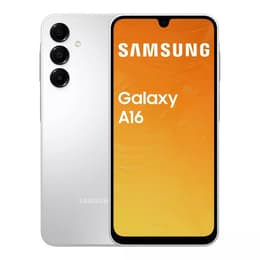
Galaxy A16
Galaxy A16
Starting at

Refurbished price:£100.62

Versus £206.96 new

See options
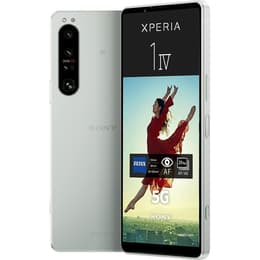
Sony Xperia 1 IV
Sony Xperia 1 IV
Starting at

Refurbished price:£347.00

Versus £1,500.00 new

See options

Ratings

The Samsung Galaxy A16 (released in late 2024/early 2025) and the Sony Xperia 1 IV (released in mid-2022) represent distinct approaches to smartphone design and functionality. While both operate on the Android platform, the Galaxy A16 focuses on delivering a modern, long-supported experience for everyday users, whereas the Xperia 1 IV was designed as a high-end device with a strong emphasis on advanced multimedia capabilities, particularly in its camera system and display.

Scores

Durability

The expected practical lifespan and software support differ significantly between these two devices, largely due to their respective release timelines and manufacturer policies.

  • Software Longevity: The Samsung Galaxy A16, released in late 2024/early 2025, benefits from Samsung's commitment to extended software support, promising six generations of OS upgrades and six years of security patches, with support expected to last until October 2030. In contrast, the Sony Xperia 1 IV, launched in mid-2022, originally shipped with Android 12 and was promised two major Android software revisions and three years of security support. This means the Galaxy A16 offers a considerably longer period of guaranteed updates.
  • Physical Durability: The Xperia 1 IV features Corning Gorilla Glass Victus on both its front and back, along with an IP65/IP68 rating for robust water and dust resistance. The Galaxy A16 offers IP54 dust and splash resistance, providing protection against everyday elements.
  • Repairability: While specific repairability scores can vary, the newer Galaxy A16 may benefit from more standardized component availability over time compared to an older flagship device like the Xperia 1 IV, though both are designed with modern smartphone construction.

Year of Release

2024

2022

Compatible with latest Update

Yes

No

OS

Android

Android

Foldable

No

No

Performance

The performance capabilities of the Galaxy A16 and the Xperia 1 IV cater to different user demands, reflecting their respective market segments and release years.

  • Processing Power: The Sony Xperia 1 IV is equipped with a processor that, at its 2022 release, was a top-tier component, enabling smooth handling of demanding applications, complex multitasking, and high-fidelity gaming. The Samsung Galaxy A16, featuring a mid-range processor, is designed for efficient performance in daily tasks such as web browsing, social media, and streaming, along with light multitasking. Users engaging in intensive tasks will likely notice the difference in responsiveness.
  • Multitasking and Storage: The Xperia 1 IV typically comes with 12GB of RAM, providing ample capacity for running numerous applications simultaneously without slowdowns. It also offers storage options of 256GB or 512GB, expandable via microSDXC up to 1TB. The Galaxy A16 is available with 4GB, 6GB, or 8GB of RAM and 128GB or 256GB of internal storage, also supporting microSDXC expansion, which is suitable for most general users.
  • Battery Behavior: Both devices house a 5000 mAh battery. The Galaxy A16 is noted for its excellent battery life, often lasting at least two days with moderate use and a full day even with heavy usage. The Xperia 1 IV's battery performance can be more variable; while some users report a full day of use, others find it drains faster, particularly when utilizing its high-resolution display and demanding features.

Memory (GB)

4 GB

12 GB

Screen quality

The display technologies and viewing experiences offered by the Galaxy A16 and the Xperia 1 IV present a clear distinction in their design priorities.

  • Display Technology and Resolution: The Sony Xperia 1 IV features a 6.5-inch 4K HDR OLED CinemaWide display with a resolution of 3840 x 1644 pixels and a 21:9 aspect ratio. This offers exceptional sharpness and color depth, particularly for high-resolution content. The Samsung Galaxy A16 comes with a 6.7-inch FHD+ Super AMOLED display, providing a resolution of 1080 x 2340 pixels. This display delivers vibrant colors and deep blacks, characteristic of AMOLED technology.
  • Refresh Rate and Brightness: Both devices offer a 120Hz refresh rate on the Xperia 1 IV and a 90Hz refresh rate on the Galaxy A16, contributing to smoother scrolling and more fluid visuals. The Xperia 1 IV's display is noted for being 50% brighter than its predecessor, while the Galaxy A16 offers up to 800 nits (HBM) brightness, which is generally good for indoor use but may present challenges in bright outdoor conditions.
  • Viewing Experience: The Xperia 1 IV's unique 21:9 aspect ratio is designed for an immersive cinematic viewing experience, especially for movies. The Galaxy A16's larger 6.7-inch screen provides an expansive canvas for general media consumption and daily interactions.

Resolution

1080 x 2340

1644 x 3840

Screen type

Super AMOLED

OLED

Audiovisual

The camera systems of the Galaxy A16 and the Xperia 1 IV are tailored for different photographic and videographic aspirations, with Sony emphasizing advanced creative control.

  • Rear Camera Capabilities: The Sony Xperia 1 IV boasts a versatile triple 12MP rear camera setup, including a main lens with optical image stabilization, an ultrawide lens, and a distinctive continuous optical zoom telephoto lens capable of 3.5x to 5.2x optical magnification. This allows for flexible framing without digital degradation. The Samsung Galaxy A16 features a triple rear camera system with a 50MP main sensor, a 5MP ultrawide lens, and a 2MP macro lens, suitable for capturing a variety of everyday scenes.
  • Video Recording and Features: A key differentiator is the Xperia 1 IV's ability to record 4K HDR video at up to 120 frames per second across all its rear cameras, alongside professional-grade apps like Photography Pro and Cinematography Pro. It also includes advanced autofocus features like Real-Time Eye AF and Real-Time Tracking. The Galaxy A16 records video up to FHD (1920 x 1080) at 30fps and does not offer 4K video recording.
  • Front Camera and Audio: Both devices feature a 12MP front camera, with the Xperia 1 IV's capable of 4K video recording and the Galaxy A16's recording at FHD. For audio, the Xperia 1 IV includes front stereo speakers and a 3.5mm headphone jack, catering to media enthusiasts. The Galaxy A16 has a single bottom-firing speaker and lacks a headphone jack.

Main camera

50 megapixels

12 megapixels

Front camera

13 megapixels

12 megapixels

Miscellaneous

Beyond core performance, several practical elements contribute to the overall user experience of these smartphones.

  • Connectivity and Ports: Both the Galaxy A16 and the Xperia 1 IV support 5G connectivity, ensuring access to faster mobile networks where available. They both utilize a USB Type-C port for charging and data transfer. However, the Xperia 1 IV's USB-C port supports USB 3.2, offering faster data transfer speeds compared to the Galaxy A16's USB 2.0. The Xperia 1 IV also uniquely retains a 3.5mm headphone jack, a feature absent on the Galaxy A16.
  • Biometrics and Design: Both phones incorporate fingerprint sensors for secure unlocking; the Xperia 1 IV features a side-mounted sensor, while the Galaxy A16 also includes a fingerprint scanner. In terms of physical design, the Galaxy A16 has a slim 7.9mm profile and weighs 200g. The Xperia 1 IV is slightly thicker at 8.2mm and weighs 185g.
  • Additional Features: The Xperia 1 IV includes features like Wi-Fi 6 (ax) and Bluetooth 5.2, along with a dedicated physical camera shutter button, enhancing its photography focus. The Galaxy A16 offers Wi-Fi 802.11 a/b/g/n/ac and Bluetooth 5.3.

Weight

200 g

185 g

Screen size (in)

6.7

6,5

Mobile network

4G

5G

SIM card

Dual Physical SIM

Physical SIM + eSIM

Carrier compatibility

Unlocked

Unlocked

Connector

USB-C

USB-C + Jack 3.5mm

The Samsung Galaxy A16 and the Sony Xperia 1 IV cater to different user priorities, reflecting their distinct market positions and design philosophies. The Galaxy A16 is often praised for its exceptional battery life, with many users reporting two days of usage on a single charge, and its commitment to long-term software updates, extending to six years. However, some users note its performance is geared towards everyday tasks rather than demanding applications, and it lacks advanced camera features like 4K video recording.

The Sony Xperia 1 IV, on the other hand, receives acclaim for its advanced camera system, particularly its unique continuous optical zoom lens and the ability to record 4K 120fps video across all cameras, making it a strong tool for content creation. Its 4K OLED display is also a highlight for immersive viewing. Criticisms often revolve around its battery life, which can be inconsistent, especially with heavy use of its high-resolution screen and powerful processor, and potential overheating during intensive tasks.

Users prioritizing a device with extensive software longevity, reliable multi-day battery performance, and a capable system for general daily use may find the Samsung Galaxy A16 well-suited to their needs. Conversely, individuals who place a high value on advanced photographic and videographic capabilities, a high-resolution cinematic display, and features like a headphone jack, might lean towards the Sony Xperia 1 IV. Both devices are available as quality-assured refurbished options, providing an eco-friendly alternative for consumers.

See all articles

Our recent comparisons