
Compare models
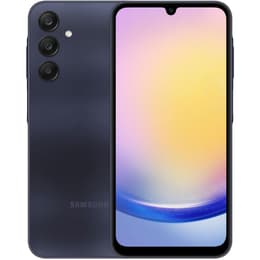
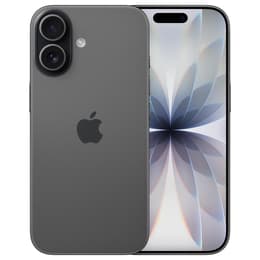
Galaxy A25 Vs iPhone 17
- 1-year minimum warranty
- Free delivery on all items
- Free 30-day returns
Differences at a glance
The Samsung Galaxy A25, released in late 2023, and the iPhone 17, launched in September 2025, represent distinct offerings in the smartphone market. While the Galaxy A25 operates on Android with Samsung's One UI, the iPhone 17 runs on Apple's iOS, providing different user experiences. Key differentiators include their respective operating systems, processor capabilities, and camera systems, catering to varied user preferences and needs.
Available Models
Colour
Storage (GB)
Scores
Durability
When considering the practical lifespan of these devices, several factors come into play, including their release timelines and software support.
- Release Timeline: The Galaxy A25 was released in December 2023, making it a more established device on the market. The iPhone 17, having launched in September 2025, is a newer model.
- Software Longevity: Samsung typically provides four years of operating system updates and five years of security updates for its A-series phones, meaning the Galaxy A25 can expect support up to Android 18. Apple generally offers 6-7 years of iOS updates for its iPhones, suggesting the iPhone 17 will receive software support for a longer duration.
- Build Durability: The Galaxy A25 features a glass front protected by Corning Gorilla Glass 5, with a plastic frame and back. The iPhone 17 incorporates Ceramic Shield 2 on its front, which is designed to be more scratch-resistant than previous generations, alongside an aluminum frame and glass back.
Year of Release
2023
2025
Compatible with latest Update
Yes
Yes
OS
Android
iOS
Foldable
No
No
Performance
The performance of a smartphone is largely determined by its internal processing unit, impacting everything from app responsiveness to gaming capabilities.
- Processor Capabilities: The Galaxy A25 is powered by a 5nm processor, which capably handles everyday tasks such as web browsing, email, and media playback. It offers smooth app switching and responsive daily activities. The iPhone 17 features a more advanced processor, designed for faster app performance, smoother multitasking, and improved energy efficiency, also supporting on-device generative AI tasks.
- Multitasking and Gaming: For the Galaxy A25, moderate gaming and multitasking are handled with ease, though it may not be ideal for heavy gaming or intense multitasking under sustained load. The iPhone 17's processor is engineered to manage demanding applications and graphics-intensive games with greater fluidity and sustained performance.
- Storage and Responsiveness: The Galaxy A25 is available with up to 8GB of RAM and storage options including 128GB and 256GB, expandable via microSD. The iPhone 17 starts with 256GB of internal storage and includes 8GB of RAM, contributing to its overall system responsiveness.
Screen quality
The display is a primary interface for users, and both devices offer distinct visual experiences.
- Display Technology and Clarity: The Galaxy A25 features a 6.5-inch Super AMOLED display with a Full HD+ resolution of 1080 x 2340 pixels, providing rich colors and details. The iPhone 17 comes with a 6.3-inch Super Retina XDR OLED display, offering a higher resolution of 2622 × 1206 pixels and a pixel density of 460 ppi, resulting in vibrant colors and deep blacks.
- Brightness and Refresh Rate: The Galaxy A25's screen can reach up to 1000 nits of peak brightness, enhanced with Vision Booster for outdoor visibility, and supports a 120Hz refresh rate for smoother scrolling. The iPhone 17 also features a 120Hz ProMotion refresh rate for adaptive smoothness and offers 1000 nits typical brightness, with HDR content peaking at 1600 nits. It also includes an Always-On display feature.
- Viewing Experience: Both devices provide a clear and vibrant viewing experience, with the iPhone 17's higher pixel density and advanced display technologies potentially offering a more refined visual output, particularly for detailed content.
Resolution
1080 x 2340
2622x1206
Screen type
Super AMOLED
Super Retina XDR
Audiovisual
Camera capabilities are a significant consideration for many users, and these phones approach photography with different hardware and software philosophies.
- Rear Camera Systems: The Galaxy A25 is equipped with a triple rear camera setup, including a 50MP main sensor with Optical Image Stabilization (OIS), an 8MP ultrawide lens, and a 2MP macro lens. The iPhone 17 features a dual-lens rear camera system, both lenses being 48MP: a Wide lens with OIS and a 48MP Ultra Wide lens, which also supports macro photography and offers improved low-light performance. The Wide lens on the iPhone 17 also enables 2x optical zoom through pixel binning.
- Front Camera and Video: For selfies and video calls, the Galaxy A25 has a 13MP front camera. It supports 4K video recording at 30 frames per second. The iPhone 17 includes an 18MP front-facing camera and supports 4K Dolby Vision video recording.
- Photography Performance: The Galaxy A25's 50MP main camera is capable of capturing high-resolution images, with users noting its competent performance. The iPhone 17's camera system, with its dual 48MP lenses and advanced computational photography, aims to deliver high-quality images with improved detail and low-light capabilities.
Main camera
50 megapixels
48 megapixels
Front camera
13 megapixels
18 megapixels
Miscellaneous
Beyond core features, several practical elements contribute to the overall user experience and device utility.
- Connectivity and Ports: Both devices support 5G connectivity. The Galaxy A25 includes Wi-Fi 5 (ac) and Bluetooth 5.3, along with a USB-C 2.0 port and a 3.5mm headphone jack. The iPhone 17 features an Apple-designed networking chip, supporting Wi-Fi 7 and Bluetooth 6, and utilizes a USB-C port, though with USB2 transfer speeds.
- Biometric Security: The Galaxy A25 incorporates a side-mounted fingerprint sensor for secure unlocking. The iPhone 17 relies on Face ID for facial recognition security.
- Design and Handling: The Galaxy A25 measures 161 x 76.5 x 8.3 mm and weighs 197g. The iPhone 17 is slightly more compact and lighter at 149.6mm x 71.5mm x 7.95mm and 177g, potentially offering a different feel in hand. The iPhone 17 also features a customizable Action button.
Weight
197 g
177 g
Screen size (in)
6.5
6.3
Mobile network
5G
5G
SIM card
Dual Physical SIM
Physical SIM + eSIM
Carrier compatibility
Unlocked
Unlocked
Connector
USB-C
USB-C
What the community thinks
Choosing between the Samsung Galaxy A25 and the iPhone 17 depends heavily on individual priorities and ecosystem preferences. The Galaxy A25, a mid-range Android device, is praised by users for its vibrant OLED display, good battery life, and capable cameras for its segment. Users appreciate its solid everyday performance and long-term software support from Samsung.
The iPhone 17, as a flagship iOS device, offers a more premium experience with its advanced processor, high-resolution OLED display with ProMotion, and sophisticated camera system. Users often highlight the seamless integration within the Apple ecosystem and the consistent performance of iOS. Common praise points for recent iPhones, which the iPhone 17 builds upon, include excellent video recording capabilities and natural color accuracy in photos. However, some users of previous iPhone models have noted concerns regarding camera post-processing and battery life under heavy usage.
Users prioritizing an extensive software update lifespan, a highly powerful processor for demanding tasks, and a premium camera experience may find the iPhone 17 well-suited to their needs. Conversely, those who value a larger battery capacity, expandable storage, a 3.5mm headphone jack, and the flexibility of the Android ecosystem might lean towards the Galaxy A25. Both devices offer compelling features for their respective audiences. For those looking for an eco-friendly alternative, considering a quality-assured refurbished option for either model can be a smart choice.