Compare models
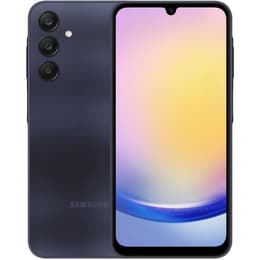
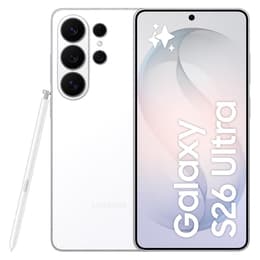
Galaxy A25 Vs Galaxy S26 Ultra
- 1-year minimum warranty
- Free delivery on all items
- Free 30-day returns
Differences at a glance
The Samsung Galaxy A25 (2023) and the Samsung Galaxy S26 Ultra (2026) represent two different tiers of Android smartphone engineering, catering to distinct user expectations across release years. While the Galaxy A25 serves as an accessible mid-range option, the Galaxy S26 Ultra operates as a feature-rich flagship loaded with advanced hardware. Both devices run on the Android operating system with Samsung's interface overlay, though they offer vastly different processing powers and build compositions.
Available Models
Colour
Storage
Scores
Durability
When evaluating structural longevity and software update timelines, these two devices reflect their distinct generational gaps and market positioning.
- Release timeline and software support: The Galaxy S26 Ultra benefits from a multi-year software commitment extending up to seven major OS updates, whereas the Galaxy A25 provides a shorter, standard update schedule suited for its mid-range category.
- Build durability: The Galaxy S26 Ultra utilizes reinforced frame materials and advanced drop-resistant glass protection, while the Galaxy A25 relies on a standard plastic and glass construction typical of everyday mid-range devices.
- Expected practical lifespan: The higher-tier processing headroom and extended maintenance schedule of the Galaxy S26 Ultra support long-term usability, while the Galaxy A25 functions effectively as a reliable short-to-medium-term daily driver.
Year of Release
2023
2026
Compatible with latest Update
Yes
Yes
OS
Android
Android
Foldable
No
No
Performance
Daily operation, multitasking capability, and energy management differ notably based on the internal hardware integration of each smartphone.
- Multitasking and system responsiveness: The Galaxy S26 Ultra handles intensive multi-app workflows, high-end mobile gaming, and demanding productivity tools seamlessly, while the Galaxy A25 manages routine daily tasks like web browsing, social media, and messaging reliably.
- Storage capacity configurations: The Galaxy A25 typically offers configurations starting at 128GB of internal storage, whereas the Galaxy S26 Ultra begins at higher baseline capacities and extends up to extensive enterprise-level volumes.
- Battery behavior: Both devices pack large 5000mAh batteries, but power efficiency optimizations in the Galaxy S26 Ultra allow for extended endurance during heavy usage scenarios compared to the moderate efficiency of the Galaxy A25.
Screen quality
Visual output varies across panel technologies, peak brightness levels, and overall immersion during media consumption.
- Display technology: The Galaxy A25 features a vibrant Super AMOLED panel, while the Galaxy S26 Ultra steps up to an advanced Dynamic LTPO AMOLED 2X display equipped with anti-reflective properties.
- Refresh rate and fluidity: Both models support a smooth 120Hz refresh rate, ensuring fluid scrolling through menus, web pages, and supported applications.
- Outdoor visibility: The Galaxy S26 Ultra achieves significantly higher peak luminance levels for clear viewing under direct sunlight, whereas the Galaxy A25 remains adequately visible in moderate outdoor lighting conditions.
Resolution
1080x2340
1440 x 3120
Audiovisual
Optics and acoustic output vary substantially, driven by the specialized sensor arrays and speaker configurations built into each model.
- Camera system capabilities: The Galaxy S26 Ultra incorporates a versatile quad-camera array featuring high-resolution primary and periscope telephoto lenses for distant subjects, while the Galaxy A25 relies on a triple-lens setup focused on standard wide and ultra-wide utility.
- Low-light and video performance: The flagship sensor architecture on the Galaxy S26 Ultra captures greater detail and stabilization in dim environments, alongside high-resolution professional video recording formats.
- Audio output: Stereo speakers on both devices provide clear sound for calls and media, with the Galaxy S26 Ultra delivering a wider dynamic range and deeper acoustic profile.
Front camera
13 megapixels
12.0
Miscellaneous
Physical dimensions, connectivity standards, and daily ergonomics dictate how comfortably each device fits into various user routines.
- Handling and physical footprint: The Galaxy A25 features a lighter, narrower frame that fits easily in smaller hands, whereas the Galaxy S26 Ultra presents a larger, heavier chassis designed to maximize screen workspace.
- Connectivity and ports: Both models support 5G network connectivity and modern Wi-Fi standards, utilizing reversible USB-C ports for charging and data transfer.
- Specialized features: The Galaxy S26 Ultra includes integrated stylus support and advanced biometric security sensors, while the Galaxy A25 features a side-mounted fingerprint reader integrated into the power button.
Weight
197 g
214 g
Screen size (in)
6.5
6.9
Mobile network
5G
5G
SIM card
Physical SIM
Dual Physical SIM + eSIM
Carrier compatibility
Unlocked
Unlocked
Connector
USB-C
USB-C
What the community thinks
User discussions across public forums highlight distinct preferences for these devices based on daily workflow demands. Owners of the Galaxy A25 frequently praise its reliable screen quality, dependable everyday battery life, and straightforward interface for basic tasks. Conversely, community feedback for the Galaxy S26 Ultra centers on its expansive display workspace, versatile camera zoom capabilities, and powerful processing output. Common criticisms for the higher-end model involve its substantial physical weight and large footprint, while the mid-range device receives occasional notes regarding restricted graphics performance in demanding games.
Users prioritizing productivity, advanced photography, and long-term hardware durability will find the Galaxy S26 Ultra well-suited to their needs. Meanwhile, users focusing on essential communication, media streaming, and straightforward handling may prefer the balanced simplicity of the Galaxy A25. Choosing between these smartphones depends entirely on matching individual workflow requirements with each device's core strengths, with quality-assured refurbished options providing a sustainable choice for conscious buyers.