

Compare models

Galaxy A17 Vs Google Pixel 7

  • 1-year minimum warranty
  • Free delivery on all items
  • Free 30-day returns
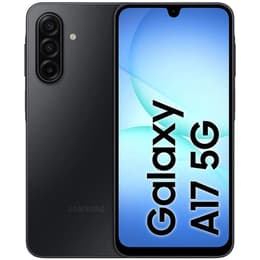
Galaxy A17
Starting at

Refurbished price:£133.00

Versus £243.85 new

See options
Google Pixel 7
Starting at

Refurbished price:£160.00

Versus £756.00 new

See options

Differences at a glance

The Samsung Galaxy A17 (2025) and the Google Pixel 7 (2022) are distinct Android smartphones designed to meet different user needs across daily productivity and multimedia consumption. While both models run on the Android operating system, they approach hardware longevity, camera processing, and screen execution from unique perspectives. Choosing between them depends on whether a user prioritizes extended software support or more advanced core imaging capabilities.

Available Models

Colour

Storage

Scores

Durability

When examining hardware longevity and software support, both devices handle ongoing maintenance differently based on their release timelines and manufacturer update commitments.

  • Release timeline and update commitment: The Galaxy A17 benefits from an extended software support policy spanning multiple years of major operating system upgrades, whereas the Google Pixel 7 operates on a fixed five-year security and update window from its earlier release year.
  • Software longevity and maintenance: Both models maintain consistent day-to-day usability through regular security patches, though the Samsung device offers a longer active support horizon for newer operating system versions.
  • Repairability and practical lifespan: Standard component replacement is straightforward for both handsets through professional repair channels, ensuring reliable multi-year operational lifespans with normal daily care.

Year of Release

2025

2022

OS

Android

Android

Foldable

No

No

Performance

Under everyday conditions, both devices deliver capable processing performance, though their internal hardware architectures handle multitasking and heavy resource loads differently.

  • Processor capabilities and responsiveness: Both handsets handle web browsing, social media feeds, and streaming apps smoothly, while more demanding mobile games and intensive multitasking run with stable frame rates and effective thermal management.
  • Memory and storage configurations: Both models offer balanced random access memory configurations paired with standard internal storage capacities, though neither includes expandable storage via memory cards.
  • Battery behavior and endurance: The Galaxy A17 features a larger battery capacity that comfortably sustains a full day of mixed use, whereas the Pixel 7 provides standard daily endurance that may require a top-up during heavier usage periods.

Screen quality

Display technology varies between the two models in terms of size, panel type, and visual fluidity during daily interaction.

  • Display technology and clarity: Both smartphones feature vibrant OLED panel technology that delivers deep black levels, high contrast ratios, and sharp text rendering for reading and media viewing.
  • Refresh rate and smoothness: Both screens support a 90Hz refresh rate, ensuring fluid scrolling through menus, web pages, and social media timelines.
  • Outdoor visibility: Panel brightness levels on both devices allow content to remain legible under direct sunlight, though adaptive brightness features respond dynamically to changing ambient light conditions.

Resolution

1080x2340

1080 x 2400

Audiovisual

Imaging hardware and software processing diverge significantly when capturing photos and recording video in various lighting environments.

  • Camera system capabilities: The Pixel 7 utilizes advanced computational photography algorithms to deliver detailed low-light shots and balanced high-contrast scenes, while the Galaxy A17 relies on a versatile multi-lens rear array for standard everyday snapshots.
  • Video recording quality: Both devices capture crisp high-definition and ultra-high-definition video with built-in stabilization features that reduce unwanted motion blur during handheld recording.
  • Audio and media output: Built-in microphone arrays isolate voice audio clearly during calls, and the integrated stereo speakers provide adequate volume levels for casual media consumption without external headphones.

Front camera

13MP

10.8 megapixels

Miscellaneous

Physical construction and connectivity standards dictate how each device handles daily handling and network integration.

  • Connectivity and ports: Both smartphones support modern fifth-generation cellular networks, dual-SIM functionality through nano-SIM and electronic SIM options, and standard high-speed wireless local area network protocols.
  • Physical dimensions and handling: The Galaxy A17 offers a larger physical footprint with a thin profile, while the Pixel 7 provides a slightly more compact form factor that rests comfortably in one hand.
  • Build materials and sensors: Both models incorporate durable glass and frame materials alongside responsive biometric security sensors, including optical fingerprint recognition and facial unlock capabilities.

Weight

192 g

197 g

Screen size (in)

6.7

6.3

Mobile network

5G

5G

SIM card

Dual Physical SIM

Physical SIM + eSIM

Carrier compatibility

Unlocked

Unlocked

What the community thinks

User discussions across community forums highlight distinct preferences for each device based on everyday usability. Owners of the Galaxy A17 frequently praise its dependable battery endurance and modern software update timeline, though some users note that intensive gaming pushes the processor to its limits. Conversely, Pixel 7 users widely appreciate the refined camera output and clean software interface, while noting that the battery depletes faster under heavy navigation and camera use. For users seeking an eco-friendly purchase path, exploring a quality-assured refurbished option provides a sustainable alternative that extends device life cycles.

Users prioritizing extended software update longevity and larger screen estate may prefer the Galaxy A17, while users prioritizing advanced computational photography and a compact feel will find the Google Pixel 7 well-suited to their needs. Selecting between these two devices ultimately depends on individual workflows, physical handling preferences, and long-term usage expectations.