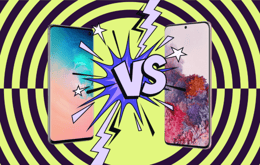

Galaxy S10 Vs iPhone 11 Pro

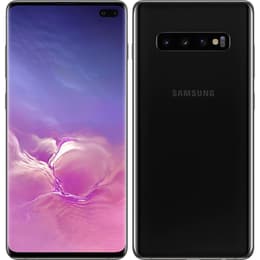
Galaxy S10
Galaxy S10
Starting at

Refurbished price:£108.00

Versus £639.00 new

See options
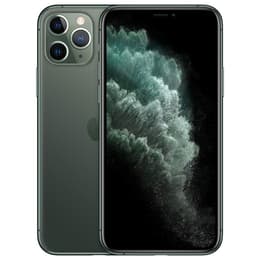
iPhone 11 Pro
iPhone 11 Pro
Starting at

Refurbished price:£151.00

Versus £639.00 new

See options

Ratings

The Samsung Galaxy S10, released in March 2019, and the iPhone 11 Pro, launched in September 2019, represent flagship smartphones from their respective manufacturers from the same year. While both devices offer premium experiences, they differ significantly in their operating systems and design philosophies. The Galaxy S10 runs on Android, offering greater customization, while the iPhone 11 Pro operates on iOS, known for its streamlined user experience. Key distinctions lie in their display technology, camera capabilities, and overall ecosystem integration.

Scores

Durability

When considering the long-term usability of these devices, several factors come into play, including software support and physical resilience.

  • Software Longevity: The iPhone 11 Pro, running iOS, typically receives software updates for a longer duration than its Android counterpart. Released in September 2019, it has received updates up to iOS 17 and is likely to receive future iOS versions, extending its functional lifespan. The Galaxy S10, launched in March 2019 with Android 9, received major OS updates up to Android 12, with security updates likely concluding in 2023 or 2024. This means the iPhone 11 Pro offers a longer period of access to the latest features and security patches.
  • Physical Durability: Both devices feature glass front and back panels with metal frames and are rated IP68 for water and dust resistance. The iPhone 11 Pro is resistant to submersion up to 4 meters for 30 minutes, while the Galaxy S10 is resistant up to 1.5 meters for the same duration.
  • Repairability: The Galaxy S10 received a repairability score of 3 out of 10 from iFixit, indicating it is difficult to repair due to extensive use of adhesive and soldered components like the charging port. The iPhone 11 Pro, on the other hand, scored a 6 out of 10, with iFixit noting that critical display and battery repairs are prioritized in its design, making them more accessible.

Year of Release

2019

2019

Compatible with latest Update

No

Yes

OS

Android

iOS

Foldable

No

No

Performance

Both the Galaxy S10 and iPhone 11 Pro were equipped with high-performance processors for their release year, delivering smooth operation for everyday tasks and demanding applications.

  • Processing Power: The iPhone 11 Pro features a powerful chip that provides efficient performance for applications and gaming. The Galaxy S10 also includes a capable processor, ensuring smooth multitasking and app responsiveness. Both devices handle typical smartphone usage, from browsing to video editing, without significant slowdowns.
  • Battery Performance: The iPhone 11 Pro is known for its optimized battery life, often lasting a full day or more for many users, even with its smaller battery capacity. The Galaxy S10, with a larger battery, generally offers solid all-day endurance for moderate use, though heavy users might find themselves needing to charge before the day ends.
  • Storage and Multitasking: The iPhone 11 Pro offers storage options up to 512GB, paired with sufficient RAM for smooth app switching. The Galaxy S10 provides more flexible storage, with options up to 512GB and the inclusion of a microSD card slot for further expansion, alongside ample RAM for efficient multitasking.

Memory (GB)

8 GB

4 GB

Screen quality

The visual experience on both devices is a highlight, with each offering vibrant and detailed displays, though with different characteristics.

  • Display Technology: The Galaxy S10 features a 6.1-inch Dynamic AMOLED display, known for its vibrant colors, deep blacks, and high contrast. The iPhone 11 Pro comes with a 5.8-inch Super Retina XDR OLED display, which also delivers excellent color accuracy, deep blacks, and high contrast.
  • Resolution and Clarity: The Galaxy S10 boasts a QHD+ resolution (3040x1440 pixels) with a pixel density of 550 ppi, offering a very sharp image. The iPhone 11 Pro has a resolution of 2436x1125 pixels at 458 ppi, providing clear and crisp visuals.
  • Brightness and Refresh Rate: Both displays support HDR content, with the iPhone 11 Pro reaching a peak brightness of 1200 nits for HDR content and 800 nits typical, ensuring good visibility in various lighting conditions. The Galaxy S10 also offers high brightness, reaching up to 1200 nits in high brightness mode. Both devices feature a standard 60Hz refresh rate.

Resolution

1440 x 3040

1125 x 2436

Screen type

Dynamic AMOLED

Super Retina XDR OLED

Audiovisual

Both smartphones feature advanced camera systems designed to capture high-quality photos and videos in various conditions.

  • Rear Camera System: The Galaxy S10 includes a versatile triple-camera setup with a 12MP wide-angle lens, a 12MP telephoto lens with 2x optical zoom, and a 16MP ultrawide lens. The iPhone 11 Pro also sports a triple 12MP camera system, comprising wide, ultrawide, and telephoto lenses, offering 2x optical zoom in and 2x optical zoom out.
  • Photography Performance: The iPhone 11 Pro introduced a significant improvement in low-light photography with its Night Mode, producing brighter images with reduced noise. The Galaxy S10 also performs well in various lighting, with its variable aperture on the main lens adapting to different light levels. Both offer features like optical image stabilization and advanced portrait modes.
  • Video Recording and Audio: Both devices are capable of recording 4K video at 60 frames per second, providing detailed and smooth footage. The Galaxy S10 includes a 3.5mm headphone jack and stereo speakers, offering a traditional audio experience and good sound quality. The iPhone 11 Pro relies on its Lightning port for wired audio and features stereo speakers with spatial audio.

Main camera

12 megapixels

12 megapixels

Front camera

10 megapixels

12 megapixels

Miscellaneous

Beyond core features, several practical elements differentiate the user experience between these two devices.

  • Connectivity and Ports: Both the Galaxy S10 and iPhone 11 Pro support 4G LTE and Wi-Fi 6 for fast wireless connectivity. The Galaxy S10 features a USB-C port for charging and data transfer, along with a 3.5mm headphone jack, offering broad compatibility with accessories. The iPhone 11 Pro uses Apple's proprietary Lightning port.
  • Biometric Security: The Galaxy S10 incorporates an ultrasonic in-display fingerprint sensor for secure unlocking, alongside face recognition. The iPhone 11 Pro exclusively uses Face ID, Apple's facial recognition system, for secure authentication.
  • Design and Handling: The Galaxy S10 has a slightly larger 6.1-inch display and a lighter build at 157g, with curved edges that contribute to a comfortable in-hand feel. The iPhone 11 Pro, with its 5.8-inch display, is slightly heavier at 188g and features a stainless steel frame, giving it a dense and robust feel.

Weight

175 g

188 g

Screen size (in)

6.1

5.8

Mobile network

4G

4G

SIM card

Physical SIM

Physical SIM + eSIM

Carrier compatibility

Unlocked

Unlocked

Connector

USB-C + Jack 3.5mm

Lightning

The Samsung Galaxy S10 and iPhone 11 Pro, both released in 2019, offer distinct experiences tailored to different user preferences. Users often praise the Galaxy S10 for its expansive, vibrant display, the flexibility of its Android operating system, and the inclusion of a headphone jack and expandable storage. Some common criticisms for the S10 have revolved around its battery life for heavy users and its lower repairability score.

Conversely, the iPhone 11 Pro is frequently lauded for its consistent camera performance, particularly in low light, its robust software support longevity, and the overall smooth and integrated iOS ecosystem. User feedback sometimes points to its smaller screen size compared to some Android flagships and the reliance on the Lightning port as areas of consideration.

Users prioritizing a highly customizable Android experience, a larger display with a high resolution, and traditional connectivity options like a headphone jack and expandable storage may find the Galaxy S10 well-suited to their needs. Those who value long-term software support, a streamlined user interface, strong camera performance, and a compact form factor might lean towards the iPhone 11 Pro. Both devices continue to offer reliable performance for daily use, and choosing a quality-assured refurbished option for either model presents an eco-friendly alternative for consumers.


See all articles

Our recent comparisons