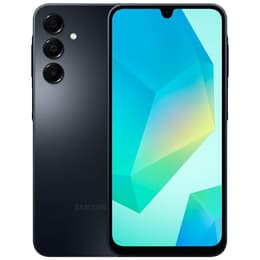


Galaxy A16 Vs Google Pixel 7

Galaxy A16
Galaxy A16
Starting at

Refurbished price:£100.62

Versus £206.96 new

See options
Google Pixel 7
Google Pixel 7
Starting at

Refurbished price:£134.00

Versus £729.00 new

See options

Ratings

The Samsung Galaxy A16, released in late 2024 and early 2025, and the Google Pixel 7, launched in late 2022, represent different approaches to the Android smartphone experience. While the Galaxy A16 focuses on extended software support and a large display, the Pixel 7 emphasizes advanced computational photography and a premium software experience. Both devices run on the Android operating system, with the Galaxy A16 featuring Samsung's One UI and the Pixel 7 offering a more stock Android interface.

Scores

Durability

When considering the longevity of these devices, their release timelines and software support policies are key differentiators.

  • Software Updates: The Samsung Galaxy A16 stands out with an impressive commitment of six years of operating system upgrades and security updates, extending its support until October 2030. This means users can expect to receive the latest Android features and security patches for a significantly longer period. In contrast, the Google Pixel 7, released earlier, is guaranteed to receive three years of OS updates and five years of security updates, with support expected to conclude around October 2027.
  • Physical Durability: The Pixel 7 features Corning Gorilla Glass Victus on both its front and back, along with an IP68 rating for dust and water resistance, indicating a higher level of protection against environmental elements. The Galaxy A16, while offering a glass front and plastic back and frame, comes with an IP54 rating, providing splash and dust resistance.
  • Practical Lifespan: Users prioritizing the absolute longest software support and a device that remains current with Android versions for many years will find the Galaxy A16 more appealing. However, the Pixel 7's robust build materials offer a higher degree of physical resilience.

Year of Release

2024

2022

Compatible with latest Update

Yes

Yes

OS

Android

Android

Foldable

No

No

Performance

The performance of these two smartphones caters to different user expectations, primarily influenced by their internal components and software optimization.

  • Everyday Responsiveness: The Google Pixel 7, powered by its custom-designed processor, delivers a smooth and highly responsive experience, adept at handling demanding applications, complex multitasking, and graphic-intensive games. Its architecture is optimized for Google's software, contributing to efficient operation. The Galaxy A16, while capable for daily tasks like browsing, social media, and light gaming, may exhibit occasional stutters or slowdowns with more intensive use or heavy multitasking.
  • Storage and Multitasking: The Pixel 7 comes with 8GB of RAM, providing ample capacity for smooth app switching and background processes. It offers storage options of 128GB or 256GB, though it does not support expandable storage. The Galaxy A16 offers more flexibility with RAM options ranging from 4GB to 8GB and storage options of 128GB or 256GB, crucially including expandable storage via a microSDXC card, which can be beneficial for users with large media libraries.
  • Battery Endurance: The Galaxy A16 is equipped with a larger 5000 mAh battery, which, combined with its efficient processor, often translates to extended usage times, with some reports indicating up to two full days of use for moderate users. The Pixel 7 has a 4355 mAh battery and is generally reported to last a full day with typical usage, though heavy users might find themselves needing to recharge before the day ends.

Memory (GB)

4 GB

8 GB

Screen quality

Both devices offer vibrant displays, but there are distinctions in their technology and capabilities that affect the viewing experience.

  • Display Technology and Clarity: The Samsung Galaxy A16 features a 6.7-inch Super AMOLED display, providing rich colors, deep blacks, and excellent contrast, with a Full HD+ resolution (1080 x 2340 pixels). The Google Pixel 7 has a slightly smaller 6.3-inch AMOLED display, also with a Full HD+ resolution (2400 x 1080 pixels), known for its vibrant colors and true blacks.
  • Brightness and Smoothness: The Pixel 7's display offers higher peak brightness, reaching up to 1400 nits, which enhances visibility in bright outdoor conditions and improves HDR content viewing. The Galaxy A16 has a typical brightness of 800 nits. Both phones feature a 90Hz refresh rate, contributing to smoother scrolling and a more fluid visual experience compared to standard 60Hz displays.
  • Viewing Experience: Users who prefer a larger screen for media consumption or productivity might lean towards the Galaxy A16's expansive 6.7-inch display. Those who prioritize higher brightness for outdoor use and enhanced HDR capabilities will find the Pixel 7's display more suitable.

Resolution

1080 x 2340

1080 x 2400

Screen type

Super AMOLED

AMOLED

Audiovisual

The camera systems on the Galaxy A16 and Pixel 7 offer different strengths, particularly in image processing and overall versatility.

  • Rear Camera Capabilities: The Google Pixel 7 is highly regarded for its dual-camera setup, featuring a 50MP main sensor and a 12MP ultrawide lens. It excels in computational photography, producing consistently detailed images with natural colors and strong low-light performance. The Galaxy A16 comes with a triple-camera system: a 50MP main, a 5MP ultrawide, and a 2MP macro lens. While its main camera can capture decent photos in good lighting, the ultrawide and macro lenses are often noted as being less capable, with some reviews suggesting overall photo quality can be mediocre.
  • Video Recording and Front Camera: The Pixel 7 offers robust video recording, capable of 4K at 30/60fps with optical and electronic image stabilization, and its 10.8MP ultrawide front camera can also record 4K 60fps video, making it suitable for high-quality video calls and vlogging. The Galaxy A16 supports 1080p at 30fps video recording with its main camera, though the 5G variant may support 4K video recording, even if the stock app doesn't always utilize it. Its 13MP front camera is suitable for everyday selfies and video calls.
  • Special Features: The Pixel 7 benefits from Google's advanced AI features like Magic Eraser and Photo Unblur, enhancing post-capture editing. While the Pixel 7 does not have a dedicated macro lens, its main camera can focus on subjects as close as 10cm.

Main camera

50 megapixels

50 megapixels

Front camera

13 megapixels

10.8 megapixels

Miscellaneous

Beyond core features, several practical elements contribute to the overall user experience of these smartphones.

  • Connectivity and Ports: Both devices support 5G connectivity (for the A16 5G variant), Wi-Fi, and Bluetooth. The Galaxy A16 features Bluetooth 5.3, while the Pixel 7 uses a slightly older version. Both utilize a USB Type-C port for charging and data transfer.
  • Biometrics and Sensors: The Google Pixel 7 incorporates an optical under-display fingerprint scanner for secure unlocking, alongside face recognition. The Samsung Galaxy A16 typically features a side-mounted fingerprint scanner. Both include essential sensors like accelerometers, gyroscopes, and compasses.
  • Design and Handling: The Pixel 7 has a more compact form factor, measuring 155.6 x 73.2 x 8.7 mm and weighing 197g, making it easier for one-handed use. Its construction with Gorilla Glass Victus on the front and back, and an aluminum frame, gives it a more premium feel. The Galaxy A16 is larger at 164.4 x 77.9 x 7.9 mm and weighs 200g, offering a more expansive screen but potentially requiring two hands for comfortable operation. It features a plastic back and frame with a glass front.

Weight

200 g

197 g

Screen size (in)

6.7

6.3

Mobile network

4G

5G

SIM card

Dual Physical SIM

Physical SIM + eSIM

Carrier compatibility

Unlocked

Unlocked

Connector

USB-C

USB-C + Jack 3.5mm

The Samsung Galaxy A16 and Google Pixel 7 cater to distinct user needs, each bringing a compelling set of features to the table. User sentiment often praises the Pixel 7 for its exceptional camera performance, particularly its computational photography capabilities and consistent image quality across various conditions. Its smooth software experience and timely updates are also frequently highlighted. Some common criticisms of the Pixel 7 include its battery life, which, while adequate for many, may not satisfy heavy users, and its charging speed, which is not the fastest available.

The Galaxy A16 receives commendation for its impressive software support longevity, offering six years of updates, which is a significant advantage for users planning to keep their device for an extended period. Its large, vibrant Super AMOLED display and long battery life are also frequently cited as strong points. However, some users express concerns about its performance, which can be sluggish under heavy loads, and the overall quality of its secondary cameras (ultrawide and macro) is often considered mediocre.

Users prioritizing a top-tier camera experience, especially for photography and video, along with a consistently fluid software interface and a more compact design, may find the Google Pixel 7 to be a better fit. Its robust build and higher water resistance also appeal to those seeking greater physical durability. Conversely, individuals who value maximum software longevity, a larger display for media consumption, and extended battery life for multi-day usage might lean towards the Samsung Galaxy A16. Its expandable storage is also a notable benefit for users with extensive media collections. Both devices are available as quality-assured refurbished options, providing an eco-friendly alternative for consumers.


See all articles

Our recent comparisons