
Galaxy A13 Vs Galaxy A56

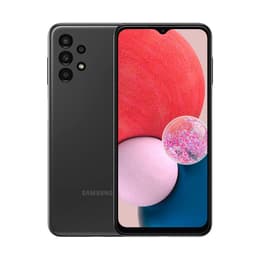
Galaxy A13
Galaxy A13
Starting at

Refurbished price:£63.00

Versus £249.00 new

See options
Galaxy A56
Galaxy A56
Starting at

Refurbished price:£274.00

Versus £422.50 new

See options

Ratings

The Samsung Galaxy A13, released in March 2022, and the Samsung Galaxy A56, launched in March 2025, represent different tiers within Samsung's popular Galaxy A series of smartphones. While both devices operate on the Android platform, the Galaxy A56 introduces significant advancements in display technology, processing power, camera capabilities, and overall build quality, reflecting its newer generation and higher positioning. This comparison aims to highlight the practical differences between these two models to assist users in making an informed decision based on their individual needs.

Scores

Durability

When considering the longevity of a smartphone, factors such as release timeline, software support, and physical durability play a crucial role. The Galaxy A13 and Galaxy A56 offer distinct propositions in this regard.

  • Release Timeline and Software Support: The Galaxy A13, launched in March 2022, originally ran on Android 12 and was eligible for two major OS upgrades, with security updates extending for approximately four years, likely concluding in early 2026. In contrast, the newer Galaxy A56, released in March 2025 with Android 15, benefits from Samsung's extended support policy, promising six Android OS upgrades and six years of security updates, ensuring software support until 2031. [1, 3, 21, 24, 25]
  • Physical Durability: The Galaxy A13 features a glass front protected by Corning Gorilla Glass 5, combined with a plastic back and frame. The Galaxy A56, however, boasts a more robust construction with an aluminum frame and Corning Gorilla Glass Victus+ on both the front and back, offering enhanced resistance to scratches and drops. Additionally, the Galaxy A56 carries an IP67 rating for dust and water resistance, a feature not present on the Galaxy A13, contributing to its greater resilience against environmental elements. [1, 2, 6]
  • Expected Practical Lifespan: Users prioritizing extended software longevity and superior physical durability will find the Galaxy A56 to be a more future-proof option. The Galaxy A13, while still functional, will cease to receive major software updates sooner, potentially impacting compatibility with newer applications and security features over time.

Year of Release

2022

2025

Compatible with latest Update

No

Yes

OS

Android

Android

Foldable

No

No

Performance

The performance of a smartphone directly impacts daily usability, from launching applications to multitasking and gaming. The Galaxy A13 and Galaxy A56 exhibit notable differences in their underlying hardware, translating to varying user experiences.

  • Processing Capabilities: The Galaxy A13 is powered by an octa-core processor, which handles everyday tasks such as web browsing, social media, and light applications adequately. For more demanding operations or intensive multitasking, users may experience slower response times. The Galaxy A56, featuring a newer 4nm octa-core processor, delivers a more responsive and fluid experience. This allows for smoother navigation, quicker app loading, and more efficient handling of multiple applications simultaneously, making it better suited for users who frequently engage with resource-intensive apps or mobile gaming. [1, 4, 6]
  • Memory and Storage: The Galaxy A13 offers various configurations, including 3GB, 4GB, or 6GB of RAM, and storage options of 32GB, 64GB, or 128GB, with the flexibility to expand storage via a microSD card. The Galaxy A56 comes with higher base memory, typically 8GB or 12GB of RAM, paired with 128GB or 256GB of internal storage. However, it's important to note that the Galaxy A56 does not support expandable storage via a microSD card, a departure from its predecessors. [1, 2, 6, 10]
  • Battery Behavior: Both devices are equipped with a 5000 mAh battery, providing ample power for a full day of typical use. The Galaxy A13 supports 15W wired charging. The Galaxy A56, while having the same battery capacity, supports faster 45W wired charging, allowing for quicker replenishment of power. [1, 2, 6, 21, 37]

Memory (GB)

4 GB

8 GB

Screen quality

The display is a primary interface for smartphone interaction, and the quality of the screen significantly influences the viewing experience. The Galaxy A13 and Galaxy A56 offer different display technologies and specifications.

  • Display Technology and Clarity: The Galaxy A13 features a 6.6-inch PLS LCD display with a resolution of 1080 x 2408 pixels (FHD+). This provides clear visuals for general content consumption. The Galaxy A56 steps up to a 6.7-inch Super AMOLED display with a similar FHD+ resolution (2340x1080 pixels). The Super AMOLED technology on the A56 offers deeper blacks, higher contrast, and more vibrant colors compared to the LCD panel of the A13. [1, 2, 6, 10]
  • Brightness and Refresh Rate: The Galaxy A13 has a standard 60Hz refresh rate, which is typical for its segment. The Galaxy A56, however, boasts a 120Hz refresh rate, resulting in noticeably smoother scrolling, animations, and overall interface responsiveness. The A56 also offers a significantly higher peak brightness of up to 1900 nits, ensuring better visibility and readability outdoors under direct sunlight compared to the Galaxy A13. [1, 2, 4, 23]
  • Viewing Experience: Users who prioritize a fluid visual experience, rich colors, and excellent outdoor visibility will find the Galaxy A56's Super AMOLED display with its high refresh rate and brightness to be a substantial upgrade. The Galaxy A13's display is functional for everyday use but lacks the premium visual characteristics of its newer counterpart.

Resolution

1080 x 2408

1080 x 2340

Screen type

PLS LCD

Super AMOLED

Audiovisual

For many users, the camera system is a key differentiator in smartphone choice. Both the Galaxy A13 and Galaxy A56 are equipped with multiple cameras, but their capabilities and resulting image quality vary.

  • Rear Camera System: The Galaxy A13 features a quad-camera setup with a 50 MP main sensor (f/1.8), a 5 MP ultrawide, a 2 MP macro, and a 2 MP depth sensor. The main camera can capture decent photos in good lighting conditions. The Galaxy A56 also has a triple-camera system, including a 50 MP main sensor with Optical Image Stabilization (OIS) and an f/1.8 aperture, a 12 MP ultrawide, and a 5 MP macro lens. The inclusion of OIS on the A56's main sensor significantly improves low-light performance and video stability. [1, 2, 6, 15, 19]
  • Front Camera and Video Recording: The Galaxy A13 comes with an 8 MP front-facing camera, suitable for basic selfies and video calls. It supports video recording up to 1080p at 30 frames per second. The Galaxy A56 features an upgraded 12 MP front camera and is capable of recording videos in 4K resolution at 30 frames per second, both from the front and rear cameras, offering greater detail and flexibility for content creation. [1, 2, 6, 19]
  • Photography Performance: The Galaxy A56 generally delivers more detailed and vibrant images, especially in challenging lighting, thanks to its OIS and improved processing. Users report the A13's main camera performs well in bright conditions, but its auxiliary lenses and low-light capabilities are more limited. The A56 also includes AI capabilities for photo editing, such as Object Eraser. [1, 4, 21, 30, 32, 37]

Main camera

50 megapixels

4K@30fps

Front camera

8 megapixels

13 megapixels

Miscellaneous

Beyond core performance and display, several practical elements contribute to the overall user experience. The Galaxy A13 and Galaxy A56 differ in connectivity, physical design, and additional features.

  • Connectivity and Ports: The Galaxy A13 supports 4G LTE networks, Wi-Fi 5 (802.11ac), and Bluetooth 5.0. It includes a USB Type-C port and retains a 3.5mm headphone jack. The Galaxy A56 offers more advanced connectivity with 5G network support, Wi-Fi 6 (802.11ax), and Bluetooth 5.4. It also features a USB Type-C port but notably omits the 3.5mm headphone jack, a common trend in newer smartphones. [1, 10, 14, 23]
  • Biometric Security and Build: For security, the Galaxy A13 utilizes a side-mounted fingerprint sensor. The Galaxy A56 integrates an under-display fingerprint sensor, offering a more seamless aesthetic. The A13 has a plastic build, contributing to its lighter weight of 195g. The A56, with its aluminum frame and glass back, feels more substantial at 198g, reflecting its more premium construction. [1, 2, 6, 15, 23, 36]
  • Additional Features: The Galaxy A56 includes stereo speakers for an enhanced audio experience, a feature not typically found on the Galaxy A13. The A56 also boasts an IP67 rating for dust and water resistance, providing an extra layer of protection against daily wear and tear. [1, 2, 23]

Weight

195 g

197 g

Screen size (in)

6.6

6.5

Mobile network

4G

5G

SIM card

Dual Physical SIM

Dual Physical SIM + eSIM

Carrier compatibility

Unlocked

Unlocked

The Samsung Galaxy A13 and Galaxy A56 cater to different user expectations and budgets, with the A56 offering a significantly more advanced and modern smartphone experience. User feedback for the Galaxy A13 often praises its reliable battery life and the capability of its main camera in well-lit environments. However, common criticisms point to its slower performance for demanding tasks and the limitations of its LCD display and auxiliary cameras. [30, 32, 36, 37, 38]

Conversely, the Galaxy A56 receives commendation for its vibrant Super AMOLED display with a high refresh rate, robust build quality, and extended software support. Users appreciate its improved camera system, especially the inclusion of OIS, and its faster charging capabilities. Some users note that while performance is strong for most daily activities, it might not satisfy power users seeking flagship-level processing for intensive gaming. [4, 21, 22, 23]

Users prioritizing long-term software support, a premium viewing experience, enhanced camera features, and a more durable build will find the Galaxy A56 well-suited to their needs. Its 5G connectivity and faster charging also appeal to those seeking modern conveniences. For individuals who require a functional smartphone for essential tasks, value a traditional headphone jack, and prefer a more budget-conscious option, the Galaxy A13 remains a viable choice. Both models, particularly when considering a quality-assured refurbished option, offer an eco-friendly alternative for consumers.
See all articles

Our recent comparisons