
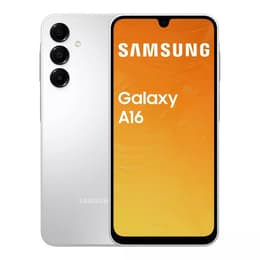
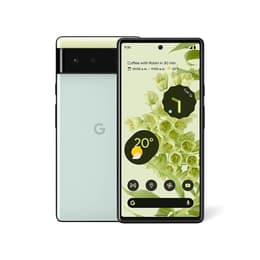

Galaxy A16 Vs Google Pixel 6

Galaxy A16
Galaxy A16
Starting at

Refurbished price:£100.62

Versus £206.96 new

See options
Google Pixel 6
Google Pixel 6
Starting at

Refurbished price:£100.00

Versus £649.99 new

See options

Ratings

The Samsung Galaxy A16, released in late 2024 and early 2025, and the Google Pixel 6, launched in October 2021, represent different approaches to the smartphone experience. While the Galaxy A16 offers a more recent release with extended software support, the Pixel 6, a former flagship, provides a premium build and advanced camera capabilities. Both devices operate on the Android platform, but their core strengths and target users diverge significantly.

Scores

Durability

When considering the long-term usability of these devices, their respective release timelines and software support policies are key factors.

  • Release Timeline: The Galaxy A16 is a significantly newer device, having been released in October 2024 in Europe and January 2025 in the US. In contrast, the Google Pixel 6 was launched in October 2021. This difference in release dates directly impacts their remaining support lifespans.
  • Software Longevity: The Galaxy A16 is notable for its extended software commitment, promising six years of operating system and security updates, with support expected to cease in October 2030. The Pixel 6, while receiving an extension, will have its last Android updates in 2026, marking five years of support from its launch. This means the A16 offers a considerably longer period of guaranteed software updates.
  • Practical Lifespan: For users prioritizing the latest software features and security patches, the Galaxy A16 provides a longer practical lifespan due to its newer release and extended update policy. The Pixel 6, while still functional, will no longer receive major OS updates after 2026, potentially limiting its compatibility with future applications and features.

Year of Release

2024

2021

Compatible with latest Update

Yes

Yes

OS

Android

Android

Foldable

No

No

Performance

The performance of a smartphone is crucial for daily tasks, from app usage to multitasking and gaming. These two devices offer distinct experiences in this regard.

  • Processor Capabilities: The Google Pixel 6 is powered by Google's first-generation Tensor processor, which was designed for flagship performance and advanced AI capabilities at its release. This allows it to handle demanding applications and multitasking smoothly. The Galaxy A16, on the other hand, utilizes a mid-range processor, either the Exynos 1330 or MediaTek Dimensity 6300, depending on the region. While capable for everyday use, some users have reported instances of lag and stuttering, particularly with lower RAM configurations.
  • System Responsiveness: The Pixel 6 generally offers a highly responsive user experience, with quick app loading and fluid navigation, benefiting from its optimized software and powerful processor. The Galaxy A16 provides a competent experience for general tasks, but its performance may be less consistent under heavy loads or with multiple applications running simultaneously, especially in versions with less RAM.
  • Storage and RAM: The Pixel 6 comes with 8GB of RAM and storage options of 128GB or 256GB, without expandable storage. The Galaxy A16 offers more flexibility with RAM options ranging from 4GB to 8GB and storage from 128GB to 256GB, alongside a microSD card slot for expansion up to 1.5TB. This allows A16 users to significantly increase their storage capacity.

Memory (GB)

4 GB

8 GB

Screen quality

The visual experience is a primary interaction point for any smartphone, and both the Galaxy A16 and Pixel 6 offer displays designed for clear viewing, though with some differences in technology and characteristics.

  • Display Technology and Size: The Galaxy A16 features a 6.7-inch Super AMOLED display, providing vibrant colors and deep blacks. The Google Pixel 6 has a slightly smaller 6.4-inch OLED display, also known for its excellent contrast and color reproduction. Both displays offer a Full HD+ resolution, ensuring sharp images and text.
  • Refresh Rate and Brightness: Both devices feature a 90Hz refresh rate, which contributes to smoother scrolling and a more fluid visual experience compared to standard 60Hz displays. The Galaxy A16's display can reach up to 800 nits of brightness, offering good visibility in various lighting conditions. The Pixel 6 also provides good brightness and supports HDR10+ for enhanced dynamic range in compatible content.
  • Durability: The Pixel 6's display is protected by Gorilla Glass Victus, offering a higher level of scratch and drop resistance. The Galaxy A16 also includes Gorilla Glass protection, though the specific version is not always specified, suggesting it may not be the most advanced iteration.

Resolution

1080 x 2340

1080 x 2400

Screen type

Super AMOLED

AMOLED

Audiovisual

Photography and videography capabilities are often a deciding factor for smartphone users, and these two models approach imaging with different strengths.

  • Rear Camera System: The Google Pixel 6 features a dual-camera setup with a 50-megapixel main sensor with optical image stabilization (OIS) and a 12-megapixel ultrawide lens. It is highly regarded for its computational photography, producing sharp, clear images with excellent dynamic range and good low-light performance. The Galaxy A16 comes with a triple-camera system, including a 50-megapixel main sensor, a 5-megapixel ultrawide, and a 2-megapixel macro lens. While capable for well-lit conditions, its low-light performance and video stabilization are generally not as advanced as the Pixel 6.
  • Video Recording: The Pixel 6 can record video at up to 4K resolution at 60 frames per second, with good stabilization and clear audio capture. The Galaxy A16 records video at a maximum of 1080p at 30 frames per second and relies on electronic image stabilization (EIS) rather than OIS, which can result in less stable footage, particularly when handheld.
  • Front Camera and Audio: For selfies, the Pixel 6 has an 8-megapixel front camera, while the Galaxy A16 features a 13-megapixel front camera. Both are suitable for video calls and casual selfies. The Pixel 6 also includes stereo speakers and multiple microphones for enhanced audio during calls and media consumption. The Galaxy A16's audio experience is generally considered standard for its segment, with some user feedback noting the absence of stereo speakers.

Main camera

50 megapixels

50 megapixels

Front camera

13 megapixels

8 megapixels

Miscellaneous

Beyond the core features, several practical elements contribute to the overall user experience and differentiate these two smartphones.

  • Connectivity and Ports: Both devices support 5G connectivity, Wi-Fi, and NFC for mobile payments. The Pixel 6 features Wi-Fi 6E and Bluetooth 5.2 LE, while the Galaxy A16 supports Bluetooth 5.3. The Pixel 6 uses a USB Type-C 3.1 port. The Galaxy A16 also uses USB-C, but specific version details are less prominent. Notably, the Galaxy A16 does not include a traditional 3.5mm headphone jack.
  • Biometric Security: The Pixel 6 incorporates an in-display fingerprint sensor for secure unlocking. While generally functional, some users have reported it can be slow or finicky. The Galaxy A16 also features a fingerprint sensor, typically side-mounted or in-display depending on the variant, offering a reliable biometric option.
  • Design and Build Materials: The Pixel 6 presents a more premium build with a Gorilla Glass Victus front, Gorilla Glass 6 back, and an aluminum frame, contributing to its IP68 dust and water resistance rating. The Galaxy A16 features a plastic back and frame with a glass front, which is typical for its category. This results in a less robust feel compared to the Pixel 6.
  • Dimensions and Handling: The Pixel 6 measures 158.6 x 74.8 x 8.9 mm and weighs 207g. The Galaxy A16 is slightly larger with a 6.7-inch display, which may impact one-handed use for some individuals.

Weight

200 g

207 g

Screen size (in)

6.7

6.4

Mobile network

4G

5G

SIM card

Dual Physical SIM

Physical SIM + eSIM

Carrier compatibility

Unlocked

Unlocked

Choosing between the Samsung Galaxy A16 and the Google Pixel 6 involves weighing different priorities. The Pixel 6 is often praised for its exceptional camera performance, particularly its computational photography capabilities, and its robust, premium build quality. Users frequently highlight its smooth software experience and powerful processor for demanding tasks. However, common criticisms include mixed battery life experiences, especially with 5G usage, and a fingerprint sensor that some find less responsive.

The Galaxy A16, being a much newer device, receives commendation for its significantly longer software support, ensuring updates until 2030, which is a major advantage for longevity. Its large Super AMOLED display and substantial battery capacity are also frequently noted as positive aspects. Conversely, user feedback often points to potential performance lag, particularly with lower RAM configurations, and a camera system that, while decent, may not match the Pixel 6's capabilities, especially in challenging lighting conditions or for video stabilization.

Users prioritizing a top-tier camera experience, a premium build, and a highly optimized software interface for demanding applications may prefer the Google Pixel 6. Its strengths lie in its imaging prowess and overall system fluidity. Conversely, individuals who value long-term software support, a large and vibrant display, expandable storage, and a generally reliable battery life will find the Samsung Galaxy A16 well-suited to their needs. It represents a more modern, eco-friendly alternative for those seeking a quality-assured refurbished option with extended usability. Ultimately, the decision depends on whether a user prioritizes cutting-edge camera and processing power from a slightly older flagship, or extended software longevity and modern mid-range features from a newer device.


See all articles

Our recent comparisons





