Galaxy A16 Vs Galaxy S24 FE

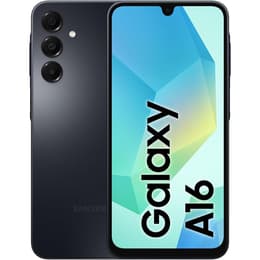
Galaxy A16
Galaxy A16
Starting at

Refurbished price:£100.62

Versus £206.96 new

See options
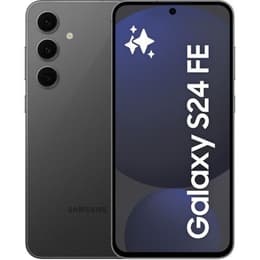
Galaxy S24 FE
Galaxy S24 FE
Starting at

Refurbished price:£250.00

Versus £741.91 new

See options

Ratings

The Samsung Galaxy A16 and the Samsung Galaxy S24 FE represent distinct offerings within Samsung's smartphone lineup, released in late 2024. While both devices operate on the Android platform with Samsung's One UI, they cater to different user priorities, with the Galaxy A16 focusing on essential functionality and extended software support, and the Galaxy S24 FE delivering a more advanced experience with enhanced performance and camera capabilities.

Scores

Durability

When considering the long-term usability of these devices, their release timelines and software support policies are key differentiators.

  • Release and Software Support: The Galaxy A16 was released in October 2024 in Europe and January 2025 in the US, and is notable for its commitment to six years of OS and security updates, extending its support until October 2030. The Galaxy S24 FE, launched slightly earlier in September/October 2024, offers an even longer support period with seven years of OS and security updates.
  • Durability and Repairability: The Galaxy A16 features a plastic back and frame with a glass front, and is described as splashproof. The Galaxy S24 FE offers a more robust build with an IP68 rating for dust and water resistance and Corning Gorilla Glass Victus+ on its front. Both devices generally receive good repairability scores, with the Galaxy A16 scoring between 8.0 and 9.0 out of 10, and the Galaxy S24 FE scoring 8.0 to 8.5 out of 10. Both models feature easily accessible batteries with pull tabs, though screen replacements can be more involved.
  • Expected Practical Lifespan: The extended software support for both models suggests a practical lifespan that exceeds many other smartphones, with the Galaxy S24 FE offering an additional year of updates, making it a suitable choice for users prioritizing maximum software longevity.

Year of Release

2024

2024

Compatible with latest Update

Yes

Yes

OS

Android

Android

Foldable

No

No

Performance

The performance capabilities of the Galaxy A16 and Galaxy S24 FE reflect their different positioning within Samsung's product range, impacting how smoothly they handle various tasks.

  • Processing Power: The Galaxy A16 is equipped with a processor designed for efficient everyday use, handling common applications and light multitasking effectively. User reviews indicate it performs well for basic tasks, though some report occasional delays with animations or app loading. The Galaxy S24 FE, featuring a more advanced processor, delivers near-flagship level performance, ensuring demanding applications, intensive multitasking, and graphic-heavy games run smoothly without significant slowdowns.
  • Memory and Storage: The Galaxy A16 offers various RAM configurations, including 4GB, 6GB, and 8GB options, alongside 128GB or 256GB of internal storage, which is expandable via a microSD card up to 1.5TB. This expandability provides flexibility for users with large media libraries. The Galaxy S24 FE comes with 8GB of RAM and storage options of 128GB or 256GB, but it does not support microSD card expansion.
  • Battery Behavior: The Galaxy A16 houses a 5000mAh battery, which, combined with its efficient processor, contributes to good battery life, with users often reporting 6 to 7 hours of screen-on time. The Galaxy S24 FE has a 4700mAh battery, and despite the slightly smaller capacity, its optimized processor and software contribute to strong endurance, with tests showing it can last over 15 hours in continuous video playback.

Memory (GB)

4 GB

8 GB

Screen quality

Both smartphones offer vibrant displays, but there are notable differences in their underlying technology and visual experience.

  • Display Technology and Resolution: Both devices feature 6.7-inch displays with Full HD+ (1080p) resolution, providing clear visuals for daily use. The Galaxy A16 uses a Super AMOLED panel, known for its rich colors and deep blacks. The Galaxy S24 FE elevates this with a Dynamic AMOLED 2X display, which typically offers enhanced color accuracy and contrast, along with HDR10+ support for a more immersive viewing experience with compatible content.
  • Refresh Rate and Brightness: The Galaxy A16 features a 90Hz refresh rate, providing smoother scrolling and a more fluid feel compared to standard 60Hz displays. The Galaxy S24 FE steps up to a 120Hz refresh rate, offering an even more responsive and fluid visual experience, particularly noticeable in fast-paced content and general navigation. In terms of brightness, the Galaxy S24 FE boasts a higher peak brightness of 1900 nits, which can improve outdoor visibility, though real-world tests suggest it often operates at lower levels. The Galaxy A16's display is generally bright enough for indoor use, but may be less visible under direct sunlight.
  • Viewing Experience: Both phones provide a large screen size suitable for media consumption and browsing. The Galaxy S24 FE's Dynamic AMOLED 2X panel and higher refresh rate contribute to a more premium and responsive visual experience, especially for users who prioritize smooth animations and vibrant, accurate colors.

Resolution

1080 x 2340

1080 x 2340

Screen type

Super AMOLED

Dynamic AMOLED 2X

Audiovisual

The camera systems on the Galaxy A16 and Galaxy S24 FE are designed for different levels of photographic versatility and quality.

  • Rear Camera Capabilities: The Galaxy A16 features a triple rear camera setup with a 50MP main sensor, a 5MP ultrawide, and a 2MP macro lens. The main camera can produce decent images in good lighting conditions, but the ultrawide and macro lenses are considered basic, and low-light performance is generally average. The Galaxy S24 FE also has a triple camera system, comprising a 50MP main sensor with Optical Image Stabilization (OIS), a 12MP ultrawide, and an 8MP telephoto lens with 3x optical zoom and OIS. This configuration offers greater flexibility, with the telephoto lens allowing for clear zoomed-in shots and OIS improving stability in photos and videos. The main camera performs well in daylight, capturing good detail, though low-light performance is noted as average.
  • Front Camera and Video Recording: For selfies, the Galaxy A16 has a 13MP front camera, while the Galaxy S24 FE features a 10MP front camera. The Galaxy A16 records video up to 1080p at 30 frames per second, with some reviews noting poor stabilization on the 4G variant. The Galaxy S24 FE offers significantly more advanced video capabilities, supporting up to 8K resolution at 30fps and 4K at 120fps, along with good stabilization, making it suitable for higher-quality video capture.
  • Audio Experience: The Galaxy A16 typically features a mono speaker setup, providing decent loudness but a less immersive audio experience. The Galaxy S24 FE includes stereo speakers, offering clearer and more balanced audio for media consumption.

Main camera

50 megapixels

50 megapixels

Front camera

13 megapixels

10 megapixels

Miscellaneous

Beyond core specifications, several practical features and design elements differentiate these two Samsung smartphones.

  • Connectivity and Ports: Both devices support 5G connectivity, ensuring access to faster mobile networks. The Galaxy S24 FE generally includes newer Wi-Fi standards and Bluetooth 5.3, offering potentially faster and more stable wireless connections. Both phones utilize a USB-C port for charging and data transfer.
  • Biometric Security and Navigation: The Galaxy A16 features a side-mounted fingerprint sensor, integrated into the power button, which is generally responsive. The Galaxy S24 FE incorporates an in-display fingerprint sensor, offering a more integrated and modern aesthetic.
  • Design and Handling: The Galaxy A16 has a plastic back and frame, contributing to its lighter weight and potentially more durable feel against drops. The Galaxy S24 FE often features more premium build materials, such as a Gorilla Glass Victus+ front and an IP68 rating, providing enhanced protection against dust and water. Both phones have a similar screen size of 6.7 inches, influencing their overall dimensions and handling. The Galaxy A16 weighs 192g, while the S24 FE is slightly heavier at 213g.
  • Expandable Storage: A notable difference is the Galaxy A16's support for microSD card expansion up to 1.5TB, offering significant flexibility for users needing extra storage for photos, videos, and apps. The Galaxy S24 FE does not offer expandable storage, requiring users to rely solely on its internal 128GB or 256GB options.

Weight

200 g

213 g

Screen size (in)

6.7

6.7

Mobile network

4G

5G

SIM card

Dual Physical SIM

Dual Physical SIM

Carrier compatibility

Unlocked

Unlocked

Connector

USB-C

USB-C

User feedback for the Galaxy A16 often praises its long software support, decent main camera in good lighting, and strong battery life, making it a reliable option for essential smartphone functions. Criticisms frequently point to its less vibrant display without HDR, basic ultrawide and macro cameras, and occasional performance stutters, particularly with more demanding tasks. Conversely, the Galaxy S24 FE receives commendation for its near-flagship performance, vibrant Dynamic AMOLED 2X display with a high refresh rate, and versatile camera system with OIS and telephoto capabilities. Users appreciate its extended software support and premium build quality. Common concerns include its average low-light camera performance and the absence of expandable storage.

Users prioritizing maximum software longevity, a highly responsive display, and advanced camera features, including optical zoom and superior video recording, will find the Galaxy S24 FE well-suited to their needs. Its robust performance handles demanding applications and multitasking with ease, making it ideal for power users or those seeking a premium experience without the highest flagship cost. On the other hand, users who value extended software support, expandable storage, and reliable battery life for everyday communication and media consumption, and who do not require top-tier performance or advanced camera versatility, may lean towards the Galaxy A16. Both devices offer a quality-assured refurbished option, providing an eco-friendly alternative for consumers.


See all articles

Our recent comparisons