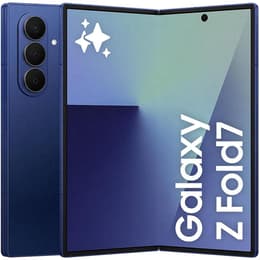

Galaxy A16 5G Vs Galaxy Z Fold7

Galaxy A16 5G
Galaxy A16 5G
Starting at

Refurbished price:£103.00

Versus £205.87 new

See options
Galaxy Z Fold7
Galaxy Z Fold7
Starting at

Refurbished price:£916.00

Versus £1,799.00 new

See options

Ratings

The Samsung Galaxy A16 5G, released in late 2024 and early 2025, and the Samsung Galaxy Z Fold7, launched in mid-2025, represent distinct approaches to smartphone design and functionality. While both operate on the Android platform, the A16 5G offers a traditional smartphone experience, focusing on core features and extended software support. In contrast, the Z Fold7 introduces a foldable design, providing a versatile tablet-like display alongside advanced capabilities for users seeking enhanced productivity and a premium experience.

Scores

Durability

The expected practical lifespan of these devices varies significantly due to their release timelines and intended market segments.

  • Software Longevity: The Galaxy A16 5G launched with Android 14 and is slated to receive six years of OS upgrades and security updates, extending its support until October 2030. The Galaxy Z Fold7, released with Android 16, offers an even longer commitment with seven years of OS and security updates.
  • Build and Durability: The Galaxy A16 5G features a plastic back and frame with a glass front, offering IP54 splash and dust resistance. The Galaxy Z Fold7, designed with an Armor Aluminum frame and Corning Gorilla Glass Ceramic 2 for its cover display, boasts IP48 water resistance, indicating a higher degree of protection against environmental elements. The foldable nature of the Z Fold7 introduces a hinge mechanism, which has undergone continuous refinement for durability.
  • Repairability: While specific repairability scores are not provided, the traditional design of the A16 5G generally suggests a more straightforward repair process compared to the complex internal structure of a foldable device like the Z Fold7.

Year of Release

2024

2025

Compatible with latest Update

Yes

Yes

OS

Android

Android

Foldable

No

Yes

Performance

The performance capabilities of the Galaxy A16 5G and Galaxy Z Fold7 cater to different user demands, primarily influenced by their internal components and design.

  • Processing Power: The Galaxy A16 5G is equipped with an octa-core processor, either the Exynos 1330 or MediaTek Dimensity 6300, which handles everyday tasks like web browsing, social media, and streaming smoothly. Users may experience occasional stuttering or lag when switching between numerous apps or engaging in graphically intensive activities. The Galaxy Z Fold7 features a high-end Qualcomm Snapdragon 8 Elite for Galaxy processor, designed for demanding applications and seamless multitasking across its expansive displays.
  • Multitasking and Storage: The A16 5G typically comes with 4GB, 6GB, or 8GB of RAM, sufficient for general use, and offers storage options up to 256GB, expandable via microSD up to 1.5TB. The Z Fold7 provides 12GB or 16GB of RAM and up to 1TB of faster UFS 4.0 internal storage, without microSD expansion, enabling fluid transitions between multiple open applications and robust performance for power users.
  • Battery Behavior: The Galaxy A16 5G houses a 5000mAh battery, capable of providing up to two days of usage with conservative use or about a day and a half with heavier screen-on time. The Galaxy Z Fold7 has a 4400mAh dual battery setup. While its battery life is considered average for a foldable, it can typically last a full day with light to moderate use, though heavy use of the larger inner display may require more frequent charging.

Memory (GB)

4 GB

12 GB

Screen quality

The display experience on the Galaxy A16 5G and Galaxy Z Fold7 differs significantly, reflecting their distinct form factors and target audiences.

  • Display Technology and Clarity: The Galaxy A16 5G features a 6.7-inch Super AMOLED display with a Full HD+ resolution (1080 x 2340 pixels). This provides vibrant colors and clear visuals for everyday content consumption. The Galaxy Z Fold7 offers two Dynamic AMOLED 2X displays: an 8.0-inch main foldable screen with a higher resolution (1968 x 2184 pixels) and a 6.5-inch cover screen with a Full HD+ resolution (1080 x 2520 pixels). The main screen of the Z Fold7 provides an expansive, tablet-like viewing area.
  • Brightness and Refresh Rate: The A16 5G's display has a 90Hz refresh rate for smoother scrolling and a peak brightness of 800 nits, which can be challenging in direct sunlight. Both displays on the Z Fold7 feature an adaptive 120Hz refresh rate, ensuring fluid motion and responsiveness. The main display can reach a peak brightness of 2600 nits, offering excellent visibility even in bright outdoor conditions.
  • Viewing Experience: The A16 5G provides a large, immersive viewing experience for a traditional smartphone. The Z Fold7's dual-screen setup allows for a compact smartphone experience when folded and an expansive, immersive canvas for media consumption, multitasking, and productivity when unfolded.

Resolution

1080 x 2340

1968 x 2184

Audiovisual

The camera systems on the Galaxy A16 5G and Galaxy Z Fold7 are designed for different levels of photographic capability and user expectations.

  • Rear Camera Systems: The Galaxy A16 5G includes a triple rear camera setup with a 50MP main sensor, a 5MP ultrawide lens, and a 2MP macro lens. This configuration is suitable for capturing clear everyday photos. The Galaxy Z Fold7 features a more advanced triple camera system, including a 200MP main wide-angle camera with optical image stabilization (OIS) and phase-detection autofocus (PDAF), a 12MP ultrawide camera with autofocus and macro capabilities, and a 10MP telephoto lens with 3x optical zoom and OIS. This setup is designed for detailed photography across various scenarios, including low-light conditions and zoomed shots.
  • Front Cameras and Video: For selfies and video calls, the A16 5G has a 13MP front camera. The Z Fold7 offers two 10MP front cameras, one on the cover screen and another on the inner display, providing flexibility for different usage modes. The Z Fold7 also supports 8K video recording, while the A16 5G records video at UHD 4K resolution.
  • Audio Output: The A16 5G features a single bottom-firing speaker. The Z Fold7 includes stereo speakers, enhancing the audio experience for media consumption.

Miscellaneous

Beyond core features, several practical elements differentiate the Galaxy A16 5G and Galaxy Z Fold7 in terms of connectivity, design, and user interaction.

  • Connectivity and Ports: Both devices support 5G connectivity. The A16 5G uses Wi-Fi 5 (802.11ac) and Bluetooth 5.3, with a USB-C 2.0 port and a USB Type-C earjack. The Z Fold7 features more advanced Wi-Fi 7 and Bluetooth 5.4, along with a faster USB-C 3.2 port.
  • Physical Design and Handling: The Galaxy A16 5G has a traditional bar form factor, measuring 164.4 x 77.9 x 7.9 mm and weighing 200g. Its plastic build contributes to its lighter feel. The Galaxy Z Fold7, a foldable device, has distinct dimensions when folded (158.4 x 72.8 x 8.9 mm) and unfolded (158.4 x 143.2 x 4.2 mm), weighing 215g. Its design prioritizes a compact form factor when closed and an expansive screen when open.
  • Sensors and Features: Both devices include fingerprint sensors for secure unlocking. The A16 5G has an accelerometer, gyro sensor, geomagnetic sensor, light sensor, and virtual proximity sensing. The Z Fold7 offers a comprehensive suite of sensors and supports features like wireless charging and reverse wireless charging, which are absent on the A16 5G. The Z Fold7 does not support S Pen input.

Weight

200 g

187 g

Screen size (in)

6.7

8

Mobile network

5G

5G

SIM card

Dual Physical SIM

Dual Physical SIM + eSIM

Carrier compatibility

Unlocked

Unlocked

Connector

USB-C

USB-C

The Samsung Galaxy A16 5G and Galaxy Z Fold7 cater to distinct user needs, offering different strengths and experiences. Users often praise the Galaxy A16 5G for its robust battery life, providing extended usage on a single charge, and its commitment to long-term software support, ensuring the device remains current for many years. Some common criticisms, however, point to its performance for demanding tasks, which can sometimes feel less responsive compared to higher-end devices, and its single speaker audio output.

The Galaxy Z Fold7 is frequently lauded for its innovative foldable design, offering the versatility of a large tablet-like display in a portable form factor. Its powerful processing capabilities and advanced camera system also receive significant appreciation, making it suitable for productivity and high-quality photography. Conversely, user feedback sometimes highlights its battery life as being average for a device of its caliber, especially with extensive use of the larger inner screen.

Users prioritizing a long-lasting battery, extended software updates, and a straightforward smartphone experience for everyday tasks may find the Galaxy A16 5G well-suited to their needs. It represents a practical choice for those seeking reliability without the complexities of a foldable design. Conversely, users who value cutting-edge technology, an expansive and versatile display for multitasking, and a high-performance camera system will likely lean toward the Galaxy Z Fold7. This device is ideal for professionals, content creators, or anyone desiring a premium, adaptable mobile computing experience. Both models, whether new or as a quality-assured refurbished option, offer pathways to owning a Samsung device that aligns with individual priorities.


See all articles

Our recent comparisons