
Galaxy A15 Vs Galaxy A16 5G

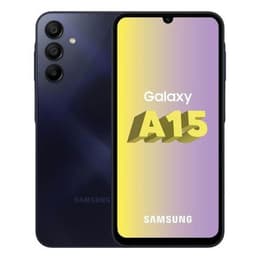
Galaxy A15
Galaxy A15
Starting at

Refurbished price:£88.00

Versus £169.00 new

See options
Galaxy A16 5G
Galaxy A16 5G
Starting at

Refurbished price:£103.00

Versus £205.87 new

See options

Ratings

The Samsung Galaxy A15 5G, released in late 2023, and its successor, the Samsung Galaxy A16 5G, launched in late 2024, are both mid-range smartphones designed to offer essential features for everyday use. While they share a similar design philosophy and core functionalities, the newer Galaxy A16 5G brings notable enhancements in software longevity and display size, alongside updated internal components.

Scores

Durability

When considering the long-term usability of these devices, their release timelines and software support policies are key differentiators.

  • Release Timeline: The Galaxy A15 5G was introduced in December 2023, while the Galaxy A16 5G followed in October 2024, making the A16 5G a more recent model with a longer potential lifespan from its initial purchase date.
  • Software Longevity: The Galaxy A15 5G is expected to receive four major Android operating system updates and five years of security patches, extending its software support until approximately 2028 or 2029. In contrast, the Galaxy A16 5G sets a new standard for its segment by offering six years of Android OS upgrades and six years of security updates, ensuring support until October 2030. This extended commitment makes the A16 5G a more future-proof option for users who prefer to keep their devices for a longer period.
  • Physical Durability: Both devices feature plastic backs and frames, with the Galaxy A15 5G utilizing Dragontrail Pro glass for its display. Neither phone boasts a high official IP rating for water and dust resistance, though the A16 5G is noted to have IP54 protection against splashes and dust. Users generally recommend using a protective case for both models to enhance their resistance to everyday bumps and drops.

Year of Release

2023

2024

Compatible with latest Update

Yes

Yes

OS

Android

Android

Foldable

No

No

Performance

The performance of a smartphone directly impacts daily interactions, from launching applications to managing multiple tasks simultaneously.

  • Processor Capabilities: The Galaxy A15 5G is powered by a MediaTek Dimensity 6100+ processor, which capably handles routine tasks and light multitasking. The Galaxy A16 5G features either an Exynos 1330 or MediaTek Dimensity 6300 processor, depending on the region, offering a slight performance advantage that results in a smoother experience for general use. While both are suitable for everyday activities, the A16 5G's updated processor provides a bit more headroom for demanding applications.
  • Multitasking and Responsiveness: Users of the Galaxy A15 5G have noted that while it handles single applications well, there can be occasional delays when loading apps or switching between multiple demanding tasks. The Galaxy A16 5G, with its slightly more capable processor, generally offers a more fluid experience for multitasking and app responsiveness, though neither device is designed for intensive power users or competitive mobile gaming.
  • Storage and RAM: Both models are available with various RAM configurations, typically ranging from 4GB to 8GB, and storage options of 128GB or 256GB. Both also support expandable storage via a microSD card, allowing users to increase their storage capacity for photos, videos, and applications.

Memory (GB)

4 GB

4 GB

Screen quality

The display is a primary interface for smartphone interaction, influencing everything from media consumption to daily navigation.

  • Display Technology and Size: Both the Galaxy A15 5G and Galaxy A16 5G feature Super AMOLED displays, known for their deep blacks and vibrant colors. The Galaxy A15 5G has a 6.5-inch screen, providing a comfortable viewing area. The Galaxy A16 5G offers a slightly larger 6.7-inch display, which can enhance the viewing experience for videos and browsing.
  • Resolution and Refresh Rate: Both devices share a Full HD+ resolution (2340x1080 pixels), ensuring clear and sharp visuals for text and images. They also both feature a 90Hz refresh rate, which contributes to smoother scrolling and a more fluid user interface compared to standard 60Hz displays.
  • Brightness: Both models offer a peak brightness of 800 nits, which is generally sufficient for outdoor visibility, though direct sunlight might still pose some challenges.

Resolution

1080 x 2340

1080 x 2340

Screen type

Super AMOLED

Super AMOLED

Audiovisual

For many users, the camera system is a crucial aspect of a smartphone, capturing everyday moments and memories.

  • Rear Camera System: Both the Galaxy A15 5G and Galaxy A16 5G are equipped with a triple rear camera setup. This typically includes a 50-megapixel main sensor, a 5-megapixel ultrawide lens, and a 2-megapixel macro lens. This configuration allows for versatility in photography, from detailed standard shots to broader landscapes and close-up subjects.
  • Photography Performance: The 50-megapixel main camera on both devices performs competently in well-lit conditions, producing images with good detail and color reproduction. Low-light performance is generally adequate for their class, though images may exhibit some graininess.
  • Video Recording and Front Camera: Both phones support video recording at 1080p resolution at 30 frames per second. For selfies and video calls, both models feature a 13-megapixel front-facing camera, capable of capturing clear images and video.

Main camera

50 megapixels

50 megapixels

Front camera

13 megapixels

13 megapixels

Miscellaneous

Beyond the core specifications, several practical features contribute to the overall user experience and daily convenience.

  • Connectivity and Ports: Both the Galaxy A15 5G and Galaxy A16 5G support 5G cellular connectivity, along with Wi-Fi and Bluetooth for wireless connections. They both utilize a USB-C port for charging and data transfer. While the Galaxy A15 5G includes a 3.5mm headphone jack, the Galaxy A16 5G generally omits this feature.
  • Biometric Security: For secure unlocking, both devices feature a side-mounted fingerprint sensor integrated into the power button. This placement offers a convenient and quick way to access the phone.
  • Design and Handling: The Galaxy A15 5G measures 160.1 x 76.8 x 8.4mm and weighs 200g. The Galaxy A16 5G is slightly larger and thinner at 164.4 x 77.9 x 7.9mm, also weighing around 200g. The A16 5G's design incorporates a 'Glastic' material that mimics glass, offering a slightly different feel compared to the A15 5G's plastic build.

Weight

200 g

200 g

Screen size (in)

6.5

6.7

Mobile network

4G

5G

SIM card

Dual Physical SIM

Dual Physical SIM

Carrier compatibility

Unlocked

Unlocked

The Samsung Galaxy A15 5G and Galaxy A16 5G both offer compelling packages within the mid-range smartphone segment, catering to users seeking reliable performance and essential features. User feedback for the Galaxy A15 5G often praises its excellent battery life, vibrant Super AMOLED display, and the inclusion of a 3.5mm headphone jack. However, some users have noted that its performance can feel sluggish during heavy multitasking or app loading.

The Galaxy A16 5G, as the newer iteration, builds upon its predecessor with a larger display and a slightly more capable processor, leading to a generally smoother user experience. Its most significant advantage, frequently highlighted by users and reviewers, is Samsung's commitment to six years of software and security updates, offering exceptional longevity for a device in this category. Criticisms for the A16 5G sometimes point to its battery life, which, despite having the same capacity, has been observed in some tests to be shorter than the A15 5G. The removal of the 3.5mm headphone jack in the A16 5G might also be a point of concern for some users.

Users prioritizing maximum software longevity and a slightly larger screen will find the Galaxy A16 5G well-suited to their needs, especially if they plan to keep their device for many years. Conversely, those who value slightly longer battery endurance, the convenience of a traditional headphone jack, and are content with a slightly smaller display and a still-generous software update policy may lean towards the Galaxy A15 5G. Both models represent solid choices, and opting for a quality-assured refurbished option can provide an eco-friendly alternative for either device, extending their useful life and reducing electronic waste.


See all articles

Our recent comparisons