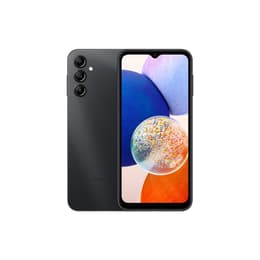
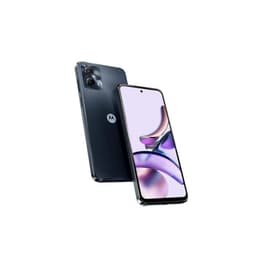

Galaxy A14 Vs Motorola Moto G13

Galaxy A14
Galaxy A14
Starting at

Refurbished price:£82.00

Versus £269.00 new

See options
Motorola Moto G13
Motorola Moto G13
Starting at

Refurbished price:£99.00

Versus £166.76 new

See options

Ratings

The Samsung Galaxy A14 and the Motorola Moto G13 are both smartphones released in early 2023, targeting users seeking essential features for daily communication and media consumption. While both devices operate on the Android platform, they present distinct approaches to display technology, software support, and overall user experience. The Galaxy A14 offers a sharper display and potentially longer software support, whereas the Moto G13 emphasizes a clean Android experience and a slightly more compact design.

Scores

Durability

When considering the longevity of these devices, several factors come into play, including their release timelines, software update policies, and ease of repair.

  • Release Timeline and OS Support: The Samsung Galaxy A14 (5G model) was launched in January 2023, with the 4G LTE model following in February 2023. It shipped with Android 13 and is expected to receive two major Android OS upgrades (up to Android 15) and four years of security updates, extending support until 2027. The Motorola Moto G13, released in January 2023, also launched with Android 13. It is anticipated to receive one major Android OS upgrade (to Android 14) and security updates until January 2026, after which it is considered to have reached its end of life for official Android updates.
  • Repairability: The Samsung Galaxy A14 has a repairability score of 8 out of 10, indicating it is relatively easy to disassemble. Notably, Samsung incorporated an adhesive pull pouch for the battery, simplifying battery replacement. The Moto G13 is also designed with repair in mind, with screen replacements often possible within 30 minutes.
  • Expected Practical Lifespan: Users prioritizing extended software longevity will find the Galaxy A14 offers a longer period of official Android version updates and security patches. Both devices are built with durable plastic materials, suggesting a similar physical lifespan under typical usage conditions.

Year of Release

2023

2023

Compatible with latest Update

No

No

OS

Android

Android

Foldable

No

No

Performance

The performance of a smartphone is crucial for daily tasks, app responsiveness, and multitasking capabilities. Both the Galaxy A14 and Moto G13 are equipped to handle everyday usage, though with some differences in their underlying hardware and user experience.

  • Processor Capabilities: The Samsung Galaxy A14 is powered by an octa-core processor, which allows it to manage common applications and general smartphone functions smoothly. The Motorola Moto G13 also features an octa-core processor, designed to deliver reliable performance for typical daily activities. While neither device is intended for intensive, high-end gaming or demanding professional applications, they are capable of running most popular apps and navigating the operating system without significant delays.
  • Storage and RAM: Both models offer configurations with 4GB of RAM and internal storage options of 64GB or 128GB. Both also support expandable storage via a microSD card, allowing users to increase space for photos, videos, and applications. The 4GB RAM configuration on both devices is suitable for light multitasking, such as switching between a few social media apps, web browsing, and email.
  • Battery Behavior: Both smartphones are equipped with a 5000mAh battery, which generally provides ample power for a full day of moderate use. However, charging speeds differ; the Galaxy A14 supports 15W wired charging, while the Moto G13 typically supports 10W wired charging, which can result in longer charging times.

Memory (GB)

4 GB

4 GB

Screen quality

The display is a primary interface for smartphone interaction, influencing everything from media consumption to text readability. The Galaxy A14 and Moto G13 offer different display technologies and resolutions.

  • Display Technology and Resolution: The Samsung Galaxy A14 features a 6.6-inch PLS LCD display with a Full HD+ resolution of 1080x2408 pixels, providing a clear and detailed viewing experience for text and images. The Motorola Moto G13 comes with a 6.5-inch IPS LCD display, offering an HD+ resolution of 720x1600 pixels. While the Moto G13's display is generally good for everyday use, some users might notice less sharpness compared to the Galaxy A14's higher resolution when viewing content up close.
  • Refresh Rate and Brightness: Both devices feature a 90Hz refresh rate, which contributes to smoother scrolling and a more fluid visual experience compared to standard 60Hz displays. The Galaxy A14's 5G model specifically offers this 90Hz refresh rate, while the 4G LTE model is 60Hz. In terms of brightness, the Moto G13 can reach around 400 nits, making it viewable in most indoor and some outdoor conditions.
  • Viewing Experience: The larger, higher-resolution screen of the Galaxy A14 provides a more immersive experience for watching videos and browsing detailed content. The Moto G13's display, while lower in resolution, still benefits from the 90Hz refresh rate for a responsive feel, and its Panda Glass protection offers some durability.

Resolution

1080 x 2408

720 x 1600

Screen type

PLS LCD

IPS LCD

Audiovisual

Camera capabilities are a significant consideration for many smartphone users, and both the Galaxy A14 and Moto G13 offer multi-lens setups for varied photography.

  • Rear Camera System: Both phones are equipped with a triple rear camera system, prominently featuring a 50-megapixel main sensor. The Galaxy A14 includes a 50MP main camera (f/1.8), a 2MP macro lens, and a 2MP depth sensor. Similarly, the Moto G13 features a 50MP main camera, a 2MP macro lens, and a 2MP depth sensor. The absence of an ultrawide lens on the Moto G13 means it cannot capture broader landscape shots like some other devices.
  • Photography Performance: In well-lit conditions, both devices can capture acceptable images with their main sensors. However, user feedback suggests that the Moto G13's camera performance can be limited in less-than-ideal lighting, with colors sometimes appearing muted and noticeable software sharpening in busy images. The Galaxy A14 also lacks Optical Image Stabilization (OIS), which can affect clarity in low-light or shaky conditions.
  • Video Recording and Front Camera: Both phones support video recording at 1080p resolution. For selfies and video calls, the Galaxy A14 features a 13-megapixel front camera, while the Moto G13 has an 8-megapixel front camera.
  • Audio Output: The Moto G13 features stereo speakers, which can provide a more immersive audio experience for media consumption, though some users note that sound quality can degrade at higher volumes. The microphone quality on the Moto G13 is generally considered good for calls.

Main camera

50 megapixels

50 megapixels

Front camera

13 megapixels

8 megapixels

Miscellaneous

Beyond core features, several practical elements contribute to the overall usability and convenience of a smartphone.

  • Connectivity Options: The Samsung Galaxy A14 is available in both 4G LTE and 5G variants, offering faster mobile data speeds for the 5G model. The Motorola Moto G13 is a 4G LTE-only device, lacking 5G connectivity. Both phones support Wi-Fi 5 (802.11 a/b/g/n/ac) and Bluetooth 5.1 (or 5.2 for A14 5G). Both also include NFC for contactless payments.
  • Ports and Sensors: Both devices retain a 3.5mm headphone jack, a convenient feature for wired audio. They both use a USB Type-C port for charging and data transfer. For security, both phones feature side-mounted fingerprint sensors. The Moto G13 also supports face unlock.
  • Build Materials and Handling: Both the Galaxy A14 and Moto G13 are constructed with plastic backs and frames, which contributes to their durability and lighter weight. The Moto G13 has a water-repellent design, though it does not carry an official IP rating for water and dust resistance. The Galaxy A14 measures 167.7 x 78 x 9.1 mm and weighs 204g, while the Moto G13 is slightly more compact at 162.7 x 74.7 x 8.2 mm and lighter at 183g. Some users have noted the Galaxy A14 can feel bulky.

Weight

201 g

183 g

Screen size (in)

6.6

6.5

Mobile network

4G

4G

SIM card

Dual Physical SIM

Dual Physical SIM

Carrier compatibility

Unlocked

Unlocked

The Samsung Galaxy A14 and Motorola Moto G13 both offer compelling features for users seeking reliable smartphones for everyday use. User feedback for the Galaxy A14 often praises its sharp display and Samsung's commitment to software updates, with an expectation of two major OS upgrades and four years of security patches. However, some users have reported concerns regarding performance, occasional bugs, slow charging, and audio quality.

The Motorola Moto G13 is frequently lauded for its clean Android experience, smooth 90Hz display, and solid battery life, partly due to its lower display resolution. Its inclusion of NFC and stereo speakers are also positive points for many users. Criticisms sometimes point to its camera performance in challenging lighting, slower charging speeds, and the fact that it will receive fewer major Android updates compared to the Galaxy A14.

Users prioritizing a sharper display and longer-term software support, particularly for Android version upgrades, may find the Samsung Galaxy A14 to be a more suitable choice. Its 5G variant also offers faster connectivity for those in compatible areas. Conversely, users who value a slightly more compact and lighter device with a clean Android interface and stereo speakers might lean towards the Motorola Moto G13. It is also a strong contender for those who prioritize a responsive screen for general navigation and good battery endurance for daily tasks.

For those considering either of these models, exploring quality-assured refurbished options can provide an eco-friendly alternative, extending the life cycle of these devices and offering a sustainable choice.
See all articles

Our recent comparisons